Will Superconductivity Breakthroughs Spur Supergrid Development?
Jonathan Fuller | May 12, 2015Recent breakthroughs may help move high-temperature superconductivity closer to the forefront of long-term grid improvements. Technical and economic challenges remain, however, likely limiting widespread adoption to a future horizon.
Superconducting materials conduct electricity with zero resistance and do not experience power loss through heat and other energy types. Unfortunately, superconductivity only occurs below 30 K or so at a point known as the material's critical temperature. Superconductors therefore require cryogenic cooling to achieve superconductivity, which has prevented their widespread use in commercial applications, with the exception of maglev trains and magnetic resonance imaging scanners.
In 1986, researchers at IBM in Zurich discovered that a lanthanum-based cuprate oxide exhibited superconductivity at around 35 K, a higher critical temperature than previously studied materials. A year later, multiple research teams found that replacing lanthanum with yttrium—forming yttrium barium copper oxide (YBCO)—created a superconductive material at 93 K. That was well above the boiling point of liquid nitrogen, a cheaper and simpler coolant than hydrogen or helium. Researchers regarded cuprates as the first high-temperature superconductors (HTS) despite the fact that they require temperatures below -180° C.
While new insights and discoveries continue to chip away at the mystery of superconductivity, the comprehensiveuse of HTS continues to face challenges. Superconductors are sensible in applications where they provide a unique solution to a specific need, yet the high cost of materials and cryogenic cooling systems and unproven reliability have prohibited their acceptance. The rapid succession of breakthroughs and economies of scale may push down the cost of manufacturing HTS materials over the next few decades, but a comprehensive use remains beyond the foreseeable future.
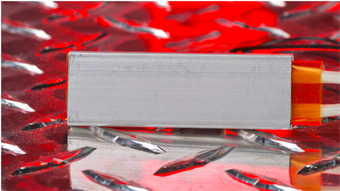
 Recent breakthroughs offer promise for superconductivity, but challenges remain. Image source: NREL, credit Al Puente What's more, although close to 30 years have passed since the discovery of cuprate superconductivity, the mechanisms involved in high-temperature superconductivity remain poorly understood. Some recent breakthroughs and collaborations, however, have advanced this understanding.
In 2014 researchers at Princeton University in the U.S. discovered that the electrons in superconductive materials order themselves into charge patterns during the transition to a superconductive state. Researchers theorized that charge orders organized into either a one-dimensional striped pattern or a two-dimensional checkerboard.
In March 2015 a collaboration between University of British Columbia Quantum Matter Institute and the Canadian Light Source used an unconventional approach to reconstruct a 2D model of YBCO's electron pattern and found that electrons form a striped pattern instead of a checkerboard one. These findings are steps on the path to understanding HTS and enhancing superconductive materials in the hopes of discovering superconductive states that are closer to room temperature.
Problematic Grids
The electric power distribution industry is particularly relevant to commercial superconductivity. Frequent outages and congestion are known vulnerabilities within the U.S. electric grid. Although investments in smart grid technology have boosted automation and alleviated some congestion, long-term capacity and infrastructure replacement remains a concern. In its 2013 Report Card for America's Infrastructure, the American Society of Civil Engineers assigned U.S. energy infrastructure a D+, saying that its condition and capacity are of "significant concern with strong risk of failure," and with “a large portion of the system [exhibiting] significant deterioration."
 The U.S. energy grid is problematic and at risk for large-scale failure. Image source: empiregs.comCapacity concerns combine electricity demand growth and retirement of critical infrastructure. According to the March IHS Energy North American Power Market Outlook, U.S demand will likely peak at 2.5% annual growth in 2017 and should continue to grow at a rate of 1-2% until 2040, even accounting for rising energy efficiency investments. The study projects supply concerns resulting from plant retirements; indeed, some 290 gigawatts of generating capacity are expected to be retired between 2015 and 2040. The average age of U.S. large power transformers is approaching the average expected lifespan of 40 years, according to a 2014 U.S. Department of Energy report. New plants and efficient transformers and transmission infrastructure are necessary to keep up with steady demand after 2020.
 A 2012 blackout affected more than 600 million people across northern and eastern India. Image source: dailymail.uk.India's electric power sector faces perhaps a more significant crisis. Around 300 million Indians, a quarter of the nation's population, lack access to electricity because of a lack of infrastructure and fossil fuel shortages. Since villages without electricity rely on kerosene and wood burning for power and heat, deaths from chronic respiratory disease and kerosene accidents ranks as public health issues.
Transmission power losses of well over 20%, loss of productivity due to frequent electricity outages and grid collapses and the constant need for backup generators represent significant monetary burdens on India's economy.
The Indian grid’s vulnerability was driven home in August 2012 when a blackout affected around 620 million people.
Superconductive Solutions
Superconductivity emerges as a possible solution to these problems. A 2007 NEMA/ABB paper asserts that between 5-8%, or approximately 200 to 300 million megawatt hours, of transmitted power is lost each year in the U.S. grid, much of that to waste heat generated by resistance stemming from traditional copper conductors. Power losses in India routinely reach 20% or more.
Manufacturers of HTS power cables claim losses of 0.5%, resulting in a power density upgrade of up to eight times that of a traditional cable. Additionally, HTS cables reduce the need for voltage transformation steps, easing the burden of replacing transformers and perhaps even substations. Perhaps most important for commercial acceptance, power loss in HTS cables is significantly lower than conventional cables even after accounting for refrigeration costs.
HTS may be applied to new transformers as well. Transformers built using HTS wire eliminate many of the inefficiencies encountered in conventional wire, as well as cut down on hazards like fires by replacing cooling oil with liquid nitrogen. HTS transformers also typically have a smaller footprint, enabling existing substations to increase distribution without expanding facilities. In high-loss, low-capacity grids like India's, HTS cables and transformers may become economical choices for long-term infrastructure improvements.
Long-term demonstration projects seek to raise awareness around viable commercial superconductivity. A number of superconductive cable demonstrations using different cable lengths, materials and voltages have taken place in the U.S., Japan, China and across Europe.
The AmpaCity project, an ongoing German effort, replaced a 110 kilovolts (kV) conventional cable with a 10 kV HTS cable and an HTS fault current limiter in Essen's city center power grid. The 1 km cable, provided by German cable manufacturer Nexans, is the longest superconductor installation in the world and is reported to have performed effectively since its full integration in April 2014. Nexans' cable design involves three superconductor phases surrounded by liquid nitrogen channels and a cryostat sleeve to keep the cable below the superconductor's critical temperature. The company uses YBCO and bismuth strontium calcium copper oxide, both cuprates, in its superconducting products.
The AmpaCity project was accompanied by several feasibility studies to determine the economic impact of replacing conventional cable installations with HTS. The study found that replacing Essen's 110 kV cable with a 10 kV conventional cable was most economical without considering electrical losses. The HTS installation was deemed preferable, however, after considering power loss, space requirements and lifecycle costs.