
Eliminating Manufacturing Downtime: Production Issues with Tesla’s Model 3
Roger Pink | April 19, 2018In a call with investors in November of last year, with pressure mounting regarding missed production goals for the Model 3, CEO Elon Musk described where Tesla was in revamping its manufacturing processes. Musk said, “Let’s say Level 9 is the worst, we were in Level 9, now we’re in Level 8, and I think we’re close to exiting Level 8. I thought we’d probably be more like in Level 7 by now.” It was announced later in that same call that the year-end Model 3 production goals would be pushed out another quarter. Tesla’s stock took a beating as investors started to question whether the production issues could be overcome.
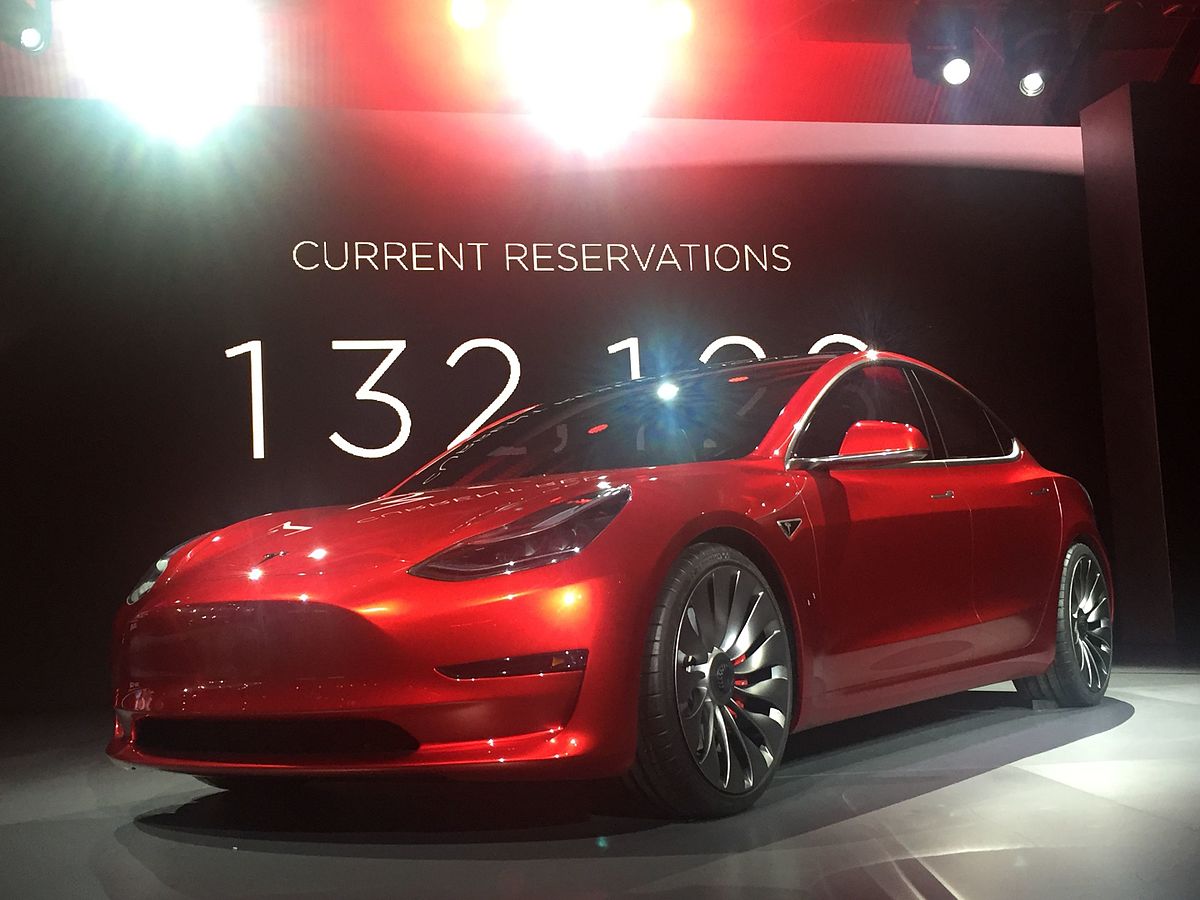 The Tesla 3 has been plagued with production issues for over a year now.The Model 3 has always been an important part of Tesla’s plan to shift the automobile market away from fossil fuels and towards electric power. Tesla first achieved significant traction with the Model S, a luxury vehicle that exploited the advantages of superior design and electric motors to produce excellent acceleration, handling and safety. The Model S changed how the market thought about electric cars. No longer were they flimsy environmental statements. Now they were muscle cars that were winning street drag races against the much higher priced competition.
Tesla followed the Model S with the Model X, a luxury SUV meant to be more accommodating to families. The plan after these two models was to launch a mass market, affordable vehicle, the Model 3. Starting at $35,000, which would be lower after customers collected government subsidies, the Model 3 was meant to change the reality of the automotive industry, just as the Model S changed its perception. Hundreds of thousands of customers put down their $1000 deposits with the promise of a delivery of a Model 3 in a year or so.
At the end of 2016, this seemed like a reasonable goal. Musk predicted Model 3 production would start in July 2017 and ramp up to 5,000 vehicles a week by September 2017, followed by 10,000 vehicles a week in 2018. Even in late August, Tesla assured investors that the 10,000 vehicles per week in 2018 was still possible. Tesla’s actions backed up those statements. In the second quarter of 2017, Tesla spent $1 billion, opening 29 new stores and service centers and aggressively building out their supercharger outlets worldwide.
Tesla received over 500,000 reservations for the Model 3, each with a $1,000 deposit. The demand for the Model 3 was there, Tesla just needed to ramp up production. Early on when delays started to set in, Musk wasn’t worried but promised to become more involved in the production. After getting more intimately involved with the manufacturing of the Model 3, Musk admitted the company was struggling with production bottlenecks. Tesla again moved the goalposts out to 5,000 vehicles per week by the end of the first quarter 2018. Elon Musk indicated the high degree of automation on the Model 3 production line was proving challenging. Tesla only ended up producing 1,764 Model 3s in all of 2017.
The Reasons Behind Production Delays
One of the main delays to production that Musk described was that there were issues with battery modules produced by a systems integration subcontractor. This forced Tesla to rewrite control software from scratch. The work took an enormous amount of man-hours and lead to an internal investigation of the use of contractors for some of the Model 3's parts. Musk would later compare the situation to a Russian nesting doll. Tesla was employing contractors to produce parts for the Model 3. The contractors, in turn, would hire subcontractors and they themselves would occasionally subcontract out some of their work.
The result was a bloated bureaucracy of middlemen who did little except add time and cost to the part they were responsible for producing. Furthermore, Musk found that the contractors often had open contracts with regards to time and materials. This encouraged ballooning costs and delays since delivery of the product meant the end of the project and the money that came with it. Tesla is shifting now to contracts with a fixed duration and costs. Contractors are being asked to demonstrate they can produce their parts for the anticipated ramp up to 6,000 vehicles per week set for June 2018. The idea being that contractors won’t be responsible for any failure to achieve that goal.
Tesla’s bloated contractor system is a little more understandable within the context of a startup company trying to revolutionize the automobile industry. Musk, however, has indicated that with the Model 3 being a mass production model, the economies of scale should be in place. That means that profit needs to become a priority and all expenditures will be reviewed. Tesla also intends to increase tolerances significantly, as much as 10 times the industry standards. Musk has indicated that if a customer measures a panel gap or dimension other than advertised, it should only be because their measuring tape is wrong.
While being immersed in the production process for months now, Musk seems to have decided that he needs to rethink earlier strategies. Tesla originally intended production of the Model 3 to be an almost completely automated process. Musk now acknowledges that human workers are underrated and plans to hire 400 additional people to ramp production. The intention is to add a third shift to the Fremont plant to help accelerate production.
The months in ‘production hell’ have had an impact on Tesla. The company seems to be shifting from a startup mentality and taking the idea of becoming a mass producer of automobiles seriously. According to Musk, “Actual production will move as fast as the least lucky and least well-executed part of the entire Tesla production/supply chain system.” It’s clear that issues such as contractors, impractical automation, unreasonable costs, etc. will no longer be ignored. Tesla’s mission is now the profitable, timely production of high-quality vehicles.
In an email to employees, Musk explained that a week-long Model 3 production shutdown is needed to make some changes to increase production substantially. Before the shutdown, Tesla had achieved 3 weeks in a row of 2,000+ vehicle production. Now Tesla is aiming for 5,000 units at the end of the second quarter. Tesla says it expects to be profitable in the third and fourth quarters of this year. Unlike past promises, these seem like they have a better chance of happening. Tesla has recognized the importance of production, thrown its best asset at the problem, and is emerging as a mature mass producer of automobiles.




The fact that, “Actual production will move as fast as the least
luckyefficient and least well-executed part of the entire Tesla production/supply chain system” should NOT have come as a surprise to Musk!This brings to mind the concept of, "we'll set up a plant to build a new, high volume automobile, then a miracle happens, and we hit all our goals.
Anybody who has ever tried to build machinery knows that the process is only as fast as they hope it will be if they have planned each and every step with a "workaround" in case supplier X misses a commitment.
In reply to #1
Quite right! Goldratt's "Theory of Constraints" has been around for over two decades now and is one of those MUST READ books for anyone manufacturing and assembling anything and it is quite certain that Mr. Musk is no stranger to its contents. The real question here is, are the Model 3 suppliers supplying conventional car manufacturers? If so, they are very savvy when it comes to automotive contracts and they will do everything to push prices up and delivery times out unless contractually bound to tight dates, fixed costs and delay/demurage penalties... One needs a very savvy purchasing department for this endeavor.
The basics of planning is Takt Time( Toyota Production System ) . When all the individual process cycle time is less than the Takt Time then the production target can be realised
In case of Tesla if Musk planned to produce 5000 vehicles per week and assuming working of 5 days a week the daily production would be 1000 vehicles
Ifdf two shift working is considered with 920 minutes/day then the takt time would be (920minutes x60 seconds)/1000(no of Vehicles) -, 55.2 seconds. Hence Musk has to map each process and do a gap analysis.Any Person who have exposure this concept can find the bottleneck(s) . This is simpler than Goldratt TOC