When Nanoparticles Collide...
Tony Pallone | April 05, 2018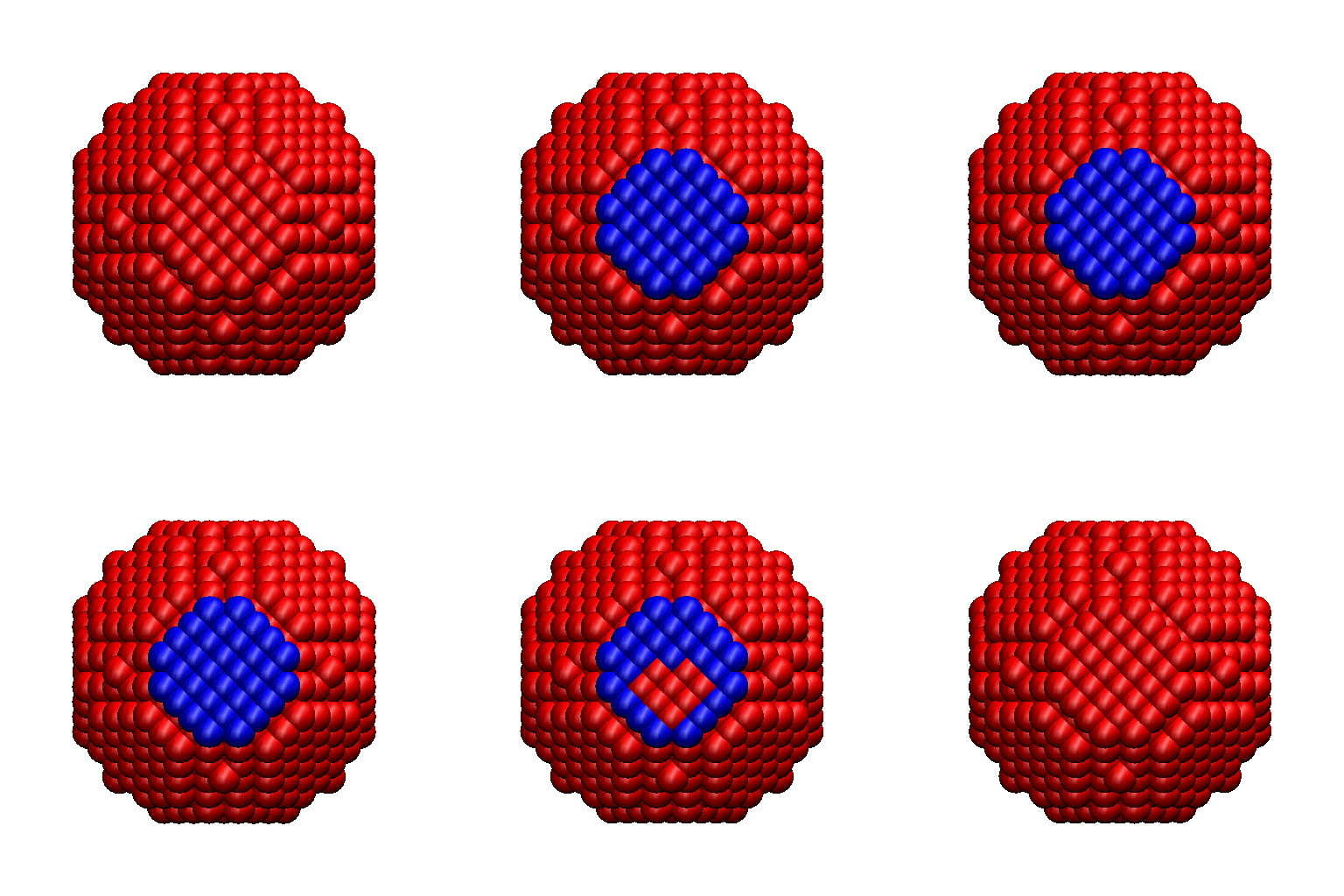 Illustration of crystal-faceted nanoparticle reaction to collision; the atoms turn blue at the point of contact. New research suggests these particle types are better at transferring energy. Source: Yoichi Takato.When tiny specks of matter collide, big things can happen.
Researchers at the University at Buffalo used supercomputers to model what happens when two nanoparticles smash into one another in a vacuum. The team focused on nanoparticles with diameters from 5 to 15 nanometers, and ran simulations for nanoparticles with three different surface geometries — largely circular with smooth exteriors, crystal-faceted and sharp-edged.
What they learned could inform the development of new technologies, such as helmets that do a better job of preventing concussions and other brain injuries, earphones that protect people from damaging noises or devices that convert “junk” energy from airport runway vibrations into usable power.
“Our research is useful because it builds the foundation for designing materials that either transmit or absorb energy in desired ways,” said the study’s first author, Yoichi Takato, Ph.D., a physicist at AGC Asahi Glass who completed much of the study as a doctoral candidate in physics at UB. “For example, you could potentially make an ultrathin material that is energy-absorbent. You could imagine that this would be practical for use in helmets and head gear that can help to prevent head and combat injuries.”
The nanoparticles behaved differently, depending on their shape. Crystal-faceted nanoparticles, for instance, transfer energy well when they crash into each other — making them an ideal component of energy-harvesting materials. They also adhere to scientific norms governing macroscopic linear systems.
By contrast, nanoparticles that are rounder, with amorphous surfaces, adhere to nonlinear force laws. During the collision, energy dissipates around the initial point of contact on each one, instead of propagating all the way through both. This could make them especially useful for shock mitigation.
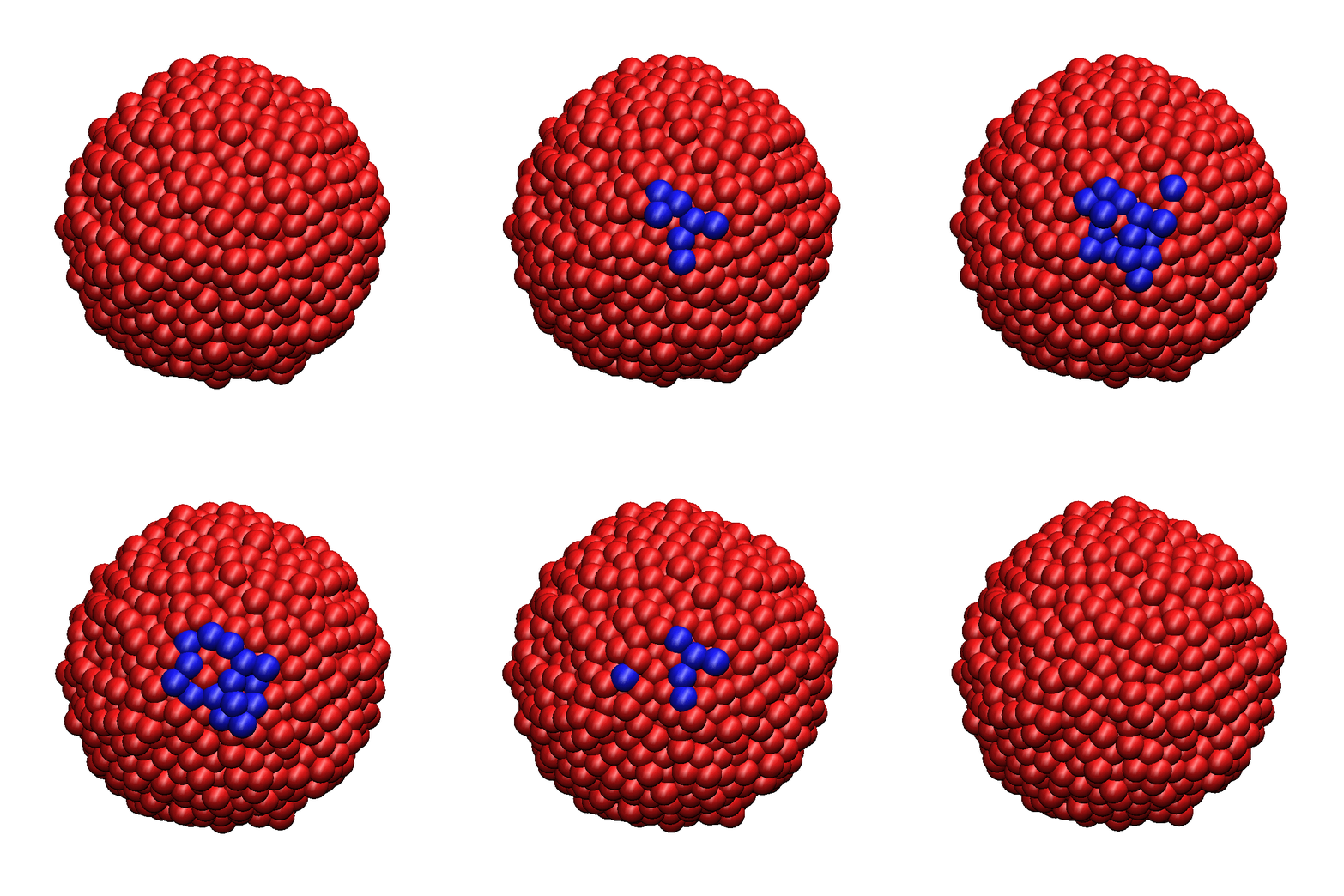 Illustration of largely spherical nanoparticle reaction to collision; the atoms turn blue at the point of contact. New research suggests these particle types are better at absorbing energy. Source: Yoichi Takato.As for nanoparticles with sharp edges, they are less predictable. According to the new study, their energy-transporting behavior varies depending on the sharpness of the edges.
“From a very broad perspective, the kind of work we’re doing has very exciting prospects,” said study co-author Surajit Sen, PhD, a UB professor of physics. “It gives engineers fundamental information about nanoparticles that they didn’t have before.”
This can help to guide designers, notes Takato.
“When you’re designing a material, what size do you want the nanoparticle to be? How will you lay out the particles within the material? How compact do you want it to be? Our study can inform these decisions,” Takato said.
The research is published in Proceedings of the Royal Society A.