
Understanding Nanomaterials' Risk
Tony Pallone | February 26, 2018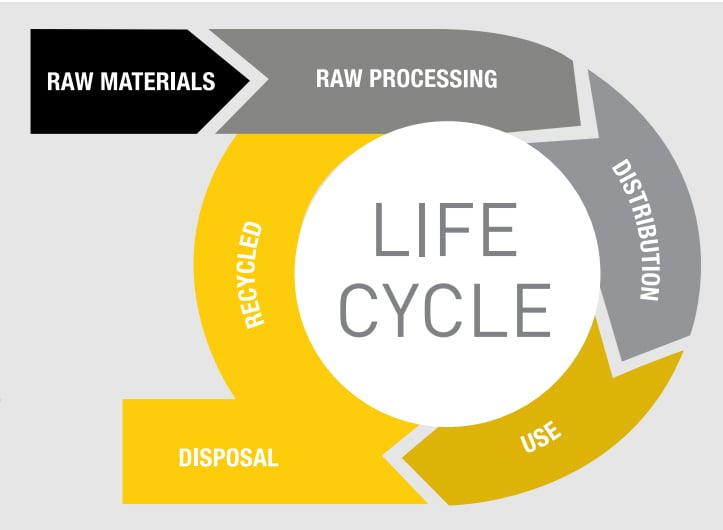 Materials lifecycle. Source: Sustainable Nanotechnologies Project (SUN).We report on all kinds of exciting nanotechnology developments on this website, but rarely have talked about the risks that could be associated with nanomaterials. Throughout the lifecycle of any material, from being fabricated to ultimately being discarded or recycled, there are environmental and health considerations to be made. Nanomaterials are certainly no exception.
Now, as part of the Sustainable Nanotechnologies Project (SUN), over 100 scientists from 25 research institutions and industries in 12 different European Countries, coordinated by scientific investigators from the Università Ca' Coscari Venezia in Venice, Italy, have completed one of the first attempts to understand the risks involved.
The SUN project's objectives were broken into three categories:
- Risk Assessment: Predicting nanomaterial exposure and effects on humans and ecosystems
- Decision Support: Integrating the know-how developed in the project to support industry, regulators and the insurance sector to make informed decisions about nanotechnologies
- Risk Management: Designing process changes and technological solutions to reduce hazard and exposure to nanomaterials
The scientists' research was focused on two of the best-known nanomaterials: nanoscale silver, used in textiles; and multi-walled carbon nanotubes, used in marine coatings and automotive parts. Also included were car pigments; silica anti-caking agents used by the food industry; nitrogen-doped titanium dioxide, used for air purification; copper-based coating and impregnation used for wood protection; and tungsten carbide-based coatings for paper mills.
A decision support system platform (login credentials required) is now available to support industries and institutions in evaluating potential risks for production teams, consumers and the environment. This tool aims to understand the extent to which the risks of nanomaterial deployment are sustainable — especially in relation to the traditional materials available — and to take appropriate preventative measures. It also allows a comparison of risk reduction costs to benefits generated, while measuring potential environmental impact.
A summary booklet of SUN results is available here.


very nice information provided on your website
aboutpetguide