
Video: Food for Thought — Eat Your GMOs (Commentary)
S. Himmelstein | February 26, 2018Many people rail against the production and use of genetically modified, or transgenic, organisms (GMOs). Many people also do not understand the science behind this valuable technology but instead focus on perceived risks and the likely evolution of Frankenstein-like crops cultivated to wreak havoc via our dinner selections.
What Is It?
Genetic modification involves the mutation, insertion or deletion of genes, often using material from a different species in a form of horizontal gene-transfer. This process can occur in nature, or artificially by physically inserting the extra DNA into the nucleus of the host, attaching the genes to a virus or other methods.
And it’s not an entirely new concept, as humans have domesticated plants and animals since around 12,000 BCE by means of selective breeding or artificial selection.
To What End?
The end goals are almost too numerous to list. Incorporating genes from one species into a completely unrelated species through genetic engineering can serve to optimize agricultural performance or facilitate production of valuable pharmaceutical substances. Crop plants, farm animals and soil bacteria are some of the more prominent examples of organisms that have been subject to genetic engineering.
Here are some specific benefits which should be lauded instead of feared:
- Crops with improved herbicide tolerance (soybeans) or insect resistance (corn)
- Increased growth rates in Coho salmon
- Possible hepatitis B vaccine derived from GMO tobacco
- Expression of valuable proteins in plants, such as spider silk protein and polymers used in surgery or tissue replacement
But Aren’t There Risks?
Obviously there are risks with any technology. But there are more specific, information-gleaning questions to 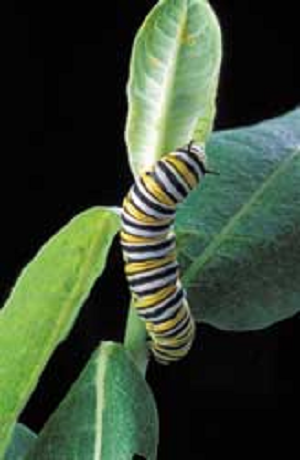 The toxicity of Bt corn to monarch caterpillars is negligible and exposure under field conditions is low. Source: USDAask for every genetically modified product: What is the cellular function of the transgene protein product? How does this cellular function affect the traits of the transgenic plant? Are there negative consequences — for humans, wildlife or ecological systems — of these plant traits? Are there negative downstream effects of the way that this GMO will be used in agriculture or medicine? Do all negatives outweigh all benefits of using this GMO?
One example of public debate over the use of a genetically modified plant involves a corn variant genetically altered to express one or more proteins from the bacterium Bacillus thuringiensis corn (Bt corn). This protein had long been known to be toxic to a number of pest insects, including the monarch caterpillar. In the laboratory, researchers fed monarch larvae with milkweed leaves that had been dusted with pollen from Bt corn raising fears of mass die-offs of the butterfly. However, the mortality they documented was attributed to higher amounts of Bt pollen on the milkweed leaves in the lab than there would be found in a field.
Subsequent peer-reviewed research concluded that monarch butterflies exposed to Bt corn in the environment are not subjected to any significant risk.
Let’s Eat
The U.S. National Academies of Sciences, Engineering and Medicine reported finding “no differences that would implicate a higher risk to human health” from GMO crops. No evidence has been found that GMOs in North America, where such items have been part of the diet since 1996, had contributed to a higher incidence of cancer, obesity, diabetes, kidney disease, autism, celiac disease or food allergies, in comparison with Western Europe, where GMOs are not as widely eaten, the organization said. The European Commission also concludes that GMOs are safe to eat.
GMOs benefit mankind when used for purposes such as increasing the availability and quality of food and medical care, and contributing to a cleaner environment. If used wisely, they could result in an improved economy without doing more harm than good, and they could also make the most of their potential to alleviate hunger and disease worldwide. But again, their full potential cannot be realized without due diligence and attention to the risks associated with each new GMO on a case-by-case basis.
I do not fear GMO salmon, corn or soybeans. Sounds like a good dinner to me.


What if all GMO's in row, fruit, nut and truck crops made those crops more resistant to poisons applied to wipe out or control indigenous environmental adversaries? And the adversaries gradually did their Darwinian thing to reduce the effectiveness of the poison to which the GMO was rendered resistant? And a new version of the GMO was produced to make the new version of our crop even more resistant to the more potent poison? At what point to we become more resistant to these poisons?
Meanwhile, as long as the GMO salmon are yummy, nutritious and as plentiful as ever, I will feast on them...until the crop poisons, PCB's, pharmaceuticals, hair dyes, motor oil, etc. bioaccumulate in the fish. What is the end game of GMO?
More profit, not necessarily more benefit.
Big industry wants to take common crops and patent them and control markets and prices.
They have been buying up small specialised seed merchants with crops specific to local conditions and closing them down.
It would be nice to think that the benefits were to the whole of humanity, but that is a naive dream.