
From Hospital Waste to Durable Concrete
Tony Pallone | October 27, 2017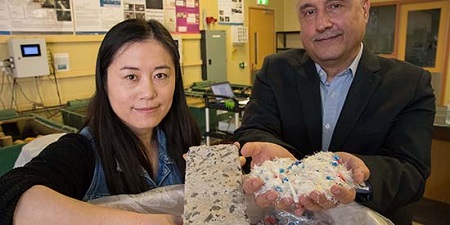 Shredded plastic waste added to concrete mix makes for greater durability. Source: Deakin University
In Australia, about 5,100 metric tons of plastic waste is generated annually from dialysis treatments. But an innovative recycling project led by Deakin University structural engineering lecturer Dr. Riyadh Al-Ameri is repurposing that waste to create more durable concrete.
Hemodialysis, the most common type of dialysis, involves making a circuit to pump blood from a patient's bloodstream through a machine and then back to the patient. “This removes toxins and excess water and is life-sustaining for patients with kidney failure," explains nephrologist Dr. Katherine Barraclough from the Royal Melbourne Hospital, who collaborated with Al-Ameri on the project. Waste is created because safety measures dictate that both the blood-carrying plastic tubes and the blood-cleaning dialyser be made from plastic designed for single use.
"Because the waste is potentially infectious, it must be either burnt or sterilised before being thrown away. This not only costs a lot of money, but also causes significant harm to the environment,” Barraclough continues.
Initial testing by Al-Ameri's team added the plastic waste in shredded form to concrete mix, resulting in a product that was both more durable and significantly more waterproof.
"Concrete can crack and damage the internal bond, which can then lead to water penetration and corrosion of the steel bars, critical for providing the strength and integrity of concrete structures,” said Al-Ameri. Steel bar corrosion is a major industry issue, and Al-Ameri believes the Deakin project could better protect structural concrete from corrosion while also contributing to sustainability.
Al-Ameri and his team hope to conduct more rigorous testing on the new concrete mix, which will be helped by funding from industry partner Fresenius Medical Care. "We will use our accelerated weather corrosion tanks in the concrete lab to simulate a marine environment," Al-Ameri said. "We're looking for innovations that will help concrete construction of off shore rigs for oil and gas, observation towers, concrete buildings in coastal areas that are exposed to humidity, and marine structures such as retaining walls that are in contact with water."
Related Eng360 story: Video: Portable System Disposes of Infectious Waste On-site

Wouldn't this facilitate human prion contamination of the environment?
Solar, it might. The bigger question is if the good doctor owns or is planning on buying stock in the concrete business.
Water treatment plants make a big profit processing human waste and the waste from that waste.