Developer Shelves Plans for Coal-Fired Power Plant
David Wagman | September 19, 2017Colorado-based Tri-State Generation and Transmission Association now says the chances are "remote" that it will build an 895 megawatt coal-fired power plant in southwest Kansas.
In a filing with the U.S. Securities and Exchange Commission, the company said it is writing off as a loss more than $93 million it has already spent on the project.
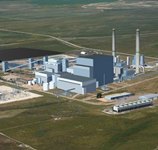 Artist's rendering of the proposed Holcomb Expansion. Credit: Sunflower"Although a final decision has not been made by our Board on whether to proceed with the construction of the Holcomb Expansion, we have assessed the probability of us entering into construction for the Holcomb Expansion as remote," the company said in its filing. "Based on this assessment, we have determined that the costs incurred for the Holcomb Expansion are impaired and not recoverable."
In March, the Kansas Supreme Court approved an air permit to build a single coal-fired unit at the site near Hays, Kansas. The Sierra Club had challenged the permit, which had been issued by the Kansas Department of Health and Environment.
In 2007, a previous state environmental official had denied an air permit for the plant, citing concerns over carbon emissions and climate change. The denial was one of the first in the U.S. to be based on climate change.
Even though the court decision granted developers the required permit, market changes and environmental rules have made it difficult to build new coal-fired generating assets.
In August, the Energy Department released a report that singled out natural gas as a primary challenge to base load generation from coal and nuclear power plants.
"The recent and unprecedented rise of natural gas as a top electricity generation resource, the increase in VRE (variable renewable energy) penetration, the flattening of electricity demand growth, and a host of policy issues—regulations, mandates and subsidies at the state and Federal levels—have negatively impacted traditional baseload generation, particularly coal and nuclear power plants," the report says.
The report says that while power plants retire for a variety of reasons, "the biggest contributor to coal and nuclear plant retirements has been the advantaged economics of natural gas-fired generation."
In 2016, natural gas was the largest source of electricity generation in the United States—overtaking coal for the first time since data collection began.
Tri-State and Sunflower Electric Power Corp. first proposed to expand an existing coal-fired plant in 2007. Later that year, Kansas Department of Health and Environment Secretary Rod Bremby denied a permit for the plant, citing carbon dioxide emissions and global warming as the major reasons.
By 2010, Tri-State and Sunflower had reduced the scope of their plan and applied for a revised permit. A new state environmental chief approved the permit. The Sierra Club challenged that permit in court. That lawsuit led to the Kansas Supreme Court's decision in March.