
Researchers Develop a Way to Convert Traffic Energy into Power
Siobhan Treacy | September 18, 2017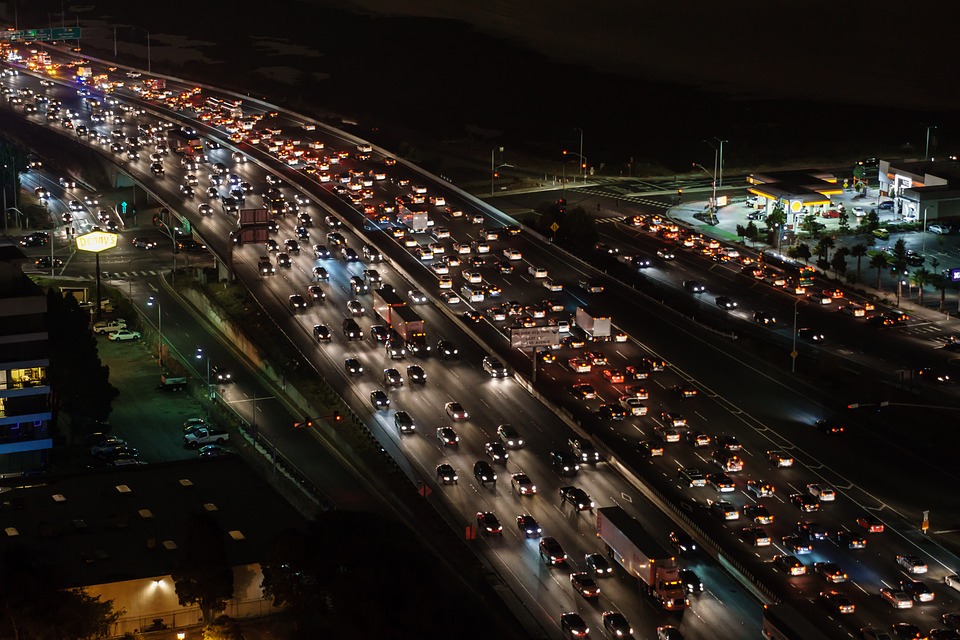 Source: Boca Watch
Environmental researchers are shifting their focus to using advanced materials for roads and pavements that could generate electricity from passing traffic.
Engineers at Lancaster University are working on smart materials like “piezoelectric” ceramics that can be embedded in road surfaces to harvest and convert car vibrations into electrical energy.
The project is led by Professor Mohamed Saafi who will design and optimize energy recovery of 1 to 2 Megawatts per kilometer under ‘normal’ traffic volumes of around 2,000 to 3,000 cars an hour.
This energy, when stored, is the amount needed to power between 2,000 and 4,000 street lamps. This would deliver significant cost savings for taxpayers along with environmental benefits.
Currently, it costs around 15 kilowatts per hour to power a street lamp. 2,000 to 4,000 lights can cost operators approximately $2,430-$4,850 per day. Researchers say the cost of installing and operating new road energy harvesting technology would be around 20 percent of this cost.
"This research is about helping to produce the next generation of smart road surfaces. We will be developing new materials to take advantage of the piezoelectric effect where passing vehicles cause stress on the road surface, producing voltage. The materials will need to withstand high strengths and provide a good balance between cost and the energy they produce. The system we develop will then convert this mechanical energy into electric energy to power things such as street lamps, traffic lights and electric car charging points. It could also be used to provide other smart street benefits, such as real-time traffic volume monitoring,” said Professor Saafi.
This technology is being developed and is undergoing field trials in the UK and other areas of the EU.

It is pretty difficult to believe that piezoelectric roadway harvesting could beat utility electic prices, especially coming in at only 20% of electricity costs with piezo installation figured in.
The article suggests 4000 streetlights at 15 kwhr each per day would cost less than $5000 / day.... so a little over 8 cents/ kWhr. So they are projecting lifetime costs of these piezo units to allow electricity production at less than 2 cents / kWhr.
Doesn't seem likely.
.
Even if it were more likely, wouldn't this just be presenting additional drag on automobiles, leading to higher fuel consumption?
Not to mention our inability to lay down a road surface that holds up to traffic use for more that a few years before it needs to be resurfaced. How long are these piezo generating surfaces actually going to last in the real world? Are they going to lose their effectiveness as more layers of road surface are laid down on top of them?
Theoretically, the road is already flexing and taking energy from the linear motion of a vehicle... adding ceramic bits to extract the energy (read: "redirecting, partially, from heat, i.e. mechanical friction, to electricity") may even reduce the amount the road flexes... of course it might not. But even if it didn't, the proof in the pudding is how much less energy is used with which combination. And I'm skeptical of anyone's ability to dead-reckon that conclusion.
In reply to #3
Any claim of ability to dead-reckon with absolute certainty the extent of loss in vehicle efficiency would definitely be beyond the pail.
However, we can TKO-reckon with high certainly there will be a transfer of energy from the vehicle in excess of what would occur without such a system in likely/practicable embodiments.
The first point to consider is that anything approaching affordable installation will not require full replacement of the road currently in place.
The next point can be illustrated considering a couple bathroom scales. If you weigh yourself on one scale alone, and next stack that scale on another scale and weigh yourself again, the displacement of the top scale is the same. There will be additional displacement in the bottom scale.
As the piezo system will be removing energy to power the street lights, at least that energy will be wholely unavailable for any rebound or road heating, both which work typically towards greater vehicle efficiency.
It isn't unreasonable to predict any installation remotely approaching affordability will result in additional rolling losses, essentially those losses inherent in the road without the added system, plus some additional losses for the energy removed to power the streetlights.
In the end, the streetlights are being powered by mutiple mobile ICEs in an indirect and inefficient fashion.