
Water Calculation Tool for the Textile Sector
S. Himmelstein | September 01, 2017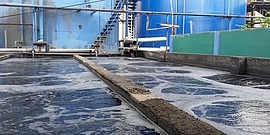 Source: UNIDO
Efficient use of water resources is crucial for manufacturing processes, including the textile sector. Reducing water consumption by establishing sustainable production processes can benefit these companies as well as the communities in which they operate.
DNV GL, an international accredited registrar and classification society headquartered near Oslo, Norway, and the United Nations Industrial Development Organization (UNIDO) have jointly developed a self-assessment tool to assist textile companies in evaluating the water footprint in manufacturing processes. This will help them make more informed decisions about how to manage water consumption in their supply chains.
“The textile processing industry is heavily dependent on water in virtually all steps of the production process, from desizing to bleaching and dyeing. It has one of the most extensive water footprints of all sectors,” says Smail Alhilali, Industrial Development Officer and Manager of the Global Resource Efficiency and Cleaner Production (RECP) programme at UNIDO. “That's why we have developed this tool, which is a measure for textile companies to obtain a better understanding of their resource efficiency and insight into where they can reduce consumption.”
The Global Network for Resource Efficient and Cleaner Production (RECPnet), supporting organizations in over 60 developing countries, will facilitate the use of the tool, which primarily targets small and medium-sized companies. It will guide companies on the use of the tool and interpretation of results.


Somehow, I had this silly impression that textile manufacturers recycled their water to the nth degree. How wrong am I?
Same here ... many years ago (40?) I had a neighbor who's company specialized in recycling water used in textile production, particularly water used in water-jet looms. His company, a Dow Chemical spinoff, got planted in Knoxville to be closer to potential clients.