
Super Steel Combines Ductility with Strength
S. Himmelstein | August 29, 2017 The research team uses a tensile machine to test the yield strength and elongation of steel. Source: University of Hong Kong
Many automotive, aerospace and other industrial applications require materials with high strength and ductility to prevent catastrophic failure of components during service. Attaining both properties is a challenge, since strategies for increasing material strength tend to decrease ductility.
A process for realizing both strength and ductility has been developed, based on cold rolling followed by low-temperature tempering. The resulting “super steel” is marked by metastable austenite grains embedded in a highly dislocated martensite matrix. The technique produces dislocation hardening but retains high ductility both through the glide of intensive mobile dislocations and by allowing control of martensitic transformation.
The material cost is just one-fifth of that of the steel used in current aerospace and defense applications. More importantly, the deformed and partitioned steel has a yield strength of 2.2 Gigapascal and uniform elongation of 16 percent, a measure of ductiity.
The new medium manganese steel contains 10 percent manganese, 0.47 percent carbon, 2 percent aluminum, 0.7 percent vanadium (mass percent) and the balance is iron.
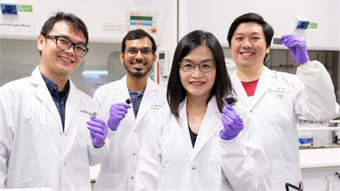
Researchers from the University of Hong Kong, University of Science and Technology Beijing (China), National Taiwan University and City University of Hong Kong participated in this development.


It has always been a compromise. But it's nice to know of the advances.