Urine Disinfection in a Microbial Fuel Cell Cascade System
S. Himmelstein | June 13, 2017Microbial fuel cell (MFC) cascade technology previously developed at University of the West of England (UWE Bristol) has been demonstrated to clean organic waste, including urine, so that it could be safely released into the environment. Sufficient electricity is generated in the process to charge a mobile phone or power lighting.
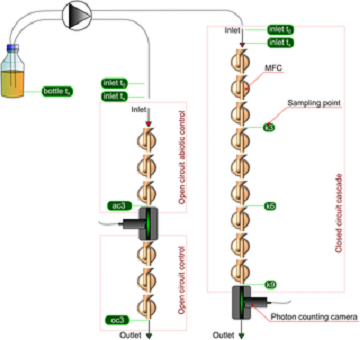 Schematic representation of the experimental setup. (Source: UWE Bristol)The researchers have now demonstrated that this technology can be applied to the destruction of Salmonella.
In a pathogen experiment, Salmonella enteritidis was added to urine flowing through the system. Data showed that pathogen numbers had dropped significantly, beyond minimum requirements used by the sanitation sector.
Other pathogens, including viruses, are now being tested and there are plans for experiments which will establish if the MFC system can eliminate pathogens entirely.
The system could be beneficial to the wastewater industry, particularly in developing areas, because MFC systems fitted in homes could result in wastewater being cleaner when it reaches the sewerage system.