
The Right Mesh for the Right Job
June 01, 2017Sponsored content
 Filters are used everywhere and are a part of our daily lives. There are many types of filters that have evolved right alongside of us to help keep us alive. Early woven filters removed particulate matter from river and marsh water to make clearer and more palatable drinking water. Early woven meshes wrapped around a face let us survive sandstorms and, when wet, can help us tolerate smoke.
But all filters aren’t that simple, and industrial as well as consumer devices often require much more demanding performance. In every case, there are many criteria when designing or specifying characteristics for a needed filter that has been optimized for a particular need.
All filtration is a process of particle separation. Filters are not limited to gases and liquids. Solid filters perform the same function at a macroscopic scale. It all depends on the tightness and tolerances of the aperture.
A consistent and high tolerance aperture will insure the needed pore size is met. This is critical to be able to only pass specific sized grains (and smaller). A second mesh can capture particles that are too small, effectively creating a high tolerance ‘one size only’ filter.
But, this is very dependent on the materials and alloys used as well as the preciseness of the weaving technology. Alloys like stainless steel, aluminum, Hastelloy, Inconel, and others can be used to stop any corrosive or reactive processes from taking place with the filter material itself. An inert environment will assure a longer and more reliable life of the filters.
While some applications like appliances and consumer products can have more range in performance and even more of a throwaway intent, high-rel space-based filters must perform for very long periods without maintenance persons or replacements. A wide range of needs in between encompasses commercial, industrial, civic, residential, agricultural, and so on.
Industry Needs
Every industry has its own requirements and specifications to which they must adhere. Several key industries are the drivers of new filter technology as they are pushing the cutting edge forward. These include pharmaceuticals, petrochemical, aerospace, appliance, acoustics, printing (screen), fuel cells, batteries, and food processing, to name a few.
In every case, the filter’s constituent materials are key in determining the effectiveness of the filter and its safety. For example, a 5-micron filter for food and a 5 micron filter for petrochemicals both block anything above 5 microns, but the petrochemical mesh needs to tolerate solvents (so no plastic mesh), while the food filter needs to leach no toxins.
As a result, suppliers with many material options that can perform precision weaving are key partners in defining the stringent requirements for a specific filter or mesh. Factors to keep in mind when designing a filter are, of course, the materials it’s made of; the loading, mechanical thermal, or chemical exposure; compression ratios; flow rates; install location; cleaning requirements; and any standards it must adhere to. Trap filters will hold particles until either replacement or cleaning. Back flushable filters can perform indefinitely in place without the need for service, but are more complex to implement.
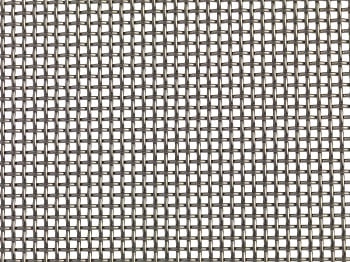 Figure 1: Square mesh is a commonly used filtration solution. (Source: Bopp USA)
The filter requirements can include mesh versus sintered style, wire or thread diameter, aperture count, mesh count, filter fineness, mesh geometry or laminate type, tensile yield point, workability, and binding methods employed. The last two, workability and binding methods, are key for staged filters and trap filters that only retain certain sized particles. Tensile strength is important, too, if flow rates and pressures get too high. You do not want a mesh to rupture.
That’s why precision with different types of weaves and sintering is important. A Poremet diffusion-bonded screen (Figure 2) uses five different mesh layers for a stable and back-washable filter at high loads. This would be the choice for a centrifuge, for example. An Absolta diffusion-bonded screen (Figure 3) on the other hand is a porous style for high flow rates, but is still usable for back washed designs. Both are available in 316L and C-22 down to 2 microns (316L) and 5 microns (C22). The less rigid Topmesh weave styles are ideal for clean-in-place types of applications like dust removal and spray dryers. Support elements can be used for higher pressure needs. Topmesh is either a two-layer (0.7mm thickness) or three-layer (2.0mm) with the filtration layer up top, as opposed to Absolta and Poremet, which both have a protection layer on the outside.
 Figure 2: A Poremet weave. (Source: Bopp USA)
 Figure 3: An Absolta weave. (Source: Bopp USA)
Another style called Poreflo uses two or three layers as an offset or twilled mesh. This is an air-permeable metallic membrane that is highly stable and minimally porous. This sintered laminate designed for fluidizing is very strong and offers high resistance to airflow and viscous fluids. The strengths and characteristics of the different weaves and architectures can be summarized in the table below.
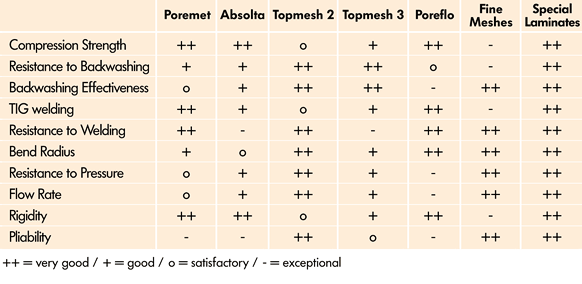 Table 1: Choose the weave topology that best fits your critical factors. (Source: Bopp USA)
Adding Value
Many markets use industry-wide standards and databases to create stores of pre-fitted parts. For example, you can go to virtually any auto parts store and get an oil filter for just about any vehicle. Many times, there are several options and manufacturers from which to choose with varying levels of performance.
But industrial and specialized machines are never replicated to such scales, so special filters are needed and used. Machine makers as well as end users need to depend on the value-added features and services a filter mesh manufacturer can offer that makes the difference.
Diffusion-bonded (sintered) mesh uses temperature and pressure to permanently bond intersecting threads or wires, and woven mesh involves a series of individual threads or wires actually woven together.
Sintered mesh adds stability and strength and can be layered with woven meshes to provide best-of-both-worlds performance. This means a supplier who has expertise with both sintered and woven materials is advantageous.
Also the ability to easily cut custom shapes and create custom forms is important. Machine design often constrains where we want to place elements, so many times very specific mechanical shapes and sizes are needed. This is especially true with discrete stage filter elements that must be removed and cleaned.
Precision welding is important when specialty rings and mount pieces must join to metallic wires or mesh. This is where filters can fail due to a weak or inadequate bond. Stamping and die cutting will also help assure repeatable precision with clean and de-burred extremities on mesh filters. In addition, other supplier capabilities like machining capabilities, slitting, custom roll widths, and annealing capabilities are important to have on hand for specialty designs or even improved designs of standard parts.
 Figure 4: The ability to shape filter elements and mesh pieces to precise shapes and the ability to complete die-cut cutouts are just two examples of the skill-sets needed when choosing a filter mesh supplier. (Source: Bopp USA)
In addition to the added value noted above, G. Bopp offers:
- Stamping
- Die-cutting
- Various welding capabilities (USA and Zurich locations)
- Pickling/passivation
- Calendaring
- Wire drawing capabilities down to 15 microns
- Engineering support
- ISO 9001 certification
A Capable Partner
G. Bopp and Company has been a world leader in the weaving and production of steel mesh for challenging and diverse applications. Initially founded in 1881 as an innovative weaving company, it has supplied quality and innovation to become a world-class leader in robust and reliable screens for filters.
Continuous improvements have kept G. Bopp as a top of the industry quality supplier with value-added services and capabilities.
 Figure 5: Oftentimes, unusual and out-of-the-ordinary filter shapes are needed to conform to the constraints designers may face. Capable partners make this path much more efficient. (Source: Bopp USA)Materials available are rated up to 600 degrees C and the many alloys available (including 304/316/430 stainless, aluminum, inconel, brass and bronze) have high tensile strengths and are chemically inert to most compounds. And, they have the expertise to help you understand the subtle but important differences on the topologies as well as the materials you need for your specific designs.
G. Bopp does its own manufacturing and has used continuous improvement techniques to remain an industry leader. Their own facilities use state-of-the-art tools and machines for welding, slitting, stamping, handling, and forming filter elements.
Conclusions
Many machines and products depend on the performance of filters at every stage. In some cases, it is to protect health and safety, and in other cases, it is to protect expensive and complex machinery. Nevertheless, if filters fail, there are consequences.
Partnering with an experienced supplier brings that expertise in house. This encompasses manufacture-ability, material science, architectures and topology tradeoffs, and more. For 130 years, G. Bopp has been that partner for those who know what they can do. Their experts are readily available to advise and guide you through the process to achieve the best cost and performance.
For more information, visit http://www.bopp.com/.

Can they be used to screen applicants?