Hydro Projects Could Boost Methylmercury Levels
John Simpson | November 30, 2016A study by Harvard University researchers has concluded that more than 90% of potential new Canadian hydroelectric projects are likely to increase concentrations of the neurotoxin methylmercury in food webs near indigenous communities.
The research relies on factors such as soil carbon and reservoir design to predict methylmercury increases for 22 hydroelectric reservoirs under consideration or construction in Canada. It identifies areas where mitigation efforts, such as removing the top layer of soil before flooding, would be most helpful.
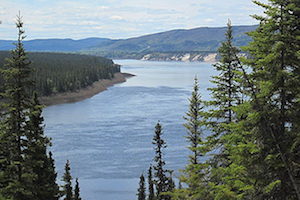 The Muskrat Falls hydro project will require the flooding of land bordering the Churchill River. Image credit: Prentiss Balcom/Harvard SEAS.Microbes convert naturally occurring mercury in soils into methylmercury when land is flooded, such as when dams are built for hydroelectric projects. The methylmercury moves into the water and animals, broadening its impact as it moves up the food chain. The toxin is especially dangerous for indigenous communities living near hydroelectric projects because they tend to have diets rich in local fish, birds and marine mammals.
To better understand how methylmercury impacts human populations, a team led by Elsie Sunderland, associate professor of environmental science and engineering, studied three Inuit communities downstream from the proposed Muskrat Falls hydroelectric facility, in Labrador. The project would require the flooding of land bordering the Churchill River, upstream from an estuarine fjord called Lake Melville.
The team collected extensive measurements of how different forms of mercury cycle through this ecosystem and formalized a mathematical model to forecast post-flooding methylmercury levels in the Churchill River and downstream estuary. They then used measurements of levels of methylmercury in the food web and unique chemical tracers to determine where each food item, such as salmon or trout, obtained its methylmercury in order to project levels of the toxin in different species of fish and wildlife. Finally, they studied the diets and baseline methylmercury exposures of more than 1,000 Inuit who live on Lake Melville’s shore to understand how changes in their food would affect individual exposures.
The team found that while there were large differences in exposure to methylmercury across the population, on average exposure to the toxin would double after the upstream area is flooded. While some people would still be below the (U.S.) Environmental Protection Agency’s reference dose for methylmercury, any increase in exposure would be associated with increased risks of cardiovascular disease and neurodevelopmental delays in children.
“We see substantial fractions of this population whose pre-flooding methylmercury exposure is at or below regulatory thresholds and post-flooding are pushed way above them without mitigation measures,” says Ryan Calder, a graduate student in Sunderland's lab.
After applying the prospective framework to the 21 other proposed hydroelectric sites in Canada—plugging in publicly available site-specific data—they found that 11 sites would have methylmercury concentrations equal to or greater than those in Muskrat Falls.