Bacteria Could Make Nuclear Waste Repositories Safer
John Simpson | October 22, 2016Naturally occurring bacteria could consume pent-up hydrogen gas in nuclear waste repositories to prevent radioactive leaks, say researchers at the Swiss Federal Institute of Technology (EPFL).
In a recent study, a research team led by EPFL discovered a microbial community made up of seven species of bacteria that live hundreds of meters underground in the very rock layers that have been chosen to host Swiss nuclear waste. Far from posing a threat, they found that, by tweaking the design of nuclear waste repositories, the bacteria could be used to increase their safety by consuming hydrogen that accumulates as the steel canisters bearing the waste corrode. If left unchecked, the gas pressure buildup could affect the integrity of the host rock.
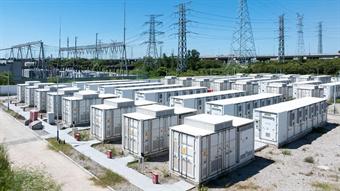
 Bacteria could be used to increase safety by consuming hydrogen that accumulates as the steel canisters bearing the waste corrode. Image credit: DOE. “In water samples from 300 meters underground at the Mont Terri Rock Laboratory, we unearthed a community bacteria forming a closed food chain," says Rizlan Bernier-Latmani, associate professor in the School of Architecture, Civil and Environmental Engineering and senior author of the study. "Under pristine conditions, the species at the bottom of this bacterial food chain get their energy from hydrogen and sulfate from the host rock, powering the remaining species.”
Five years ago, Bernier-Latmani and her researchers investigated this phenomenon in the field, for two years subjecting the underground bacteria to increased hydrogen levels. During that time, they monitored the composition of the bacterial population and how they changed individually—both in terms of their potential to support biochemical pathways and the proteins they actually produce.
Once the bacteria had consumed all the available oxygen and iron, the team observed a shift in their population numbers and their metabolism. Both were driven by the increased availability of hydrogen gas.
“Two of the bacterial species that are able to use hydrogen to drive their metabolisms flourished, while the other species piggybacked on their growth,” says Bernier-Latmani. It was good news, as the proliferation of the bacterial community helped keep the buildup of hydrogen gas at bay.
So how can these findings be used to make nuclear waste repositories safer? Bernier-Latmani proposes adding a fourth, biological, engineered barrier—a layer of porous material between the bentonite that surrounds the steel canisters and the host rock. This porous layer could provide an ideal niche for bacteria to feed off sulfate from the host rock and hydrogen from the corroding canisters.
However, one issue troubles Bernier-Latmani: genomic studies of the bacterial community suggest that the microorganisms could possess the capacity to transform the hydrogen gas into methane, which would be a less-favorable outcome.
“We have been trying to provoke methanogenesis at Mont Terri. After half a year, we are still waiting to observe it," she says.