BP-backed Research Aims to Detect Pipeline Damage Before Failure
John Simpson | September 07, 2016Researchers from the Beckman Institute for Advanced Science and Technology at the University of Illinois have developed a way to identify microscopic damage in polymers and composite materials before total failure occurs.
"Autonomous indication of small cracks has potential to make structures safer and more reliable by giving time to intervene and repair or replace the damaged region prior to catastrophic failure,” says Nancy Sottos, professor of materials science and engineering.
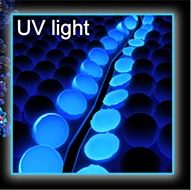 The method uses aggregation-induced emission, which is visible under ultraviolet light. Image credit: Beckman Institute.The researchers sequestered fluids containing turn-on fluorescence indicators in microcapsules that are colorless and non-fluorescent when intact. They can then be embedded into materials and, when damage occurs, release their payload and become fluorescent, indicating that repair is needed.
Previous work led by postdoctoral research associate Wenle Li had investigated another type of indicator within microcapsules that underwent a chemical reaction upon release to produce a color change. However, the nature of the chemical reaction limited the system to a narrow range of materials.
The new method uses a type of fluorescence called aggregation-induced emission, which becomes brighter as the indicator solidifies from solution and is visible under ultraviolet light. The mechanism of indication, which relies on a physical change of state instead of a chemical reaction, enables performance in a variety of materials and for visualizing different types of damage, according to the researchers.
The research is funded by BP, which is interested in coating oil and gas pipelines with a polymer that will be able to indicate damage. The goal is to target damage at its earliest stage to prevent further deterioration, improve safety and reliability, and reduce life-cycle costs associated with regular maintenance and inspection.
The next steps for this research are to combine damage indication with self-healing materials.