Boost Plant Efficiency with Regular Compressed Air Maintenance
Winn Hardin | June 07, 2016Compressed air is sometimes known as the fourth utility, and an expensive one at that. It takes approximately 8 hp of electricity to generate 1 hp of compressed air in manufacturing and other industrial facilities. Over a 10-year lifecycle, at least 75% of the cost of compressed air supply comes from power consumption.
Plant engineers have many good reasons to make sure their compressed air systems are operating as efficiently as possible. “Discovering and eliminating areas of waste are key to decreasing the cost of compressed air,” says Chad Larrabee with Ingersoll Rand’s Compression Technologies and Services business unit.
 Chad Larrabee with Ingersoll Rand’s Compression Technologies and Services. Even though the U.S. Department of Energy estimates that energy savings from system improvements can range from 20% to 50% of electricity consumption, “we often find plants with no KPIs around compressed air,” Larrabee says.
A combination of assessments, regular monitoring and preventive maintenance can help manufacturers improve performance and reduce energy consumption while delivering consistent, reliable air supply to their production processes.
Conducting an Audit
“The key to a successful compressed air energy management program is beginning with a baseline of how the system is currently running,” says Brian Blum of Atlas Copco Compressors LLC.
 Brian Blum of Atlas Copco Compressors LLC. Often performed by air compressor OEMs and independent specialists, this audit or assessment of compressed air systems helps manufacturers understand the interaction between supply and demand. The assessment collects and analyzes KPIs such as pressure, power, airflow, leakage, temperature and dew point. It also seeks out inappropriate uses of air that could be more efficiently served with another form of energy.
(Subscribe to the free Plant & Facilities Engineering newsletter from IEEE GlobalSpec.)
The process should first include a review of the business objectives and an understanding of the pain points being experienced to define the problem, Larrabee says.
Kelly Kissock, director of the University of Dayton Industrial Assessment Center, recommends starting the audit at the end use. “By paying attention to what pressure is actually needed everywhere compressed air is used, you can reduce the overall operating pressure of the compressor,” he says.
 Kelly Kissock, director of the University of Dayton Industrial Assessment Center The auditor then evaluates the distribution system, looking for ways to reduce unnecessary pressure drops or the amount of air leakage from the system. Next is a review of the compressed air plant itself. According to Kissock, this step entails lowering the set point pressures of the compressors, ensuring adequate compressed air storage, and using the most energy-efficient type of compressor output control, multi-sequencer control and compressed air drying.
The auditor’s final report to plant management typically includes a detailed overview of a plant’s compressed air usage presented in graphs, recommendations on system improvements and savings achieved by taking action.
Certification and Assurance
Who performs the assessment is as important as the assessment itself. The Compressed Air Challenge (CAC), a national collaboration of industrial users, manufacturers, distributors, facility operators and utilities, offers a set of guidelines to select an independent compressed air system specialist. Service providers should demonstrate that they assess the system as a whole rather than as individual components.
According to the Compressed Air Sourcebook from the DOE and CAC, “providers who are familiar with using a systems approach are much more likely to address situations, both inside and outside the compressor room, that are having an effect on the reliability of your compressed air supply.”
The compressed air user should ask potential auditors questions such as:
· Can you work on all types of compressors in my facility?
· How much experience do you have? And what kind of training?
· Could I see a sample of similar work you’ve done for other customers, as well as references from them?
· Do other personnel review your findings?
· Do you have experience with treatment or ancillary equipment? How about system controls?
· How do you handle an emergency service response or purchase shipments?
· Do you offer follow-up services once the assessment is completed?
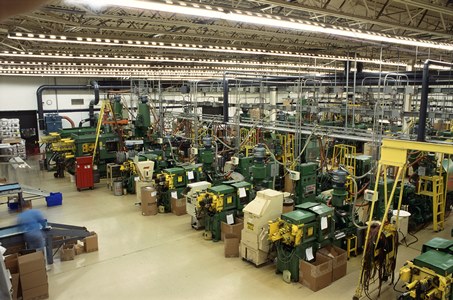 At least 75% of the cost of compressed air supply comes from power consumption. Image source: CAGI. Industry associations are streamlining the training process for compressed air auditors. CAC offers training in fundamentals of compressed air systems and advanced management of compressed air systems. Meanwhile, the Compressed Air and Gas Institute (CAGI) is looking to develop a certification for compressed air system service providers per ISO 11011. This standard establishes requirements for conducting and reporting the results of a system-wide compressed air assessment.
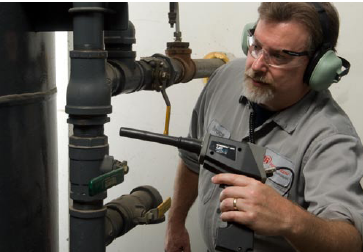 A compressed air audit looks for leaks and drops in pressure. Image source: Ingersoll Rand. In addition, the Energy Department provides no-cost energy assessments, which include compressed air assessments, to mid-sized manufacturers.
Many tools are available to augment or complement compressed air system audits. The DOE offers AIRMaster+, a free online software program that simulates a facility’s compressed air system and allows users to quantify electrical operating and lifecycle costs, as well as evaluate energy savings. Organizations that perform audits often will have their own software.
(Search for products and suppliers related to compressed air by using the Engineering360 resource directory.)
Another tool is an ultrasonic acoustic detector to find leaks, since about 80% of them are inaudible. Leaks waste 20-30% of a compressor’s output. A single ¼-in. leak could cost of facility more than $8,000 a year, according to CAGI. Other adverse effects of leaks include a shortened lifecycle for equipment, a drop in system pressure leading to inefficient air tool use and a bump in unscheduled downtime due to increased maintenance.
Turning Data into Action
After the compressed air system assessment is complete, the real work begins. Getting customers to act on the analysis remains a challenge.
“It is not uncommon for me to go into plants and see that compressed air auditors have tagged a lot of leaks, and years later the tags are still there,” says Kissock, who has performed compressed air assessments on more than 500 plants.
According to Kissock, the DOE Industrial Assessment Centers routinely identify savings opportunities that reduce plant energy use by about 12% and at a rate of return of 50%. However, Kissock says that only about half of these measures get implemented in the first year.
Several follow-up actions ensure that the compressed air system stays in top condition and generates even more operational savings. For example, plant engineers can move from reactive to predictive maintenance by using portable or fixed sensors such as flow meters, which monitor air consumption to identify leakage areas. Leak repairs range from tightening a connection to replacing damaged components such as fittings, couplings, hoses, joints and pipe sections. Properly installing components with the appropriate thread sealant can prevent future air leaks.
Other common corrective actions to optimize a compressed air system include central controllers, energy recovery systems, variable speed drive (VSD) technology and added storage, says Atlas Copco’s Blum.
Ultimately, making a compressed air system as efficient as possible requires a systems approach. That begins with establishing a baseline of conditions and measuring KPIs through an audit, implementing the findings from that assessment, continuously monitoring the system and properly maintaining it for peak performance.
Compressed air may be the most expensive form of energy in a plant, but a properly managed compressed air system improves uptime, production throughput and product quality while shrinking electrical bills by up to 50%. In a manufacturing culture that pushes for leaner operation, these are all worthy goals.
For More Information
Compressed Air and Gas Institute
U.S. Department of Energy’s Advanced Manufacturing Office