Complex Color 3D Models Simplified by Disney Team
Riia O'Donnell | May 18, 2016A team from ETH Zurich and Disney Zurich has developed a means to replicate almost any pattern or color combination with 3D printing.
The technique, called Computational Thermoforming, allows the production of replicas of digital 3D models, growing the range of digital fabrication methods, and possibly lowering the cost of 3D color printing. The method combines traditional thermoforming techniques with a computer software that, they believe, will allow skilled amateurs to create single pieces or small batches with intricately complex structure, patterning, and coloration quickly and inexpensively.
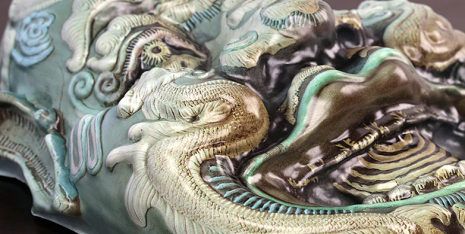 Close-up image shows exact match for the original. Image Credit: Christian Schüller, ETH ZurichAn accurate simulation of the thermoforming process creates a colored image of the surface of a digital 3D mode. The image is then printed on a plastic sheet. This in turn is thermoformed into the final shape. The software computes the color and patterning in the deformed sheet accurately, so that the end product resembles the original. Without the software, the amount of time to produce the calculations would be cost-prohibitive, the developers say.
While thermoforming is widely used for large-batch production, it can be too expensive to create short runs without special equipment and complex calibration. Computational thermoforming allows the option for small runs and prototypes, even single replicas, without highly specialized equipment or expertise.
A basic 3D printer creates a negative mold of the model in PLA in a single color. This creates a basic gypsum mold with which the form will be created. Next, the software computes the correct texture for the 3D model which is printed with a standard laser printer on special transfer paper. Pressure and heat transfer the image to a plastic sheet. The sheet goes into the mold and is clamped into a standard thermoforming machine, where vacuum creates the replica.
Tests showed that the computational technique replicated even the most complex detail. The technique could be used by hobbyists and architectural modelers to quickly and inexpensively create 3D models based on plans and visualizations.