Sonic Net Could Repel Birds from Airfields
Engineering360 News Desk | May 13, 2016Introducing a noise net around airfields that emits sound levels equivalent to those of a conversation in a busy restaurant could prevent collisions between birds and aircraft, saving passenger lives and billions of dollars in damage, new research suggests.
A study led by John Swaddle, professor of biology at the College of William and Mary and a visiting research associate at the University of Exeter, found that broadcasting acoustic noise in a controlled area around an airfield, where the majority of bird-aircraft collisions take place, could reduce the number of birds in the vicinity by 80%.
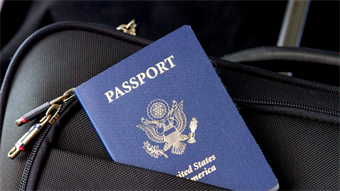
 Bird strikes were responsible for 255 passenger deaths between 1988 and 2013. Image credit: Pixabay. Bird strikes, which were responsible for 255 deaths between 1988 and 2013, cost the global aviation industry billions of dollars annually—and measures taken to date to solve the problem have largely been ineffective. Collisions also pose a threat to resident and migratory birds, as they often find the habitat around airports, such as wetlands and open fields, attractive.
Commonly used techniques to deter birds from congregating at airports include shooting, live capture and relocation, poisoning and the use of scare technologies. By contrast, Professor Swaddle and his team believe they have found a benign and relatively cost-effective alternative solution by emitting 24-hour noise in the area to interrupt bird communication.
The researchers set up speakers and amplifiers in three areas of an airfield in Virginia and observed bird abundance over eight weeks—the first four weeks without noise and the second four weeks with the noise turned on. Results showed a large decrease in the number of birds in and around the "sonic net," particularly among species that are at high risk of collision with airplanes, such as starlings.
“We have conducted prior research in an aviary, but this is the first study done out in the field to show the efficacy of the sonic net," says Swaddle. "We are using a different kind of deterrent—trying to stop birds from hearing one another by playing a noise that is at the same pitch as the alarm calls or predator noises they are listening out for.”
There was no sign of the birds becoming habituated to the noise, he adds.
According to Swaddle, the findings have implications not only for airport safety, but also agriculture and alternative energy sources such as solar farms, where birds living and feeding in the area can cause disruption, as well as wind turbines, where birds are at risk of collision with blades.