Natural and Man-Made Structures Are Best Flood Defense: Study
Engineering360 News Desk | April 29, 2016A study carried out by the Nature Conservancy and engineering firm CH2M in the wake of Hurricane Sandy has concluded that incorporating nature-based defenses into traditional infrastructure solutions provides the most effective protection against climate-related flooding.
Hurricane Sandy’s storm surge caused more than $19 billion in damages in New York City. In the city’s Special Initiative for Rebuilding and Resiliency, planners requested a case study for one of the lowest-lying and most vulnerable areas of Queens to evaluate the role of nature and nature-based infrastructure in protecting communities from some of the impacts of climate change.
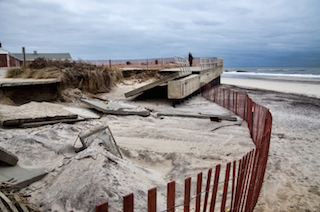 Hurricane Sandy’s storm surge caused more than $19 billion in damages in New York City. Image credit: CH2M.The Howard Beach Flood Risk Reduction Study and the resulting Urban Coastal Resilience Report found that a building-by-building elevation approach is not the most cost-effective way to tackle flooding challenges. Among a variety of alternatives examined, a neighborhood-wide hybrid approach combining both nature-based features and human-made solutions proved most effective in protecting coastal areas from storm flooding.
The Nature Conservancy and CH2M—which developed engineering models with detailed coastal and flooding scenarios to conduct the study—included a cost-benefit analysis to quantify economic returns resulting from risk reduction, ecosystem improvements and enhanced property values. The most economically beneficial alternative—incorporating sea walls, flood gates and natural infrastructure such as wetlands, marshes, mussel beds, dunes and native vegetation to reduce the ingress of flood waters and minimize erosion—would save $225 million in damages from a 1-in-100-year storm event, while generating significant ecosystem benefits, the report concludes.