When should you replace your pH sensor?
Neha Shinde for Mettler Toledo | September 02, 2026 Following proper maintenance practices ensures that pH sensors remain effective and provide accurate results for as long as possible. Source: Mettler Toledo
In a pH measurement system, the pH electrode stands as the essential component responsible for accurately detecting and sensing changes in pH levels. It translates the chemical information — specifically the activity of hydrogen ions (H+) within the sample — into an electrical potential, which the pH meter then interprets as a precise pH value. While the measurement system may be robust, the pH sensor itself needs special care. It requires careful maintenance and timely replacement to ensure continued accuracy.
The decision to replace a pH sensor depends largely on its usage, the quality of maintenance it receives, and, importantly, its age. As the sensor approaches the end of its operational lifespan, it loses reliability and precision. Replacing the sensor at the right time is critical to maintaining measurement accuracy and avoiding errors. Understanding the indicators of sensor wear and knowing when to act can save time, money and frustration in any application relying on precise pH measurement.
This article explores the key signs, timelines and best practices around pH sensor replacement.
Why pH sensor replacement matters and the impact of delays
The need for timely pH sensor replacement arises because the sensor’s ability to accurately measure pH naturally deteriorates over time. If a worn-out sensor is not replaced promptly, it can produce inaccurate data, jeopardizing process control, product quality and safety. In regulated industries, this can lead to non-compliance issues, costly audits or even product recalls. Therefore, timely replacement is essential to maintain measurement accuracy and operational integrity.
Typical lifespan of a pH sensor
Most general-purpose pH sensors last between 1 to 2 years under normal laboratory or industrial conditions. In more demanding environments, this lifespan can decrease to several months.
Factors affecting pH sensor lifespan
Physical damage: The fragile ion-selective glass membrane can break easily from mechanical shocks during calibration or installation, requiring replacement.
Usage frequency and conditions: Sensors used continuously in harsh chemical environments, extreme temperatures or samples containing high solids or oils tend to degrade faster and accelerate clogging of the reference junction.
Maintenance: Regular cleaning and calibration extend sensor life, while neglect can lead to contaminant buildup and inaccurate readings.
Sensor type: Different sensor designs and qualities have varying durability.
Proper care: Correct storage and handling prevent drying out or damage.
Signs it's time to replace your pH sensor
1. Inconsistent or erratic readings: If you observe frequent fluctuations (unstable readings) or measurements that do not align with known calibration standards, this suggests sensor degradation. Such symptoms often point to problems like internal electrolyte depletion or breakage of the reference system. The issue persists even after proper sensor reconditioning and electrolyte refilling. This is one of the clearest indicators that your pH sensor needs to be replaced.
2. Slow response time: If your pH sensor takes significantly longer than usual to stabilize readings or fails to stabilize at all — it may be compromised. Ideally, response times should be 30 to 60 seconds under typical laboratory conditions, although this can vary depending on the sample matrix and sensor type. When response times extend to several minutes, it indicates a serious issue. While cleaning and maintenance might provide temporary relief, the most effective long-term solution is sensor replacement.
3. Physical damage or fouling: Always inspect the electrode for cracks, deposits or buildup, as these can impair sensor function.
In case of visible cracks and fractures, even a small one can cause electrical interference and affect the accuracy of your results.
Electrolyte precipitation is normal, but if the junction contamination persists and thorough cleaning does not restore proper performance, it is necessary to replace the sensor to ensure reliable measurements.
4. Calibration failure and drift: Difficulty achieving or maintaining calibration is a clear indicator. Persistent calibration errors, despite following correct procedures and using fresh calibration solutions, suggest issues like electrode aging, contamination or internal damage. Continuous drift in measurements despite recalibration suggests the sensor is wearing out.
5. Aging: If your sensor has been in use beyond its recommended lifespan or shows signs of gradual performance decline despite proper maintenance, it’s time to replace it.
Note: Always take down the date of manufacture somewhere to keep a record. For Mettler Toledo electrodes, it is easy; the serial number written on the sensor shows the age — the first digit is the year, and the next two digits indicate the production week.
When accuracy cannot be restored through maintenance, it strongly indicates that the sensor has reached the end of its usable life and should be replaced to ensure reliable measurements. Timely and proactive replacement is always more cost-effective in the long run.
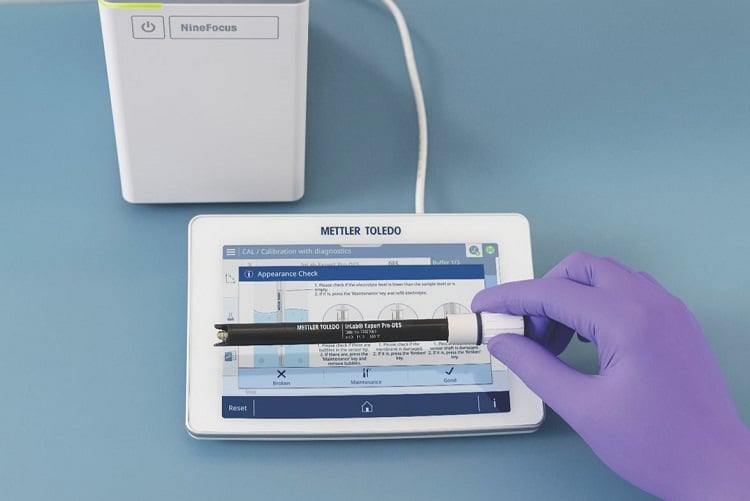 pH sensor diagnostics: InLab Expert Pro-DES with NineFocus Multiparameter Meter. Source: Mettler Toledo
Sensor diagnostics
Your sensor will often warn you through the above five key signs that it may need attention or replacement. It's important not to ignore them. To help you remember what to check, follow the "5-Finger Rule" and always inspect:
- The electrolyte level and condition (checking for depletion or contamination)
- The reference junction (checking for clogging or damage)
- The pH membrane condition (looking for cracks or fouling)
- The mV signals (monitoring for unstable or drifting output)
- The age of the electrode (based on the manufacture date or usage hours)
By routinely checking these five areas, you can maintain sensor accuracy and prolong its lifespan. To learn more about how to recognize the signs of sensor degradation, read the METTLER TOLEDO theory guide.
Note: Reading fluctuations, drift, errors and slow response times are not always definitive indicators of sensor failure. These issues can also stem from other factors affecting the measurement system. It is essential to thoroughly check the entire setup before concluding that the sensor itself is faulty. Common causes to investigate include damaged or loose cables and connectors, unstable power supply and temperature fluctuations. By considering these factors, you can accurately diagnose the problem and avoid unnecessary sensor replacement.
Diagnostics and troubleshooting can be challenging, especially with a busy schedule and complex processes. Often, important checks are overlooked, leading to continued pH measurements without proper validation. This negligence can result in significant issues, such as the rejection of entire product batches due to non-compliance with standards. To prevent such problems, it is crucial to implement regular and thorough diagnostic procedures as part of the workflow.
To make life easier and for peace of mind in the lab and production, METTLER TOLEDO offers the NineFocus pH Meter with InLab DES Digital Sensors. It features sensor diagnostics that monitor sensor condition in real-time, provide step-by-step troubleshooting guidance directly on the meter, facilitate preventive maintenance and help prevent premature sensor replacement — ensuring fast and reliable problem-solving.
Conclusion
Replacing your pH sensor should be based on observed performance indicators rather than a fixed schedule alone. Monitoring sensor readings for signs of instability, performing regular maintenance and understanding the operating environment will help determine the optimal replacement time. By doing so, you ensure precision, reliability and efficiency in your pH measurements.
To contact the author of this article, email pHmatters@mt.com.