
Geothermal energy is gaining momentum
Heather McLean, for IEC e-tech | July 06, 2026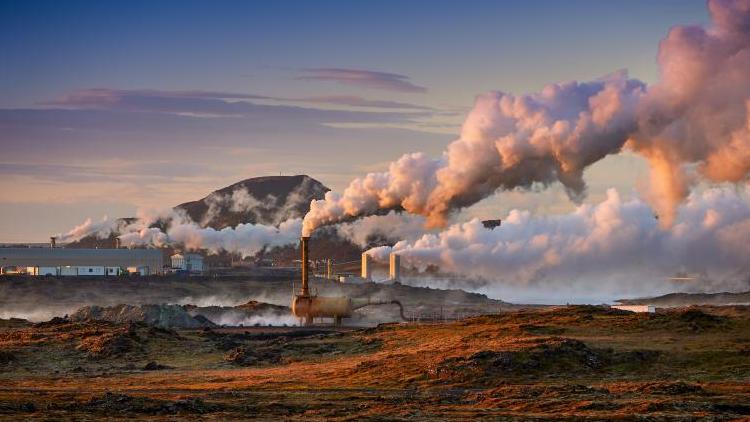
Editor's note: This article originally ran on e-tech and appears here courtesy of the IEC.
Geothermal energy, or energy stored below the Earth’s surface in the form of heat, is breaking through the constraints which, until recently, held it back. It began this year, at what the International Energy Agency (IEA) calls a "critical juncture," with installation costs falling, major power purchase agreements (PPAs) being signed and large-scale next generation geothermal projects coming online.
An example of this is Fervo Energy, which is bringing its first 100 megawatt (MW) commercial-scale project online in the U.S. state of Utah, in 2026, with a pathway to producing 500 MW by 2028 and up to 2 gigawatts (GW) in the longer term. According to this report, more than $1.5 billion in capital has been invested in next generation geothermal companies since 2021, and recent developments highlight accelerating momentum.
- Vulcan Energy has secured a $2.2 billion financing package to launch its flagship Lionheart geothermal-lithium project, one of Europe’s largest clean energy and critical minerals investments.
- In March 2026, Ormat closed an upsized $1 billion convertible debt offering, highlighting strong investor confidence and providing capital to expand its geothermal and energy storage portfolio.
- Controlled Thermal Resources (CTR), a geothermal and lithium developer in the U.S., has announced plans to go public in 2026 via a $4.7 billion merger with Plum Acquisition Corp.
Said Dani Merino-Garcia, VP of research at Project InnerSpace, an independent research organization focused on accelerating geothermal energy: “Taken together, these developments show how financial markets are increasingly recognizing geothermal energy as a bankable, utility-scale infrastructure asset.”
Several countries around the world have placed bets on geothermal energy, ranging from the U.S., which has the largest installed capacity, to Indonesia. Kenya is a case in point. According to the Global Electricity website, “the country leads Africa in geothermal development with 891 MW installed, primarily at the Olkaria complex in the Great Rift Valley. Geothermal provides approximately 45% of Kenya’s electricity, making it the country’s primary baseload power source. Kenya aims to reach 5,530 MW by 2030, which would represent over half of total national capacity.”
The numerous pros of geothermal energy
Geothermal energy offers exceptional potential globally because it provides continuous, 24/7 power that is not dependent on weather conditions, “achieving capacity factors exceeding 90%,” Merino-Garcia added.
“This makes it one of the very few clean energy sources capable of delivering reliable, firm baseload power at scale, with a land footprint much lower than hydropower,” he commented.
“Crucially, geothermal also strengthens energy security. It does not rely on imported fuels and instead harnesses domestic subsurface resources, giving countries greater control over their energy supply while reducing exposure to price volatility and geopolitical risk.”
The war between the U.S. and Iran has generated even greater momentum for geothermal energy.
Merino-Garcia said: “The current crisis is illustrating, in real time, the core vulnerability of an energy system built around imported hydrocarbons that must transit narrow maritime chokepoints. Every country watching tankers back up near the Strait of Hormuz is being given a stark demonstration of what energy dependence actually costs."
He continued: “Geothermal offers a fundamentally different model. Its fuel is effectively free; its cost is set by upfront capital investment, not by volatile global commodity markets that can be disrupted by conflict thousands of miles away. While geothermal does carry higher initial capital costs than gas-fired generation, that comparison shifts quickly when oil prices spike to $126 per barrel with credible warnings of $200, effectively resetting the baseline for energy costs in a matter of weeks."
Crucially, geothermal is not limited to electricity. It can displace hydrocarbons across all three major end uses: power generation; industrial heat; and building heating and cooling. The key point is that the technology to do this now exists and the current crisis is accelerating the case for deploying it at scale.
Location is becoming less of a problem
Project InnerSpace recently partnered with the IEA to publish the Future of Geothermal Energy report, which used data from its GeoMap tool as the foundation for the analysis, creating a model which estimates both electricity and heat potential across the globe. The IEA found that the full technical potential of next generation geothermal systems to generate electricity is second only to solar photovoltaic (PV) among renewable technologies and sufficient to meet global electricity demand 140 times over. The IEA report also found that geothermal could economically provide heat for about 35% of global industrial demands below 200° C.
However, there is a gap between the scale of the opportunity and the limited current deployment. Next-gen geothermal, which use technologies taken from the oil and gas industries, such as directional drilling and hydraulic fracturing, can create artificial reservoirs in hot dry rock areas. The sites do not need to rely on natural permeability or volcanic proximity, as was often the case in more ancient geothermal sites. This makes the outlook for this energy truly global, opening up the potential to benefit from it in nearly all countries.
Merino-Garcia commented: “Next gen geothermal takes the technology from a niche solution available to a handful of geologically privileged countries to one that is genuinely global. A country with no volcanoes, no hot springs, and no tectonic advantage can still develop significant geothermal resources if it can drill deep enough, and the oil and gas industry has demonstrated it can do exactly that. IEA’s analysis with Project InnerSpace data indicates that new drilling technologies exploring resources at depths beyond 3km opens the potential for geothermal in nearly all countries in the world.”
Costs are coming down
Setting up a geothermal site has historically ranged from around $60 to $100 per MWh, which is broadly comparable to the cost of setting up intermittent renewable facilities like large solar PV plants and windfarms, according to Lazard’s June 2024 analysis. The upfront capital expenditure is the major cost, with drilling and surface facilities accounting for up to 80% of total project costs.
Yet that cost is dropping quickly for next gen geothermal, which is benefiting from the use of advanced oil and gas drilling techniques. Early commercial results are already demonstrating this shift. At Fervo Energy’s Utah project, drilling times fell by 70% over the first eight wells, with costs declining from $9.4 million to $4.8 million per well, nearly a 50% reduction.
The IEA projects that this trajectory will continue and extend across the broader value chain, with “costs potentially falling by 80% by 2035 to around USD 50 per MWh and less than 4,000 USD/kW in overnight capital costs - making geothermal the cheapest source of dispatchable low-emissions electricity, on a par with existing hydropower and nuclear.”
The role of hyperscalers and data centers
In parallel, Project InnerSpace has launched a collaboration with XPRIZE to accelerate this curve with the aim of catalyzing the innovation and supply chain transformation needed to boost deployment and accelerate geothermal growth at scale. The market is already pricing in this trajectory, with major energy buyers committing to geothermal today. Fervo Energy has signed a first-of-its-kind corporate agreement with Google to deliver next generation geothermal power and support 24/7 carbon-free energy for the tech giant’s Nevada data centers. In 2024, Meta signed a PPA with Sage Geosystems for up to 150 MW of geothermal power, and XGS Energy is partnering with Meta to develop an additional 150 MW of around-the-clock clean electricity in New Mexico.
Says Merino-Garcia: “The role of hyperscalers in this transition is significant. They are uniquely positioned to absorb higher near-term electricity costs in exchange for securing firm, always-on clean power, effectively underwriting the early deployment and scaling of next generation geothermal.”
Another advantage is that geothermal resources can be used for multiple energy applications.
- Electricity: firm, dispatchable baseload power from high temperature resources (typically ≥150° C)
- Thermal Energy: direct use of heat for district heating, industrial processes, agriculture and buildings (typically <200° C)
- Storage: use of the subsurface for efficient thermal energy storage and load balancing across seasons
What are the challenges?
However, there are three main difficulties in growing the number of geothermal energy sites globally. They require a transfer of tech from the oil and gas sector which is still a work in progress. The second damper is that while they are coming down, installation costs remain high. And there is a global lack of government policies to support the energy worldwide.
Up to 80% of the investment required in geothermal relies on capabilities directly transferable from existing oil and gas operations, spanning the full project lifecycle, from AI-assisted subsurface exploration and resource characterization, through to drilling, completion and simulation, plus reservoir management, monitoring and long term productivity optimization.
Ongoing initiatives such as the GEODE consortium, coordinated by Project InnerSpace and SPE and funded by the U.S. Department of Energy, are actively shaping this spillover of technology, know-how and workforce. Such an initiative aims to accelerate the industrialization of the sector by systematically translating decades of oil and gas expertise into scalable geothermal deployment.
Next-gen geothermal is transitioning from a niche renewable to a strategic source of firm, always-on power driven by explosive AI and data center demand. However, the key constraint is not demand but supply: scaling geothermal to tens of GW requires high capital costs and investment from large companies.
While there is interest and investment from several companies as was highlighted above, many more investors need to become involved for the energy to really become a substitute to fossil fuels. Ideally, investment would be required from oil and gas majors, whose technology transfer and balance sheets can industrialize deployment and unlock a massive global market. But that would require a massive shift from one business model to another and that is not happening yet.
On the policy front, progress is being made, with several countries demonstrating what coordinated national action can achieve, but it remains uneven and highly localized. While over 100 countries have implemented policies supporting solar PV and onshore wind, only around 30 have established comparable frameworks for geothermal.
An example is Turkey, which has built one of the world’s largest geothermal power markets through sustained policy support, streamlined permitting and investment incentives, scaling from near-zero to over 1.5 GW of installed capacity in just over a decade. Europe has released its first-ever geothermal action plan, which outlines a series of measures that are expected to speed-up the deployment of geothermal energy projects across the whole of the EU. They include the creation of an EU-level database of geological data and the establishment of geothermal de-risking and insurance schemes.
International standards are also a way to reassure investors and policy makers. IEC TC 5 is the IEC technical committee which prepares standards for steam turbines, including their design, application, installation, operation and testing. It has published a number of standards for the specification of steam turbines, notably for thermal acceptance tests. ISO 17628 is a key standard dealing with geothermal testing. However, these were published some years ago. More up-to-date standards will likely be required, given the speed at which this sector is growing and its potential for helping smooth the global energy transition.

Good day. Very interesting article. I would like to write the following two comments down.
1. To fully grasp the technological leap of next-generation geothermal, it is essential to understand the deployment of Enhanced Geothermal Systems (EGS). While traditional geothermal relies on naturally occurring underground reservoirs of water and steam, EGS utilizes advanced directional drilling and hydraulic fracturing to create artificial reservoirs in hot, dry rock. Furthermore, the industry is seeing the emergence of Advanced Geothermal Systems (AGS), which operate as closed-loop architectures. By circulating fluids through sealed wellbores, AGS harvests subterranean heat without interacting directly with the surrounding rock, effectively mitigating the risks of induced seismicity and drastically reducing water consumption. This evolution is what truly decouples geothermal energy from geological constraints, and,
2. Beyond power generation, the economic viability of modern geothermal projects is being supercharged by a critical co-product: battery-grade minerals. Deep geothermal brines are frequently rich in lithium, a cornerstone of the global transition to electric vehicles and energy storage. By integrating Direct Lithium Extraction (DLE) technologies into their operations, companies are pioneering a highly lucrative dual-revenue model. This approach extracts lithium from the brine before it is re-injected into the earth, simultaneously yielding baseload clean electricity and a zero-carbon domestic lithium supply. Consequently, this transforms geothermal facilities into strategic assets for both energy security and critical mineral supply chains.
Thanks
Arturo Galván
México
Good day. Interesting article. I would like to post the following two comments.
1. To fully grasp the technological leap of next-generation geothermal, it is essential to understand the deployment of Enhanced Geothermal Systems (EGS). While traditional geothermal relies on naturally occurring underground reservoirs of water and steam, EGS utilizes advanced directional drilling and hydraulic fracturing to create artificial reservoirs in hot, dry rock. Furthermore, the industry is seeing the emergence of Advanced Geothermal Systems (AGS), which operate as closed-loop architectures. By circulating fluids through sealed wellbores, AGS harvests subterranean heat without interacting directly with the surrounding rock, effectively mitigating the risks of induced seismicity and drastically reducing water consumption. This evolution is what truly decouples geothermal energy from geological constraints.
2. Beyond power generation, the economic viability of modern geothermal projects is being supercharged by a critical co-product: battery-grade minerals. Deep geothermal brines are frequently rich in lithium, a cornerstone of the global transition to electric vehicles and energy storage. By integrating Direct Lithium Extraction (DLE) technologies into their operations, companies are pioneering a highly lucrative dual-revenue model. This approach extracts lithium from the brine before it is re-injected into the earth, simultaneously yielding baseload clean electricity and a zero-carbon domestic lithium supply. Consequently, this transforms geothermal facilities into strategic assets for both energy security and critical mineral supply chains.
Hoping be useful.
Regards. Arturo Galván