
New buoy designed to deter jellyfish
Marie Donlon | June 24, 2026A new floating buoy that helps prevent jellyfish from reaching coastlines and subsequently reduces the risk of stings among beachgoers has been developed by a team of researchers from the Universitat Politècnica de València (UPV) and the University of Alicante.
To develop the anti-jellyfish buoy, the team outfitted it with assorted electronic components, power sources and a network of coils that produce electromagnetic fields that paralyze the jellyfish and prevent them from reaching swimming areas.
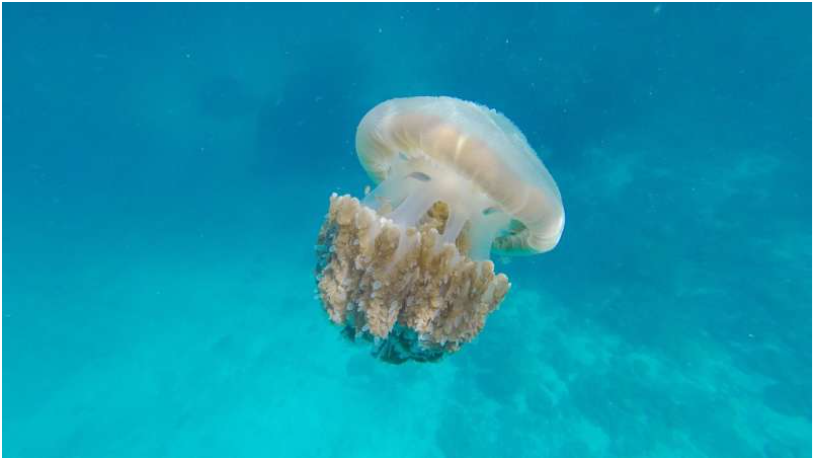 Source: Tirachard Kumtanom/Pexels
"Jellyfish move by pulsating, contracting their bell to create a flow of water that allows them to move. By generating electromagnetic fields, it is possible to reduce the number of pulsations in jellyfish, and even paralyze them, thereby reducing their ability to move and maintain their position," the team explained.
As such, their movements are momentarily restricted. However, as the creatures move away from the emitter, gravity and water currents restore their normal movement and mobility.
Importantly, the technology is entirely harmless to both creature and environment. The buoys do not harm other species, working only on jellyfish, which is not true for commonly used solutions like physical barriers.
"In addition, the main components of the device are concentrated within the floating buoy, making access to it and the repair or replacement of components much simpler," the team concluded.
In addition to the deterrence sensors, the buoy also features sensors for measuring assorted water parameters, including temperature, turbidity, chlorophyll and oxygen levels.


