Clean-in-place systems get leaner, meaner with automation
Jody Dascalu | April 26, 2026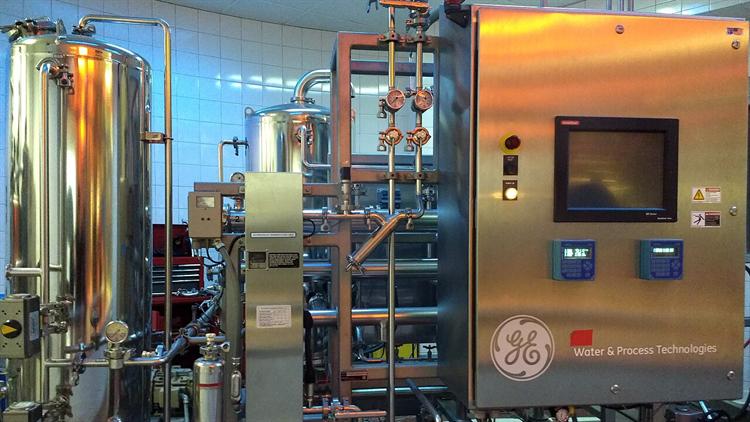 CIP unit at Word of Coca-Cola in Atlanta.
Automated clean-in-place (CIP) systems sanitize the internal surfaces of process equipment without disassembly. By circulating cleaning fluids through closed loops, these systems replace manual scrubbing with a controlled process with precise flow, temperature, chemical concentration and time.
In applications like food and beverage and pharmaceutical manufacturing, where hygiene is a strict operational constraint, CIP systems are critical equipment.
Yet there is a quiet change occurring in CIP technologies. CIP is no longer limited to removing residues. In modern facilities, the system is expected to demonstrate that cleaning conditions were achieved and maintained. This shifts CIP from a procedural task to a data driven process.
System mechanics and process control
Modern CIP systems operate as high-precision closed loops. Centrifugal pumps and heat exchangers provide the mechanical and thermal energy needed. Implements like rotary jet heads deliver high-impact cleaning tailored to complex workpiece and equipment geometries, and an improvement for simple static sprayers. Equipment like ensures that cleaning effectiveness is consistent across all surfaces.
Notably, automation has shifted these mechanics from basic sequences to data-driven operations. For example, inline sensors provide continuous validation by tracking conductivity, temperature and flow in real time. This allows the system to confirm cleaning conditions and specifications. This turns a formerly unquantified procedure into a transparent and monitored process.
Cleaning sequence and governing variables
A typical CIP cycle follows a structured progression from bulk removal to final sanitization. An initial rinse reduces the overall soil load, after which an alkaline wash breaks down organic residues, such as fats and proteins. The system is then rinsed to remove remaining chemicals, with an optional acid stage used where mineral scale is present. A final rinse and sanitization step prepares the equipment for the next production run.
The effectiveness of each stage depends on how well the underlying process conditions are maintained. Flow drives mechanical removal of contaminants via water sprays, while temperature supports reaction rates and solubility. Meanwhile, chemical concentration determines how effectively soils are broken down and carried away. These effects are not independent, and cleaning effectiveness depends on holding them within a consistent operating range for the required duration.
Fluid dynamics determines how reliably these conditions translate into actual cleaning. In pipelines, turbulent flow is required to generate sufficient shear at the wall. In vessels, cleaning depends on how kinetic energy is delivered to the surface, whether through full coverage or localized jets or sprays. When turbulence or surface contact is low, CIP systems rely on chemistry and temperature, which often requires longer cycles and more energy.
Modern CIP systems are shifting away from these approaches. Rather than relying on duration alone, these systems use real-time feedback to confirm each stage achieves its intended conditions. This allows cycles to respond to actual process variables, such as fluctuations in soil load, to avoid defaulting to conservative settings. The result is a system that reduces water, energy and chemical consumption, while maintaining validated performance.
Ultimately, the industry is moving toward treating cleaning as a controlled, observable process as opposed to a predefined routine.
Designing for CIP
Designing equipment and organizing it on the factory floor requires keen forethought. System geometry defines how effectively a CIP system can perform under real operating conditions. Features such as dead legs, poor drainage and complex valve arrangements introduce regions where flow is limited and cleaning media cannot reliably reach. As facilities push toward shorter cycles and reduced resource use, this is of growing significance. Surface finish and fabrication quality play a similar role. Smoother internal surfaces reduce adhesion and limit deposit formation, while high-quality welds eliminate crevices that can trap material.
Cleaning chemistry must still be matched to the fouling present, but its role is increasingly tied to how well the system delivers and sustains the required conditions. Alkaline solutions target organic residues, while acids address mineral scale, and more resistant contamination such as biofilms requires additional chemical and thermal energy. Temperature remains a key factor by accelerating reactions and improving solubility, but its effectiveness depends on whether the system can maintain uniform exposure across all surfaces.
Efficiency and failure modes
CIP systems are increasingly operated with tighter resource constraints, driven by water usage targets, energy costs and throughput requirements. Shorter cycles and reuse strategies are now common, but they reduce the margin for error and place greater emphasis on process QA/QC. Small deviations that were previously absorbed by conservative settings now have a direct impact on cleaning performance.
Most failure modes are linked to loss of control over core process conditions. For example, reduced flow can drop the system out of turbulent regimes and limit wall shear. Or temperature drift affects reaction rates and residue solubility. Errors in conductivity measurement can lead to incomplete rinsing or unintended chemical carryover. These issues are often amplified by design limitations such as poor drainage or localized stagnation, where even minor deviations persist.
In this environment, reliability depends less on adding time or chemical intensity and more on maintaining stable, verifiable conditions throughout the cycle. This is where process monitoring and automation can really shine. Operators have a real-time view into equipment performance, and can more quickly address issues that might compound later.
Direction of development
CIP systems are evolving toward adaptive operation, where cycle structure is informed by real-time process conditions. Systems are beginning to differentiate based on soil load, product type and system response to match cleaning intensity to actual requirements.
This shift is supported by improvements in sensing and control, along with incremental changes in equipment design that make complex geometries easier to clean consistently. Greater visibility into process data also enables earlier detection of deviations, which can be addressed before they accumulate into performance issues.
The overall direction is toward tighter alignment between process conditions and cleaning outcomes. The focus is on applying the necessary conditions with greater precision and consistency to achieve validated results without unnecessary cycle extensions.