How a battery sweats to keep cool
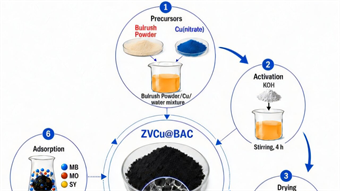
S. Himmelstein | March 31, 2026 Components of the cooling membrane. Source: Sui Zengguang, City University of Hong Kong
High‑performance lithium‑ion batteries lose a portion of their energy as heat during the conversion between electrical and chemical energy as they charge and discharge. Effective thermal management is needed to prevent the dissipated heat from degrading the battery, impacting its lifespan over time and triggering thermal runaway. Without breaking a sweat, City University of Hong Kong researchers have engineered an efficient thermal management approach for these batteries.
Inspired by the natural cooling mechanism — or sweating — of mammalian skin, a new cooling membrane was devised to dissipate heat. The passive cooling membrane draws heat away from batteries by releasing water vapor and then recharges this thermal capability by pulling moisture back in from the air.
Composed of lithium chloride, graphene oxide and active carbon fiber encased in a porous PTFE membrane, the system pulls in and retains water from the atmosphere when the battery is cool. As the unit heats up, the water absorbs the heat and evaporates, transferring it away from the battery.
Experiments described in ACS Nano confirm that the self-adaptive cooling membrane delivers an average cooling power of 802.5 W·m⁻² and reduces temperature by a total of 34.3° C (61.7° F) under a 2.7 kW·m⁻² heat flux. When applied to a commercial 3.7 V/12 Ah lithium-ion battery under high-rate discharging and charging, the membrane extended battery lifetime from 118 to 233 cycles.
In addition to beneficial sweating, the membrane improves flame retardancy, preventing thermal runaway under conditions that would normally cause combustion.