Coffee grounds extend blueberry shelf life
Marie Donlon | December 22, 2025A team of UNSW Sydney researchers are turning spent coffee grounds into a protective film that promises to extend the shelf life of certain fruits.
The UNSW Sydney team is working to prolong the shelf life of fruits with an edible film derived from coffee waste. This film promises to help preserve the freshness of delicate fruits like blueberries by limiting how much water seeps in or out.
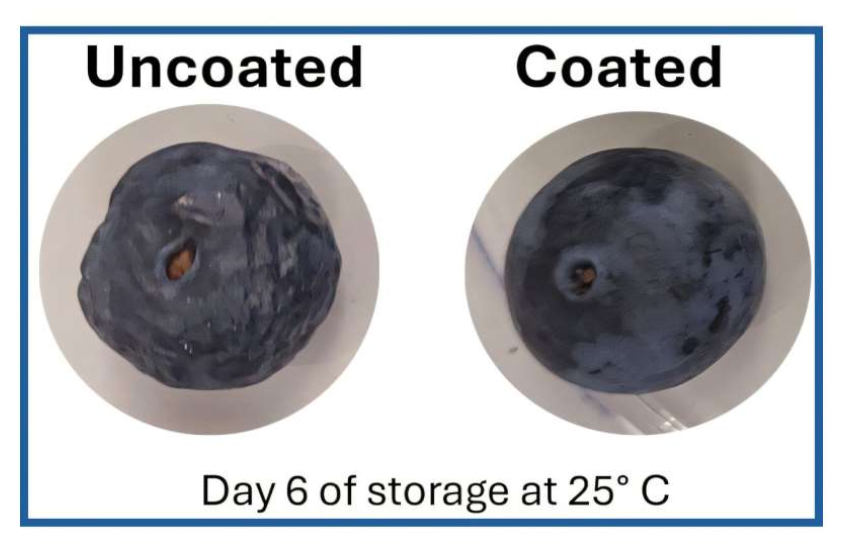 Source: Lilah Saidi
"We've created a polysaccharide-based coating to improve the fruit's water-vapor barrier," the researchers explained. "The coating contains cellulose nanofibers (CNFs) — derived from used coffee grounds — and grapeseed oil."
While current polysaccharide films derived from other plant cellulose fibers or starches are confirmed appropriate for use as edible coatings because they are biocompatible, biodegradable and food safe, they are not effective at protecting fresh produce from moisture. This is because they have a high-water affinity, the researchers explained. Spent coffee grounds, on the other hand, can function as both nano-fillers and stabilizers in the coating.
The team explained that the nanofibers from the coffee grounds help to create a tighter, more interconnected network that makes it difficult for water molecules to migrate through. Further reducing the film’s affinity for moisture is the water repellent grapeseed oil.
This combination of materials results in a food film that is transparent with improved mechanical strength. The coffee ground nanofibers make the film tougher, more flexible and safer to eat.
The team also found during preliminary tests that the addition of grapeseed oil to the film could potentially inhibit bacterial growth on the film's surface.
Further, the new formulation produces a gentle, edible "skin" in the form of a spray coating or a packaging film that is designed to preserve freshness, thereby reducing the reliance on synthetic plastics.
The coating is detailed in the article, “Enhancing the Water Resistance of Carboxymethyl Cellulose Films with Cellulose Nanofibers from Spent Coffee Grounds and Grapeseed Oil,” which appears in the journal Food and Bioprocess Technology.