A water purification system that multitasks
S. Himmelstein | January 07, 2026 Highlighting the separation of streams and gas production in the mesoscale device. Source: Communications Materials 6, 275 (2025)
Water purification technology developed by researchers from Seoul National University (Korea), the University of Tokyo (Japan) and ProvaLabs, Inc. (Korea) yields more than clean water — the process also produces hydrogen.
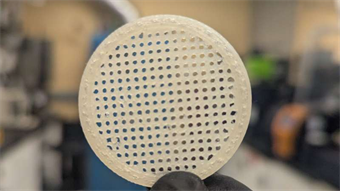
The compact system described in Communications Materials combines desalination and water electrolysis into a single scheme that minimizes energy loss compared to conventional water purification systems. Impurities are removed from saline water as hydrogen ions at the electrode are reduced to generate hydrogen gas. The ion concentration polarization (ICP) treatment allows protons to move freely through a stacked membrane structure composed of cation-exchange membranes, enabling hydrogen production at the cathode. By delivering the produced hydrogen to a fuel cell, a self-powered, energy-autonomous water purification platform can be realized.
An electric field applied across the membranes forms an adjacent ion depletion zone and repels contaminants larger than ions, causing most of contaminants to reroute to a brine channel. Hydrogen and sodium ions preferentially travel through the membrane, and hydrogen gas is generated on the surface of an embedded microelectrode.
In addition to salt, the system also removes heavy metals, fine particulates and bio contaminants, indicating applicability in environmental remediation and water treatment.
The prototype ICP module tested was designed to yield only a few liters of water daily. By parallelizing or stacking multiple ICP modules, the volumetric throughput of freshwater and the mass of hydrogen gas can be increased by one or more orders of magnitude without redesigning individual units.