Eco-friendly mushroom coating promises to replace traditional plastic wrap
Marie Donlon | December 20, 2025Researchers from the University of Maine have developed a natural waterproof coating that may one day replace single-use plastic food wrap and synthetic cup linings.
The team used edible fungus in combination with processed wood fibers to develop a food-safe coating capable of blocking water, oil and grease.
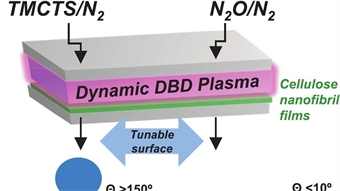
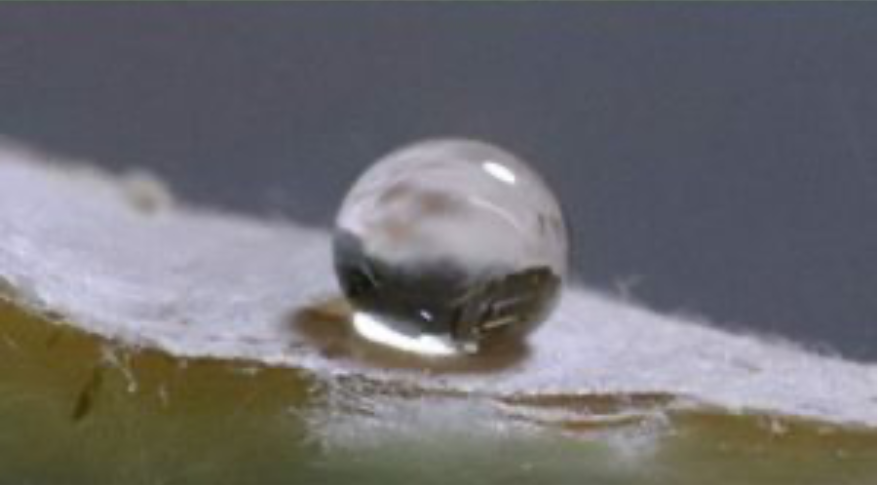 An impervious coating grown by an edible fungus causes water droplets to bead. Source: Langmuir
The edible fungus — the turkey tail mushroom, which is otherwise known as Trametes versicolor — grows on wood. Underneath its cap, a dense mycelium structure made of thin strands forms. These strands, the researchers noted, function much like a natural shield repelling water.
In the lab, the mycelium was combined with cellulose nanofibrils, which are tiny fibers used in the production of paper and help create strong films that resist oxygen, oil and grease. The team discovered that when it was mixed with the mycelium, a material was formed that creates a tight protective surface on whatever it came into contact with.
The fungus was grown in a liquid solution that also featured the cellulose nanofibrils. Thin layers of this mixture were then spread on paper, denim, polyester felt and thin sheets of birch wood. These samples were then kept warm to encourage the fungus to grow.
The team reported that after three days under these conditions, the surface of the treated materials formed a strong water barrier. Meanwhile, after four days, the coating was slightly thicker and developed patches of yellow, orange or tan, thus showing where the fungus had grown.
The samples were then placed in an oven to halt further growth and to fully dry the coating. The coating’s final thickness was reportedly much like that of a coat of paint.
The team then added drops of water to the treated materials, which subsequently formed round beads on the surface. When the team added drops of water to untreated surfaces, the droplets flattened out or soaked in, thereby demonstrating that the fungal film effectively blocked water absorption.
The coating prevented liquids like n-heptane, toluene and castor oil from being absorbed and could potentially be a replacement for the vast assortment of plastic-based coatings currently used in packaging and food service.
An article detailing the coating, "Growing Sustainable Barrier Coatings from Edible Fungal Mycelia," appears in the journal Langmuir.