
How “Equipment-as-a-Service” is transforming industrial processing
Jody Dascalu | December 09, 2025Equipment-as-a-Service (EaaS) is changing how industrial plants access and manage production assets. Instead of buying machines outright, operators pay for results such as uptime or throughput, while the supplier handles ownership and maintenance.
The shift is driven by pressure to cut capital costs, improve flexibility and use data for better performance. Connected sensors, cloud analytics and predictive maintenance make it possible to track equipment health in real time and prove value through measurable outcomes. EaaS is gaining ground in sectors like chemical processing, food and beverage, and mining, where equipment is expensive, complex and critical to continuous production.
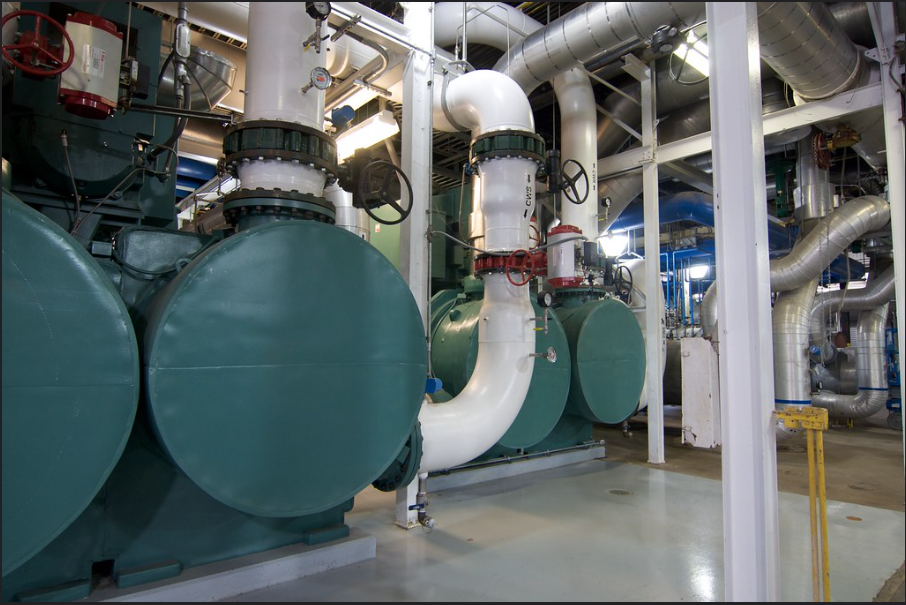 Centrifuge chiller. Source: dbkfrog/Flickr
EaaS market momentum and model evolution
Adoption of EaaS in industrial processing is still in its early stages but is expanding fast as original equipment manufacturers (OEMs) invest in connectivity and data infrastructure. Most large suppliers now embed smart sensors and cloud links into their machines, creating the foundation for service-based contracts. Mid-size equipment vendors are following, often starting with pilot programs focused on critical or maintenance-heavy units.
The dominant models fall into three categories. Pay-per-use agreements charge operators based on actual runtime or production output, ideal for utilities and batch processing lines. Subscription models offer fixed monthly fees that include maintenance, remote monitoring and software updates, which is a predictable structure suited to continuous operations. Outcome-based contracts go further, tying revenue directly to agreed performance targets such as uptime or energy efficiency. These arrangements demand high data accuracy and trust between the OEM and plant operator, but they deliver the clearest alignment of incentives.
EaaS performs best where assets are costly, complex or vital to production continuity. Examples include air compressors, chillers, centrifuges and filtration systems in chemical, pharmaceutical, and food plants. There are all equipment types with high maintenance costs and measurable performance indicators. Mining and pulp operations are testing similar models for pumps and conveyors, where downtime losses are significant.
Digital infrastructure powering service delivery
The success of EaaS depends on a robust digital foundation. The model only works if suppliers can see how equipment performs in real time, predicts issues before they cause downtime and verifies results under contract. That visibility comes from a combination of internet of things (IoT) sensors, edge computing and predictive maintenance platforms embedded across the equipment fleet.
IoT sensors capture temperature, vibration, pressure and flow data from each machine. Edge devices process that data locally, filtering and compressing it to reduce latency before transmitting key metrics to the cloud. Predictive maintenance software then analyzes patterns to forecast wear, identify early faults and schedule interventions automatically. This loop creates the data confidence needed for uptime guarantees, the core promise of most EaaS agreements.
The real differentiator is data analytics. When OEMs can benchmark performance across hundreds of identical machines, they can detect anomalies faster and refine operating parameters for every client site. Usage tracking becomes precise enough to invoice based on real production metrics rather than rough estimates, which strengthens both transparency and trust.
Cloud platforms and digital twins are reshaping how these service contracts are structured. A digital twin is a live, data-driven model of the asset that allows both parties to simulate performance under different operating conditions. OEMs use twins to test improvements remotely and update firmware or control logic without plant downtime. For operators, the twin provides a clear visual record of equipment condition, energy use and service history.
Legacy integration remains the biggest barrier. Many processing plants still run decades-old equipment without built-in connectivity, making retrofitting sensors and gateways complex. Standardization is uneven, and security policies often restrict external data access. Overcoming these limits requires coordinated investment between operators and OEMs — but once the infrastructure is in place, EaaS models can scale quickly across the production environment.
Operational impact across the value chain
For plant operators, the main shift under EaaS is financial and structural. EaaS turns large capital investments into recurring operating costs, reducing balance-sheet pressure and freeing up funds for other upgrades. In exchange, plants become more dependent on their vendors for uptime and data access. This changes the relationship from a one-off transaction to a continuous partnership where both sides share operational risk and reward.
Original equipment manufacturers are undergoing an even deeper change. Selling equipment once meant closing a deal; now it means managing performance for years. OEMs must develop service organizations, analytics teams and remote-monitoring capabilities that function more like a software company than a hardware supplier. The upside is long-term revenue stability and stronger customer retention, but it requires new pricing models, staff training and digital platforms capable of handling real-time service delivery.
Inside the plant, EaaS affects every support function. Maintenance teams shift from reactive repair toward collaboration with remote monitoring centers. Procurement departments need to evaluate contracts based on lifecycle value instead of purchase price. Finance teams track new forms of cost allocation and risk exposure. The overall effect is a more transparent, data-driven operating model where decision-making relies on performance metrics rather than intuition.
Early deployments show measurable results. Plants using EaaS report higher equipment utilization, fewer unplanned stoppages and lower total lifecycle cost. Predictable service fees simplify budgeting, while shared performance data encourages continuous improvement. There is also a growing sustainability benefit: OEMs maintain responsibility for extending asset life and minimizing waste, which aligns with corporate environmental targets and investor expectations.
Future shift toward autonomous service systems
The EaaS market is set for strong growth as connected infrastructure becomes standard across processing industries. Over the next five to seven years, adoption will shift from isolated pilots to widespread deployment in high-value sectors like chemicals, food and pharmaceuticals.
The next step is autonomous service systems, where artificial intelligence (AI) monitors and adjusts performance in real time. Equipment will diagnose faults, schedule maintenance and validate results automatically, resulting in tighter uptime guarantees and reducing manual oversight.
EaaS will also reach smaller systems such as modular skids, filters and packaging lines, bringing mid-tier suppliers into the model. Over time, industrial networks will operate as integrated service ecosystems, with OEMs acting as global, data-driven operators while plants focus on production outcomes.



This is an interesting discussion. Packaging operations can benefit a lot from the right combination of automation, reliable equipment, and proper process control. In my experience, choosing machinery based on the product, required output, and packaging format can make a significant difference in efficiency and consistency. For those interested in packaging machinery and solutions, you can also explore <a href="https://venupa