Fasteners in the e-Mobility space: Enabling the electric future
October 02, 2025The shift from internal combustion engines (ICEs) to electric vehicles (EVs) is more than just a change of powerplant. It is a transformation of vehicle architecture, materials, thermal and electrical systems, supply chains and manufacturing methods. Fasteners-studs, nuts, inserts and contact bushings that historically have played more “supporting” roles are now central enablers in many critical performance areas. Getting them right can make the difference in energy efficiency, durability, reliability, weight, safety and manufacturability. Poorly chosen fasteners can lead to losses — mechanical, thermal, electrical — compromised safety or failure under vibration, stress or environmental challenge.
Drawing on PEM’s eMobility fastener portfolio, this article explores how fastener technologies are confronting four interlinked mega-trends: lightweighting, ingress protection, conductivity and durability. The article will describe challenges, fastener-based solutions (including specific products: IFH studs, the eConnect/ECCB line) and implications for manufacture and performance.
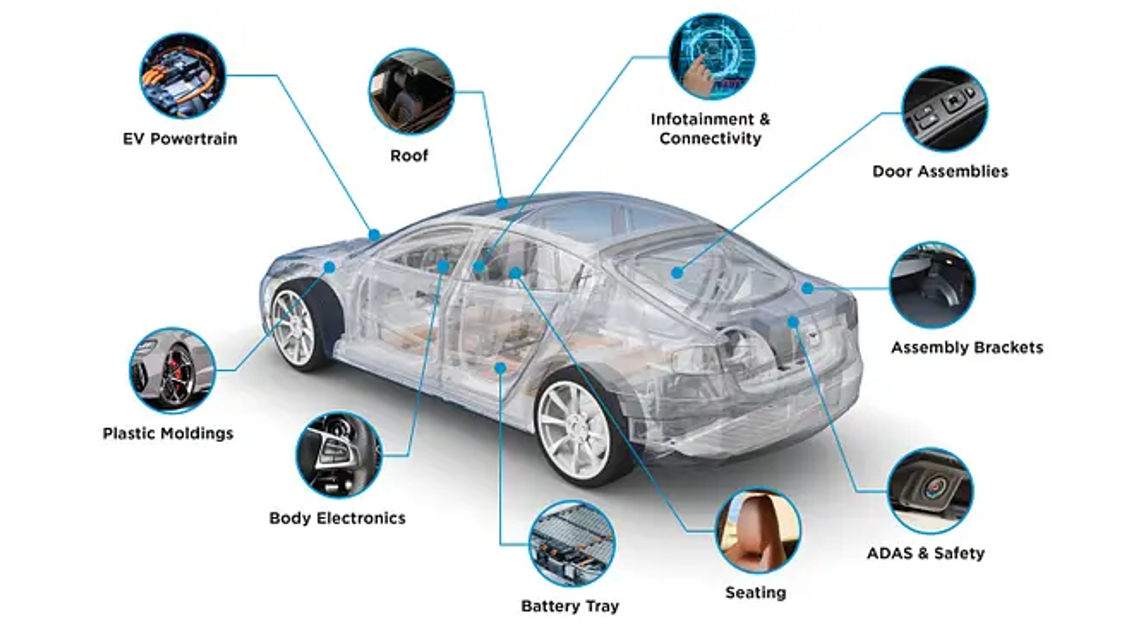 Figure 1: Fastener technologies are confronting four interlinked mega-trends: lightweighting, ingress protection, conductivity and durability. Source: PEM
Mega-trend 1: Lightweighting
Why lightweighting matters in eMobility
In ICE vehicles, reducing weight is always beneficial — resulting in better fuel consumption and less need for large engine power. In EVs, lightweighting arguably has even greater leverage:
- A lighter vehicle requires less energy to move; this improves range or allows smaller or cheaper battery packs.
- Smaller batteries reduce cost, weight, packaging complexity, cooling demands and environmental impact tied to battery materials.
- Lower weight helps with thermal management, braking, suspension, tire wear and overall lifecycle energy consumption.
Thus, OEMs are pushing for lighter materials (e.g., aluminum, magnesium, high-strength steel, composites) and integrating lighter structures. But lightweight materials present challenges: they may have lower strength, be more brittle, have different thermal expansion behaviors or reduced vibration damping. The joints connecting them (mechanical plus electrical) must be efficient, strong, durable and lightweight themselves.
Fastener roles in lightweighting
Fasteners can contribute to lightweighting in multiple ways:
· Material selection: Using aluminum or light alloys rather than heavier steels, where feasible-for both the parts being joined (e.g., aluminum busbars) and the fasteners themselves.
· Efficient joint design: Using fewer, more effective fasteners; combining mechanical and electrical joining; minimizing extra components (washers, excessive sealing/adhesive).
· Multi-functionality: Fasteners that also do the job of electrical contact, thermal conduction, sealing and alignment avoid separate parts and reduce weight.
· Precision and tight tolerances: To allow thin panels and structures to carry loads without reinforcement. Fasteners must work even in thin materials or mixed-material joints without compromising joint strength or fatigue.
PEM’s solutions: Aluminum busbars and ECCB Contact Bushings
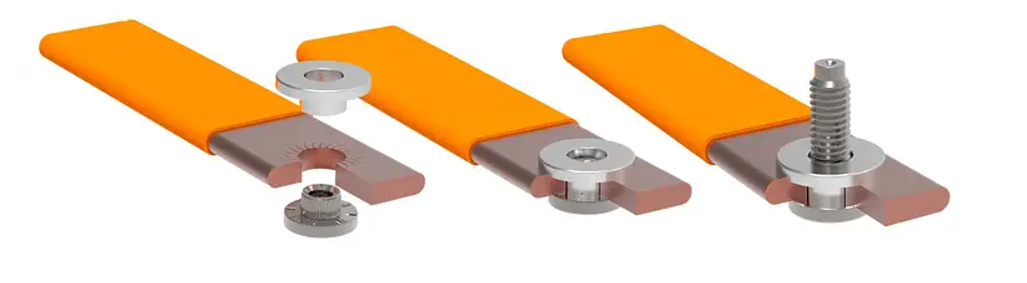 Figure 2: Aluminum busbars and ECCB Contact Bushings. Source: PEM
Every µΩ counts
A key example is the use of fasteners that can reliably join aluminum busbars. Historically, copper was preferred for busbars due to its high conductivity. However, copper is heavy and relatively costly. Aluminum presents a lighter alternative. Challenges with aluminum include:
- Lower mechanical strength and stiffness than copper (and often lower than steel), meaning fastener designs must accommodate deformation under torque or load while still maintaining electrical contact.
- Oxide layers forming on aluminum surfaces, which can increase resistance at electrical contacts.
- Potential galvanic corrosion when aluminum is in contact with other metals.
PEM’s eConnect line includes products that help address these issues. In particular, the ECCB Contact Bushing is designed to “minimize electrical resistance at connection points” using a high surface area knurl design that pierces the oxide layer on busbars. This both eliminates or reduces the need to plate busbar ends and allows a mechanical plus electrical connection in one component.
This is a good illustration of a light-but-strong joint: instead of adding plating, adhesives or other treatments (which add weight, cost and complexity), use a fastener that takes care of both mechanical anchoring and low resistance electrical contact. The PEM Cost Calculator can identify how savings of 30% to 40% can be realized compared to traditional busbar plating.
Also, fasteners designed for “high joining force” even in thin panels (e.g., where weight constraints make thicker sections impractical) help maintain structural integrity without adding extra material or additional support.
Examples and design considerations
- Busbars: If a user has moved from copper to aluminum, thickness might need to increase to match conductivity, but fasteners can help by minimizing electrical losses at the interfaces.
- Panel attachments: Use of self-clinching nuts/inserts allows for strong threaded joints in thin sheet metal without adding backing or thick bosses.
- Mixed materials: Fasteners often have to join dissimilar materials; design must ensure compatibility, avoid galvanic corrosion and account for different thermal expansions.
Mega-trend 2: Ingress protection
Why ingress protection matters in EVs
Ingress protection relates to the ability of a component or assembly to resist intrusion by solids, dust, water, moisture, sometimes chemicals or salts. In EVs, ensuring a high ingress protection rating is crucial because:
- Battery packs, power electronics and busbar assemblies are often exposed to harsh environments: road spray, salt, moisture, vibration and even splashdowns.
- Failure of ingress barriers can cause corrosion, electrical shorts, insulation breakdown or safety issues.
- The weight and volume cost of adding large, heavy sealed enclosures or redundant gaskets is high. Fasteners that can help achieve IP compliance without big sealing complications are valuable.
PEM’s IFH studs for ingress protection
PEM IFH studs are one of the fasteners in the eMobility portfolio specifically designed for ingress protection.
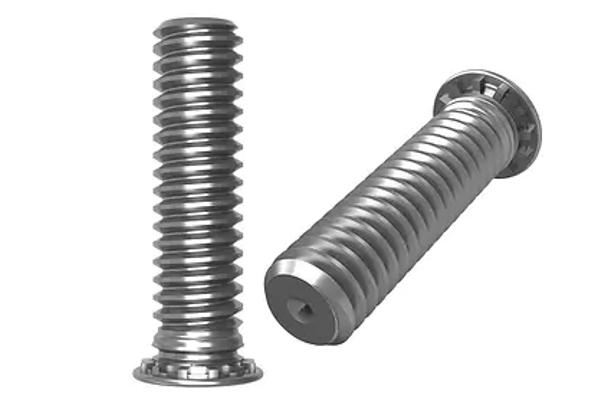 Figure 3: PEM IFH studs. Source: PEM
Key features:
- Mechanical ingress protection-rated: their fasteners meet standards IPX9K and IPX7/8. IPX9K is one of the higher water ingress ratings (steam jet, high-pressure, high-temperature spray). IPX7/8 involves water immersion scenarios.
- Metal-on-metal solutions, minimal or no sealants: helps reduce complexity, weight, cost and potential failure points. Sealant or gasket degradation is a frequent reason for ingress failures, so avoiding reliance on them is a plus.
- Suitability in tight spaces/non-standard designs: many EV components are compact; space for large flanges, gaskets or over-sized fasteners may be limited. IFH studs can be used even in such constrained designs.
Integration and testing: Fastener choice matters for ingress protection
- Fastener design must account for vibration, thermal cycling and mechanical shock, which can compromise sealing surfaces or loosen fasteners, reducing ingress protection over time.
- Ingress protection-rated fasteners must be tested under relevant standards. PEM refers to its testing services.
Mega-trend 3: Conductivity/energy efficiency: Every µΩ counts
A critical difference between ICE-based systems and EVs is that in EVs, electrical resistance losses are central. In ICEs, mechanical efficiency, combustion efficiency and exhaust losses dominate. In EVs, every portion of the electrical path — from battery, through wires/busbars, through connectors, through switches and through fasteners — contributes to total system efficiency.
What damages conductivity
- Resistance at joints or contacts due to inadequate contact pressure, interposing non-conductive layers (oxides, contamination) and poor surface finish.
- Thermal cycling causing expansion/contraction, loosening of contacts and micro-gaps.
- Vibration leading to fretting, wear and oxidation.
- Large current densities producing heating, which can degrade contact materials or insulating materials.
PEM’s eConnect Line and ECCB Contact Bushing
PEM’s eMobility portfolio includes eConnect technologies for good electrical contact, most notably the ECCB Contact Bushing, and also products like EPCRB pin for pin-style contact; ReelFast surface mount fasteners and more.
ECCB Contact Bushing
- Designed specifically to minimize electrical resistance at connection points.
- High surface area knurl design: this knurling helps in multiple ways:
- It mechanically penetrates the thin oxide layer on aluminum or copper surfaces, ensuring metal-to-metal contact.
- It increases real contact area under load, lowering contact resistance.
- Removes or reduces the need to plate busbar ends (plating is expensive, can add weight and may degrade over time).
Other eConnect line items
- Surface mount fasteners that let users make electrical connections with minimal extra parts.
- Blind nuts, spinning flare nuts and self-clinching nuts, selected for both mechanical strength and electrical performance.
Impacts on performance
- Lower resistance at contact points means less heat generation, lower power loss, better efficiency (especially at high currents).
- Improved stability over time (less drift in contact resistance under thermal/mechanical stress) leads to more predictable performance and safer operation.
- For battery systems, inverters, onboard chargers and traction motors, any loss adds up; fastener design can help reduce those cumulative losses.
Mega-trend 4: Durability
For EVs, durability is not optional. The expectations are for long lifespans, minimal maintenance and high safety. Fasteners are small parts, but often exposed to harsh conditions (vibration, shock, moisture, temperature extremes, corrosion, cyclic loading). Failures of fasteners can be catastrophic (e.g., loose busbar connection inside a battery pack) or just reduce performance gradually (contact resistance rising, mechanical loosening, ingress).
Key durability requirements
- Fatigue resistance: ability to survive many cycles of vibration, mechanical load and thermal expansion/contraction without loosening or failure.
- High torque out/torque retention: Not only must fasteners be tightened once correctly, but they must retain their clamping force/torque settings over their operational life. This is especially tricky in thin panels, uneven mating surfaces and vibration. PEM mechanical fasteners achieve strong attachment even in thin panels and high torque-out resistance.
- Resistance to environmental degradation: corrosion, moisture, salt spray, thermal extremes and chemicals.
- Structural strength under load: fasteners must carry loads safely, including static loads, crash loads, or loads from misalignment or mounting stresses.
How PEM’s fastener designs achieve durability
- Mechanically attached fasteners (MAFs): These often have better reliability and more joining force than traditional joining methods (welds, adhesives, simple screws in thin sheet). PEM’s MAFs are engineered to gain higher strength via features like self-clinching, cold forming and broaching.
- Cold-forming processes: These can enhance metallurgical properties, giving better grain structure and hardness, which supports fatigue and strength.
- Testing standards: PEM refers to USCAR-2 and LV-214 (European standard) for vibration, corrosion and durability. Fasteners must meet these to assure performance in automotive/EV environments.
- Ingress protection (as above) also contributes to durability: water or moisture intrusion often accelerates corrosion that degrades both mechanical and electrical performance.
Challenges and design trade-offs
While fastener technologies have advanced a lot, there are unavoidable trade-offs and design challenges. Understanding these helps in choosing the right fastener for a given EV application.
Material trade-offs
Aluminum versus copper versus steel versus various coatings: Aluminum is light but less mechanically strong and more prone to oxidation; copper is excellent electrically but heavier; steel is strong but less conductive and may require insulating/ plating/coating and behind panels could raise weight or thermal mismatch concerns.
- Coatings/plating adds cost, manufacturing complexity and possible durability issues (e.g. plating peeling, oxidation under coating).
Contact resistance versus mechanical integrity
- Achieving low resistance demands high, uniform contact pressure, clean surfaces, minimal oxide layers or contamination. But mechanical designs that force high pressure must ensure the substrate (panel, busbar) can support the pressure without deformation or damage.
- Vibrations, thermal cycling and physical shocks can relax or degrade contacts. Design must avoid over-tightening, which might damage materials, or under-tightening, which causes unreliable connections.
Sealing versus access
- Ingress protection often requires sealing surfaces, gaskets or tight mating surfaces. But seals may deteriorate, may not be feasible in some compact designs. Fasteners like IFH studs attempt to provide ingress protection ratings without separate sealants, but system design must support the sealing.
Cost versus function
- High performance fasteners — those with special features like knurled contact bushings, high IP rating, special coatings and cold-forming may cost more. OEMs must balance total cost (parts plus manufacturing plus warranty plus maintenance) versus performance gains (range, reliability, safety).
- Sometimes extra cost in fasteners is more than offset by savings elsewhere (lighter battery pack, reduced cooling, fewer failures/warranty claims).
System-level impacts: Reducing energy waste in ICEs and EVs
A nice framing from PEM’s site is: “Cutting energy waste in ICEs and EVs: The hidden efficiency challenge.”
- In ICEs, there are many energy losses: friction, thermal and exhaust. Fasteners there were mostly mechanical, structural, often non-critical from the perspective of electrical conduction. But with EVs, electrical loss (even small resistance at a joint) is directly converted to heat, which must be dealt with (cooling, insulation), and contributes to energy consumption (via heat loss, or wasted charging cycles).
- For instance, if a busbar termination has higher resistance due to poor contact, oxidation or low contact area: at high currents (hundreds of amps in power electronics, motors, battery systems), even small milliohm resistances can lead to significant losses (power loss P = I²R). That heats the system, necessitates heavier cooling and reduces lifetime.
- On the mechanical side, poor fasteners that loosen under vibration or over temperature cycles allow gaps or motion, which degrade both electrical and mechanical performance, leading to inefficiencies or failures.
Thus, fastener selection/design is part of energy efficiency strategy.
Case study: Efficient joining of new materials — Aluminum busbars
Here is an example of aluminum busbars, which are central to many EV power and charging architectures.
Background
- Busbars are rigid or semi-rigid conductive elements that distribute power (often high current, relatively low voltage compared to battery packs) within EVs: between cells, modules, in battery management, between power distribution centers and from battery to inverter.
- Traditionally, copper is used because it has lower resistivity. But copper is heavy and expensive; aluminum is lighter and cheaper per kilo but has higher resistivity (~1.6 to 1.7 times that of copper), plus issues of surface oxidation and weaker mechanical strength.
- To get the same conduction, aluminum busbars tend to have a larger cross-section. That increases volume, weight and cost.
How fastener innovations help
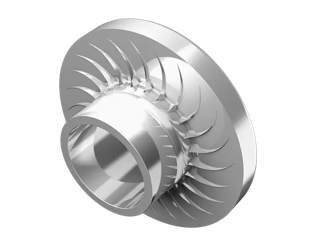 Figure 4: PEM’s materials show that fastener technologies like ECCB Contact Bushing help reduce the overheads associated with aluminum busbars. Source: PEM
PEM’s materials show that fastener technologies like ECCB Contact Bushing help reduce the overheads associated with aluminum busbars:
- By minimizing contact resistance (e.g., via knurl design that pierces oxide, ensures good metal-to-metal contact), less “buffer” margin is needed in sizing, or less over-engineering is needed. That can allow thinner or narrower aluminum busbars, thus reducing weight.
- Eliminates or reduces the need to plate busbar ends. Plating (e.g. tin, nickel, silver) is expensive, adds process steps, may add weight or thickness and may degrade over time. With a fastener that can make good contact through oxide, plating can be skipped or reduced.
- Combine mechanical fastening and electrical contact in one element reduces extra parts, reduces interfaces, simplifies assembly and improves consistency (less variation in contact resistance).
- Self-clinching, press-in or blind installation inserts (like CastSert) allow good mechanical load paths even in thinner panels or mixed materials, which might reduce structural weight.
Practical design considerations
- Care must be taken to ensure the mechanical strength of aluminum busbars is sufficient over the expected service life: bending, current cycles and thermal cycling.
- Thermal expansion mismatch: aluminum expands more with temperature; joints must tolerate this without loosening or cracking.
- Surface treatments or coatings may help reduce oxidation or between aluminum and fastener material if dissimilar. Material selection of both busbar and fastener surfaces is important.
- The fastener design must ensure that the knurl or contact geometry both penetrates oxide but does not excessively damage the busbar; durability of the knurled contact over many cycles and under vibration.
Specific products: Highlighted
From the PEM eMobility portfolio, here are several fasteners and related products worthy of note, especially in relation to the four mega-trends.
- ECCB Contact Bushing — as discussed: for ultra-low resistance contact, combining mechanical stability and electrical conductivity.
- IFH Studs (ingress protection) — for sealing and ingress protection; enable IPX9K, IP7/8 ratings; metal-on-metal; minimal sealants needed. Useful in battery modules, connector housings and places prone to moisture and vibration.
- EPCRB Pin — a contact pin; likely used where pin-style connections are preferred (plugs, connectors, terminations). These must maintain high conductivity and tight mechanical tolerances.
- ReelFast Surface Mount Fasteners — useful for SMT-like assembly or automated surface mounting; likely lighter assemblies; faster and more consistent manufacturing; may reduce labor or alignment cost.
- CK CastSert Press-in Inserts — for use in aluminum or lighter panels, providing a threaded insert/captive thread in thin/soft materials; support durability, reduce need for thicker/double panels; help lightweighting.
- Blind B Nuts, Self-Clinching Nuts — similar idea: get strong, reliable threads in thin or sheet material; useful in places where backing access is limited or material thickness is minimal, helping weight and simplifying assembly.
Conclusion
Fasteners might seem humble compared with motors, batteries or power electronics in EVs, but their role is central. The mega-trends of lightweighting, ingress protection, conductivity and durability are all deeply intertwined, and fastener technology is at their crossroads: enabling lighter components, sealing against environment, enabling efficient electrical paths and ensuring long-term performance.
Companies like PEM are pushing these solutions forward: offering mechanically attached fasteners with high joining force even in thin panels; contact bushings that reduce resistance; studs that deliver IPX7/8/9K ratings; moving away from bulky sealing/ additive parts to more elegant, integrated fastener-centric solutions. The payoff is not just reliability, but measurable performance in EV range, component weight, energy losses, durability and cost of ownership.
As EVs become more mainstream and push into more extreme environments, these fastener technologies will become ever more critical. OEMs, system integrators, fastener suppliers, material scientists and manufacturing engineers need to work closely to ensure that every joint counts — because in many ways, the journey toward efficient, safe, sustainable eMobility rides on the specification of that tiny piece of metal that holds everything together.