Inexpensive Tunable Window Technology Developed
By Engineering360 News Desk | April 05, 2016Researchers at Harvard University's John A. Paulson School of Engineering and Applied Sciences have developed a technique to quickly change the opacity of a window, turning it cloudy, clear or somewhere in between with the flick of a switch.
Tunable windows aren’t new, but most previous technologies have relied on electrochemical reactions achieved through expensive manufacturing. The new technology, developed by David Clarke, professor of materials, and postdoctoral fellow Samuel Shian, uses geometry to adjust the transparency of a window.
 The researchers say the new technology is scalable for larger architectural projects. Image credit: Pixabay.The tunable window is comprised of a sheet of glass or plastic sandwiched between transparent, soft elastomers sprayed with a coating of silver nanowires too small to scatter light on their own.
With an applied voltage, the nanowires on each side of the glass are energized to move toward each other, squeezing and deforming the soft elastomer. Because the nanowires are distributed unevenly across the surface, the elastomer deforms unevenly. The resulting unevenness/roughness causes light to scatter, turning the glass opaque in less than a second.
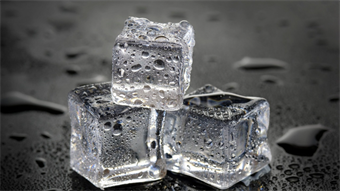
It’s like a frozen pond, says Shian. “If the frozen pond is smooth, you can see through the ice. But if the ice is heavily scratched, you can’t see through," he says.
Clarke and Shian found that the roughness of the elastomer surface depends on the voltage. To make the window only light clouded, less voltage is applied than if a totally opaque window is desired.
“Because this is a physical phenomenon rather than based on a chemical reaction, it is a simpler and potentially cheaper way to achieve commercial tunable windows,” says Clarke.
Current chemical-based controllable windows use vacuum deposition to coat the glass, a process that deposits layers of a material molecule by molecule. It is an expensive and painstaking manufacturing process. In Clarke and Shian’s method, the nanowire layer can be sprayed or peeled onto the elastomer, making the technology scalable for larger architectural projects.
Next, the team is working on incorporating thinner elastomers, which would require lower voltages more suited for standard electronical supplies. In the meantime, Harvard’s Office of Technology Development has filed a patent application on the technology and is engaging with potential licensees in the glass manufacturing industry.