Large Fog Collection System Erected in Morocco
By Engineering360 News Desk | March 31, 2016Dar Si Hmad (DSH), a Morocco-based non-profit association, has built a large fog collection and distribution system to serve landlocked communities in the Anti-Atlas Mountains of the country's southwest.
Scarce water, compromised wells and droughts have destabilized indigenous Amazigh communities. But while southwest Morocco is water poor, abundant fog drapes the area for six months each year.
Fog collection is an ancient system to collect clean water in a non-invasive, sustainable way in regions where fog abounds. The technique uses specialized mesh, hung between poles, to trap water droplets in the fog. The wind pushes fog through the mesh, where droplets are trapped, condense, fall and amass in a container placed at the base of the unit.
Drop by drop, the system collects a substantial amount of water—a technique that can be used in regions where fog abounds but there are few to no viable means for conventional water access.
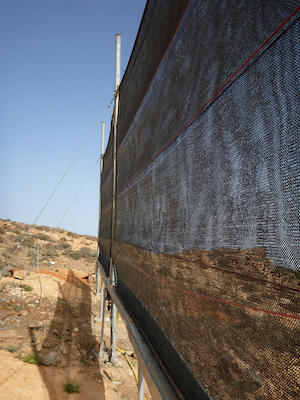 A closeup of the fog collector. Image credit: DSH.In Phase 1, DSH has installed 600 square meters of fog nets, solar water pumps and 8 km of pipes to deliver potable water to 400+ rural Berber people who have never had running water. DSH is now experimenting with next-generation nets that can withstand harsher conditions and increase fog water yield.
Traditional water management in this region was predicated on parsimonious water use. People hand-dug wells and built cisterns for rainwater catchment to meet their survival needs, as modern techniques for finding water with drilling machines tapping aquifers are expensive and unsustainable. Given the increasing cycles of drought, the scarcity of rain and low aquifer re-charge rates, fog provides a reliable supplemental water resource that relieves pressure on aquifers and wells.
Nevertheless, the project faced both mechanical and cultural challenges. Infrastructure challenges included severe landscapes, searing heat, extreme wind and difficult access. Moreover, community members initially doubted that fog was a safe source of water, and women—the traditional water guardians—were at first hesitant to participate in managing the water system.
Through user-centered design approaches, Amazigh women now manage water resources by using their mobile phones to send SMS messages about the water system. According to DSH, delivery of fog water has significantly reduced women’s water-gathering chores, which previously took up to 3.5 hours per day and often interrupted, or prevented, girls from regularly attending school.
DSH says that greater water availability should also help poor farmers to keep their livestock, which previously might have been sold during the increasingly frequent droughts that have lowered the water table.