A complete guide to dissolved oxygen sensors: From selection to calibration
Sakshi Jadhav, courtesy of Mettler Toledo | July 11, 2025Dissolved oxygen (DO) is the measure of oxygen gas that is physically dissolved in water. It is a critical parameter for aquatic environments because it supports the respiration of fish, invertebrates and aerobic microorganisms. The level of dissolved oxygen in water affects the overall health and balance of aquatic ecosystems, influencing biological processes and water quality. DO is also an important factor in water treatment, environmental monitoring and industrial applications, as it helps detect pollution and ensures suitable conditions for aquatic life and various processes. This makes measuring dissolved oxygen necessary.
To measure the DO concentration in a sample, a sensor is immersed directly into the liquid. The traditional measurement method relies on oxygen diffusing through a selectively permeable membrane, establishing an equilibrium between the oxygen activity (or concentration) in the sample and inside the sensor. The oxygen level is then determined within the sensor itself. It is important to note that this method does not measure DO concentration directly but rather its partial pressure.
 Source: Mettler Toledo
Partial pressure can be understood as the tendency of oxygen molecules to escape from the solution and is commonly expressed as a percentage of air saturation. For instance, a solution in equilibrium with air is considered 100% air saturated. If the oxygen concentration exceeds 100%, the surplus oxygen will diffuse out of the solution into the air. Conversely, if it is below 100%, the solution will gradually absorb oxygen from the surrounding air. Similarly, oxygen will move between the solution and the sensor depending on their relative partial pressures — oxygen flows into the sensor if its partial pressure in the solution is higher, and vice versa. At equilibrium, the partial pressures inside the sensor and the solution are equal.
However, equal partial pressures do not imply equal oxygen concentrations. The concentration corresponding to 100% saturation depends on the oxygen solubility in the specific solution. In the case of water, which is the most common solvent, this solubility is well characterized, allowing conversion from air saturation percentages to concentration units like mg/L.
Types of DO sensors
The tables below provide an overview of three different types of DO sensors,
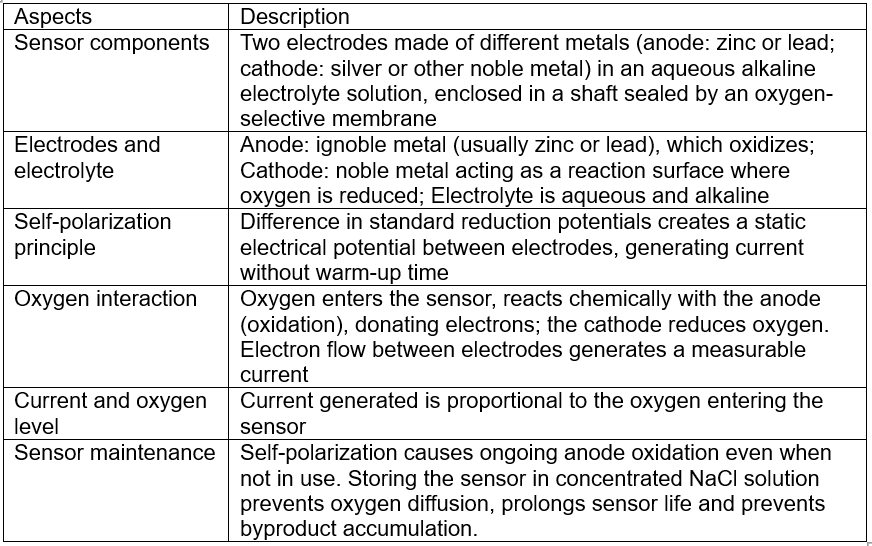
A. Galvanic DO sensor: These sensors are electrochemical devices that measure dissolved oxygen levels by generating an electrical current through a chemical reaction between oxygen and electrodes within the sensor.
 Source: Mettler Toledo
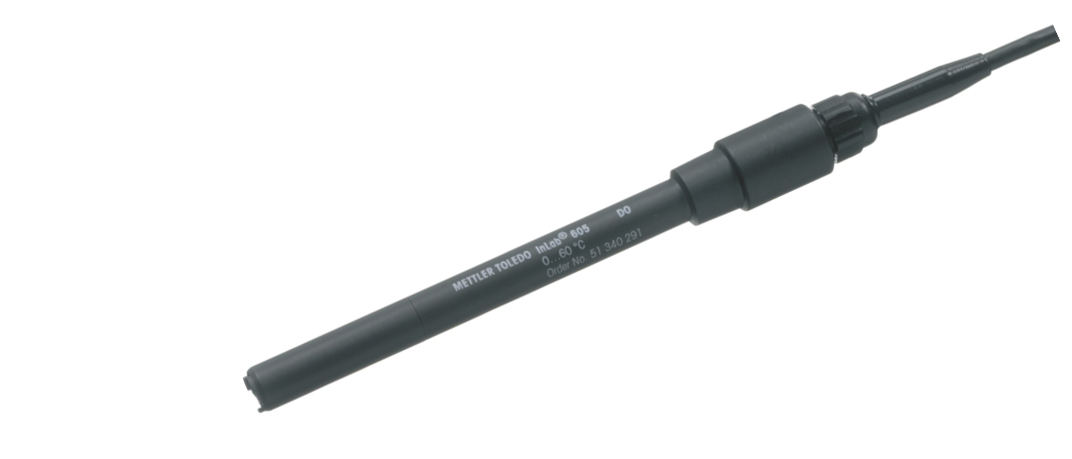
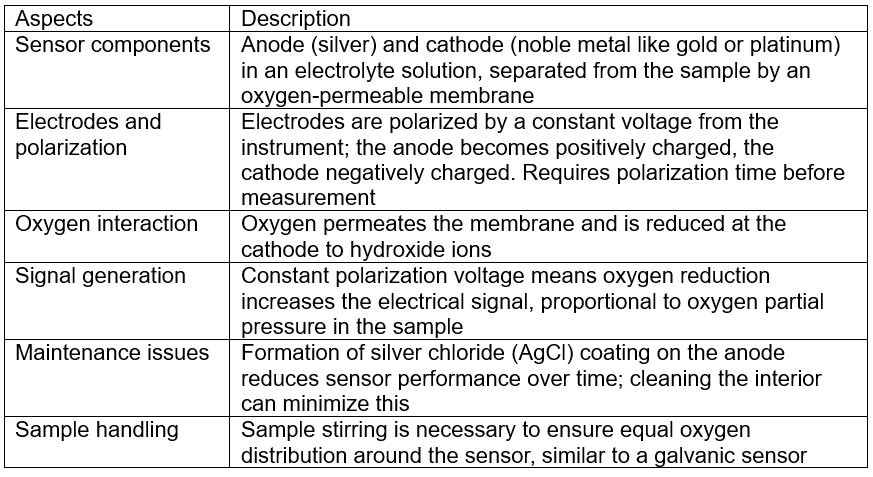
B. Polarographic DO sensor: These sensors measure DO by applying a voltage to a cathode, causing oxygen to be reduced and generating a current proportional to the oxygen concentration in the sample.
 Source: Mettler Toledo
 Source: Mettler Toledo
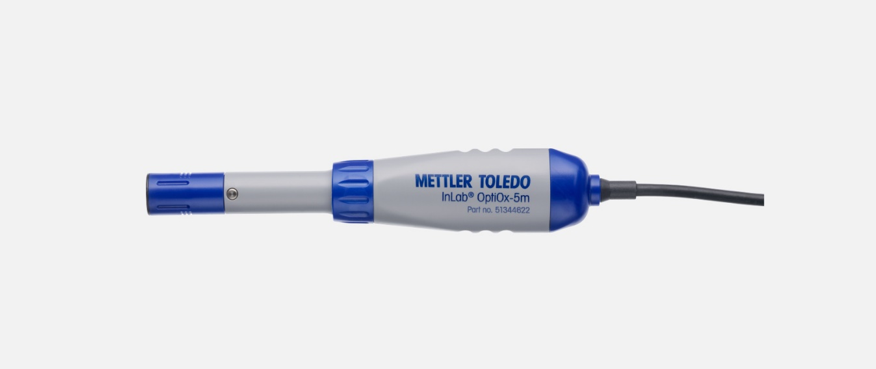
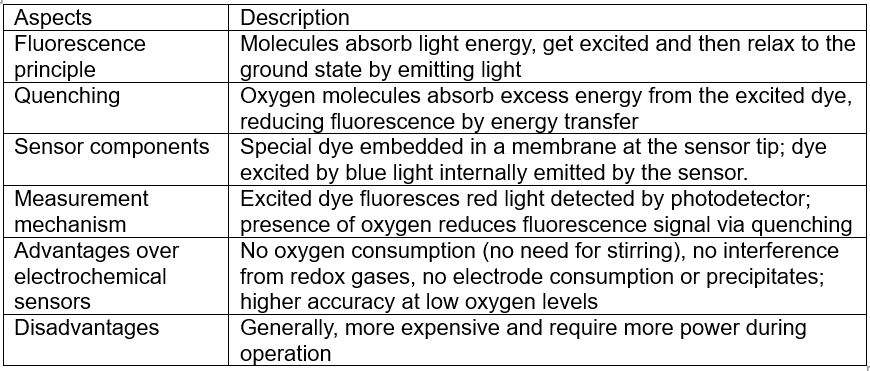
C. Optical DO sensor: These sensors measure DO by detecting changes in the fluorescence or luminescence of a sensor material, which varies based on the oxygen concentration in the environment.
 Source: Mettler Toledo
 Source: Mettler Toledo
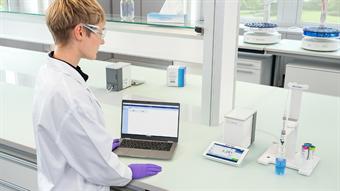
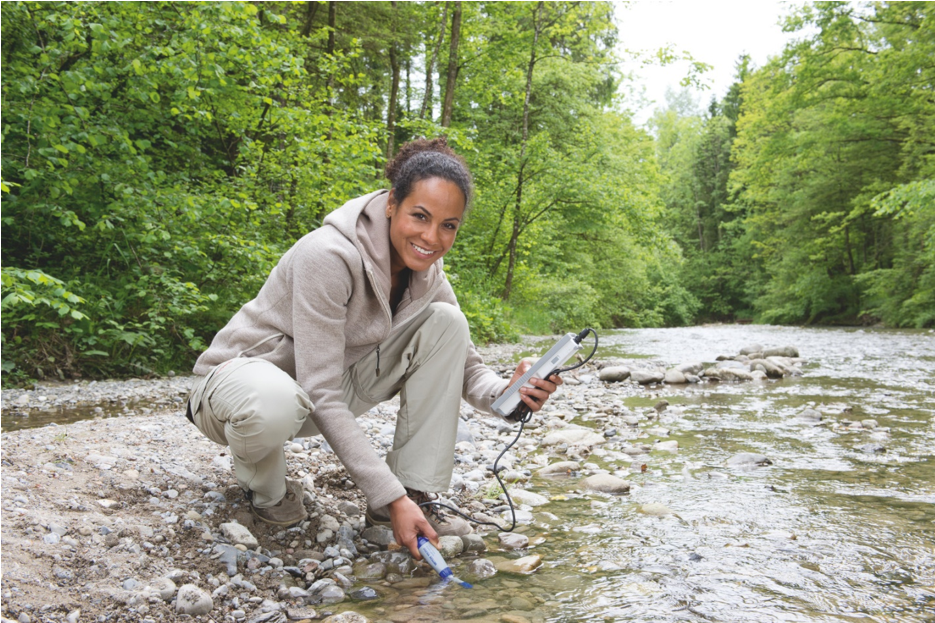
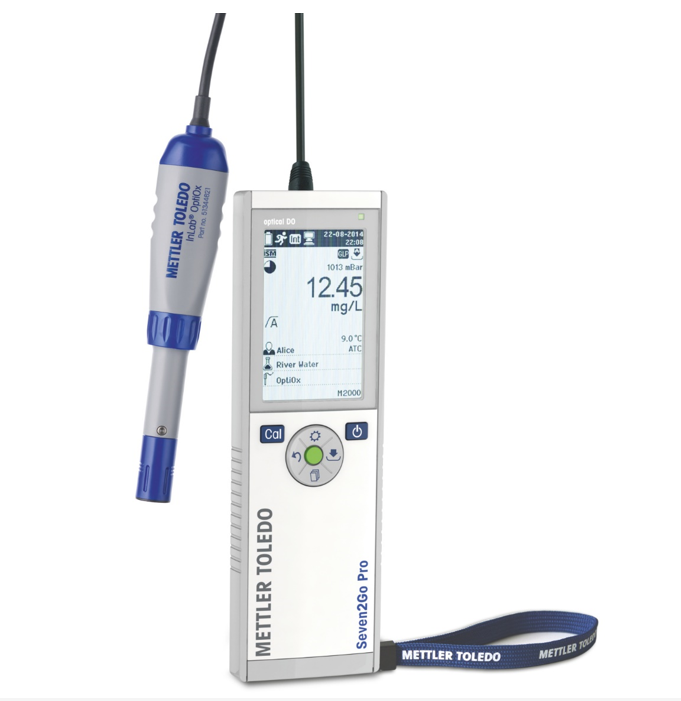
DO meters measure the oxygen concentration in liquids using the sensors mentioned above. Benchtop meters deliver high precision, making them ideal for laboratory settings and often use polarographic or galvanic electrochemical sensors. Portable meters, on the other hand, offer quick and convenient field measurements and typically utilize optical sensors for easier maintenance.
 Source: Mettler Toledo
Handling DO sensors
A. Preparation of DO sensors
- Optical DO sensors require no preparation before use.
- Electrochemical sensors need to be checked for membrane integrity. If electrolyte refilling is applicable, it is essential to ensure the electrolyte is properly replenished.
- For polarographic sensors, proper polarization must also be maintained before use.
B. Calibration of DO sensors
- Calibration can be performed using either a one-point or a two-point method. The first calibration point typically involves measuring oxygen saturation in water-saturated air, corresponding to 100% oxygen saturation. When calibrating with only this single point, the meter adjusts the slope of the calibration curve by assuming the signal at 0% saturation is zero. To determine the offset, a second calibration point is necessary.
- The second point involves preparing an oxygen-free standard solution, representing 0% oxygen saturation. This is commonly achieved by dissolving zero oxygen tablets in water to remove all dissolved oxygen. Using this second point allows for precise offset determination. While many applications are adequately served by a one-point calibration, it is recommended to perform a two-point calibration when measuring samples with oxygen saturation below 10% or oxygen concentrations under 1 mg/L for improved accuracy.
C. Maintenance and storage
- After completing a measurement, clean the sensor thoroughly with water and gently dry it using a soft tissue. This is especially important when working with biological samples to prevent any risk of microbiological growth. Store sensor at 5° C to 45° C; avoid rapid temperature changes.
- To ensure optimal performance, store the sensor in a secure environment with temperatures maintained between 5° C and 45° C, avoiding rapid temperature fluctuations.
- For short-term storage, rinse the galvanic DO sensor with deionized water and keep it immersed in a storage solution. For long-term storage, additionally, short-circuit the sensor to prevent deterioration caused by continuous self-polarization and store it in a cool environment.
- For long-term storage of the polarographic DO sensor, it should be detached from the instrument to prevent continuous polarization, which can gradually reduce the sensor's lifespan.
- When stored with the inner electrolyte filled and the protective cap securely placed over the membrane, the sensor can be kept for several months. However, if the sensor is to be used after more than three months of storage, the electrolyte must be replaced. For storage periods longer than six months, the electrolyte should be completely removed. Optical sensors should be stored dry.
Visit Dissolved Oxygen Electrode: Optical, Polarographic & Galvanic Determinations for more information on DO sensors and check out Seven2Go DO meter S4 — Overview — METTLER TOLEDO for details on DO meters.
To contact the author of this article, email pHmatters@mt.com