Shark skin-inspired tech creates bacteria-resistant food surfaces
Marie Donlon | June 17, 2025A team of scientists from the Hopkirk Research Institute, the New Zealand Food Safety Science and Research Centre, and Applied Technologies Group, hoping to solve a challenge plaguing the meat processing industry — specifically, keeping surfaces clean — have developed a nature-inspired solution.
The team developed new laser technology that adds texture to metal food handling surfaces where bacteria from meat can attach, multiply and create biofilms that are resistant to even the most rigorous cleaning protocols.
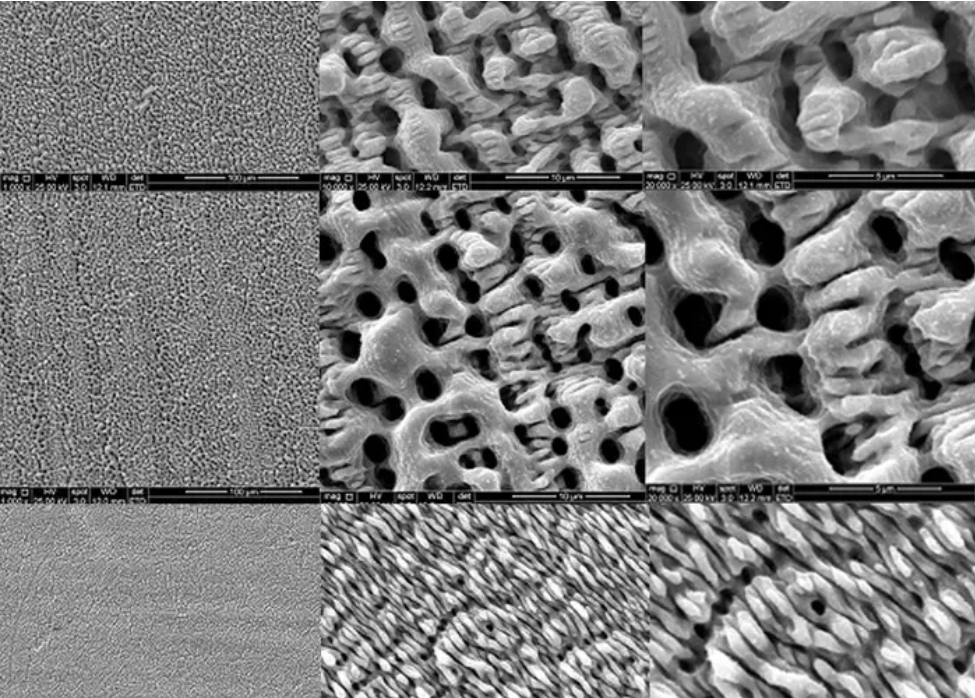 These laser-textured metal surfaces, designed at micro and nanoscale levels, could prevent bacterial adhesion and enhance food safety. Source: Sebastiampillai Raymond
By adding texture to such surfaces, the researchers sought to mimic the antimicrobial properties of shark skin and cicada wings with the aim of dramatically reducing bacterial contamination without the need for chemical treatments.
Rather than performing frequent cleaning protocols, the team built a laser-induced surface texturing technique that uses lasers to etch microscopic patterns into stainless steel. This, according to its developers, modified the food handling surface at the nanoscale level, thereby making it physically difficult for bacteria to attach and grow. The laser etching approach also alters the metal’s water-repellent properties, thus further limiting microbial adhesion.
“Antimicrobial interventions currently approved and used commercially have a limited capacity to reduce well-established bacterial biofilms and spores, and complete decontamination is rarely achieved,” the researchers explained.
Further, this solution can me modified to target an assortment of bacterial species by adjusting the surface textures to match the shape of specific microbial cells. This adjustment makes it more difficult for the bacteria to gain a foothold.
Another benefit of laser surface texturing, according to its developers, is that the process does not introduce non-native materials or require chemical etchants or sensitizers on treated surfaces.
The team detailed their findings in the article, “Antibacterial effectiveness of laser surface textured metal on meat-borne bacteria,” which appears in the Journal of Laser Applications.