Data centers are overheating — And so are their utility bills
May 13, 2025As data centers grow in size and power demands, cooling systems are under pressure — driving up both energy use and utility costs. Discover how smarter flow measurement with electromagnetic flow meters can help data centers stay efficient, sustainable and cool under strain.
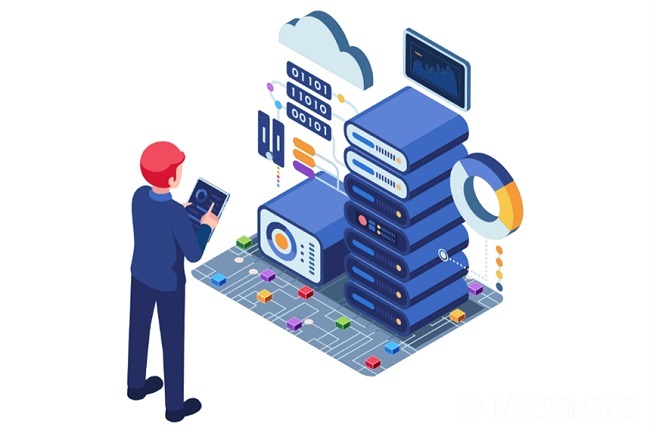 Figure 1: Isometric graphic of an engineer monitoring a data center server. Source: McCrometer
Data centers may be the backbone of the digital world, but behind every blinking server light is a relentless heat problem that’s getting harder — and more expensive — to manage.
As processing power increases, so does the energy demand, pushing cooling systems to their limits and utility costs through the roof.
For operators under pressure to maintain uptime while meeting efficiency and sustainability goals, the solution lies in smarter, more strategic infrastructure — starting with how water and energy are measured and managed.
Now, is it possible to establish an efficient business operation for an energy-intensive facility?
The short answer is yes, but only when these “smart strategies” are deployed. Producing a concentrated amount of energy in the form of heat, data centers require a significant amount of cooling to prevent overheating. Without sufficient cooling on-site, data centers can become safety hazards, damaging the servers containing valuable data as well as the overall facility.
In energy-intensive environments like data centers, effective cooling is not just a comfort — it's a business-critical necessity. But in the quest for reliability, data centers must also prioritize operational efficiency and sustainability — particularly in how they manage water and energy.
This sounds like a huge mission, and it often is. Operating, maintaining and optimizing a man-made oven that also processes billions of data points for people around the globe is a monumental order. At some point, someone must pick up the tab and pay for the end result of it all, and it shouldn’t be an expensive bill to pay if the right resources are used.
This article will discuss the infrastructure behind modern cooling systems, opportunities for water recycling in data centers and why choosing the right cooling solution is essential for day-to-day budget control and long-term facility performance.
Key highlights
- Understand cooling demands in modern facilities
- What role meters play in cooling towers, chillers and heat exchangers
- Cooling challenges that contribute to the bottom-line
- The importance of metering solutions for flow data and utility usage
- How flow meters help with industrial cooling and high-temperature systems
- Final thoughts on flow measurement for smarter facility management
Why is data center cooling a “hot topic”?
Industries such as data centers, often known as server farms or colocation centers, house energy-producing equipment for data storage and processing. These facilities produce concentrated heat loads that must be managed with complex, onsite cooling systems to protect valuable data and infrastructure.
At the heart of every cooling operation is one crucial, often overlooked component: flow measurement. In high-demand environments like data centers, the ability to monitor and manage water flow with precision isn’t just about operational insight — it’s about survival.
From chillers to heat exchangers and cooling towers, each system relies on accurate flow data to run efficiently, avoid equipment strain and minimize water waste. That’s why industrial-grade flow meters — engineered for reliability and durability — are fast becoming essential tools for data center engineers looking to balance performance with cost control.
While a data center’s entire business rests on adequate cooling, their bottom line is contingent upon efficient and effective operations, including utility usage.
To calculate impact on budget and carbon footprint, a data center requires multiple precision flow measurement instruments that provide accurate, reliable data for the lifetime of the facility.
While there are many compatible flow meters on the market, there are essential variables to consider when selecting the right flow instruments for data center applications.
Solving the right problem with the right solution
Smaller operations may utilize district cooling and municipal water to serve their needs, but larger facilities rely upon an intricate network of on-site cooling towers, chillers, heat exchangers and coolant distribution units (CDUs) to remove the heat produced by the servers.
On-site cooling operations also provide the opportunity to recycle the water used to cool the facility, minimizing overhead expenses and increasing a data center’s sustainability and efficiency objectives. However, this can only be achieved with the right system that allows cooling media (often chilled water) to flow throughout the facility.
Aside from air conditioning and “air cooled” hardware structures, engineers are turning toward water meters that have historically been used in other applications, specifically in water utilities and agriculture.
Why use an old-school, mechanical and ancient system in a data center?
The term “water meter” doesn’t equate to a mechanical meter these days. When selecting a meter for liquid cooling, consider the application, flow media and flow conditions to identify the right fit:
- Chill water: For meters measuring chiller water, the bypass or the building return load, it’s important to install flow meters that are tolerant of varying temperatures, pipeline pressures and turbulent flow. A highly accurate flow meter that easily tolerates varied water composition will help determine resource usage and reuse. Chiller systems can be complex, with many flow disturbances such as elbows, and a variety of flow rates. To ensure accuracy, select a flow meter with a high turndown, and minimal straight run requirements. For the ultimate efficiency, install a flow meter that can also manage British Thermal Unit (BTU) measurement. BTU is a measurement that provides users with important energy data about how much cooling is occurring when the water enters and then exits the chiller. Combined with the flow data from the meter, users have quantifiable data to monitor how efficiently a cooling system is operating. If the chiller isn’t delivering the expected BTUs for the flow rate, it might be indicative of an equipment or pipeline problem.
 Figure 2: An infographic depicting chill water loop measurement points. Source: McCrometer
- Cooling tower water: It’s ideal to install multiple meters within this pipeline process to measure inlet, blow down, make up and outlet. The efficiency of this pipeline process is entirely dependent on proper recirculation of the cooling water. It’s beneficial to measure the water entering the cooling tower (inlet), the water removed from the cooling tower for water quality purposes (blowdown), the water added back to the cooling tower (existing water known as sump) to dilute the cooling tower water in the system (makeup) and the water returned to the cooling process pipeline (outlet). Installing a level measurement meter for the sump will inform the technicians of how much make up water to add to the system. Additionally, the outlet flow data can be used when setting chemical dosage amounts, to keep scale and bacteria to a minimum within the pipeline. Installing dedicated flow meters for these applications provides operators and technicians with accurate data across the pipeline to utilize alongside water quality monitoring, which maintains the overall health of all system equipment. These metering points will also establish a baseline for use and reuse and correlate it with system energy use. By integrating flow measurement into an overarching management system, users can monitor trends in data to pinpoint potential problems such as equipment or pipeline deterioration in performance. When selecting flow meters for these applications, choose meters that can withstand particulates, mineral scaling and chemicals, and that requires minimal maintenance over a long lifespan.
The challenges of cooling off a data center
Air cooling has traditionally been the preferred cooling method for these facilities, but high demand and rising costs often compel colocation centers to adopt liquid cooling for increased efficiency. Despite the improved cooling capabilities, liquid cooling still poses many challenges for these facilities.
- Efficiency and sustainability: Technicians managing cooling operations must balance maintaining optimal temperatures for their server rooms with minimizing energy and resource usage. Inefficient management can lead to damaged servers (and lost customer data), high operational costs and increased carbon emissions. Efficient cooling tower water management strategies can result in two points toward a LEED Certification. Additionally, there are often local government credits and rebate programs tied to cooling tower water management. Accurate flow measurement is essential to quantify efficiency, profitability and to reduce a facility’s carbon footprint. Real-time, reliable flow data pinpointing cooling water usage and reuse is what will allow technicians to tighten operations and minimize resource waste.
- System uptime: Facilities managers may intend on investing in flow meters, but the threat of downtime and the unfamiliarity with new technology might be a major obstacle. Servers are running nonstop, which means cooling processes cannot be shut down and pipes dewatered to install a flow meter. Non-invasive flow meters, or meters that can be installed while the pipeline is running, are ideal solutions to maximize uptime.
- Data integration and management: Selecting a flow meter with a compatible and highly sophisticated transmitter is equally important as one that suits the application parameters. With so many inputs and outputs to manage, technicians need flow measurement equipment to integrate into their overarching management system and simplify the monitoring process. Collecting flow data is only part of the challenge; data overload, not enough data and unreliable data can cause additional (and unnecessary) problems. Select a flow meter proven to be highly accurate and repeatable in-field and in demanding applications, which offers a variety of data output options for integration, including data logging. Real time, on-demand flow data combined with flow meter alarms, like empty pipe and low flow alarms, allows operators to make timely adjustments to cooling processes to increase efficiency and prevent pipeline issues.
- Location and environmental factors: Depending upon the geographic location of the data center, additional efforts may be in place to manage the effects of the outside temperature and humidity. Especially for data centers utilizing air cooling, the outside air being pumped into the cooling system may need to be heated first to remove moisture, resulting in coil condenser water. This condenser water can then be reused as cooling tower makeup water, or even in heat recovery systems. Many air-cooled systems employ computer room air conditioners, or CRACs, which may utilize circulated condenser water to remove heat. CRACs are efficient in managing humidity levels in air flow as well as efficiently cooling data centers in hotter environments.
Data centers housing increasingly powerful servers generating immense heat need reliable and robust cooling equipment that meets the demands of large, scalable server farms. When selecting flow meters for the various installation points in a cooling process, ensure the measurement instrument can easily tolerate the high flow, pressure and temperature ranges and requires minimal maintenance during its lifespan.
McCrometer’s mag meters for data centers
For measuring cooling water and all the application points within that pipeline, McCrometer’s industrial product suite offers excellent, long-term solutions. The full-bore electromagnetic (mag) flow meters, the Vera Mag 3000 and Vera Mag 5000, offer durability and longevity that cannot be beat. These meters are manufactured with the UltraLiner, McCrometer’s fusion-bonded epoxy that eliminates any potential tearing or delamination from the meter body — a benefit for installations near pumps and pipelines flowing particulates or abrasive flows.
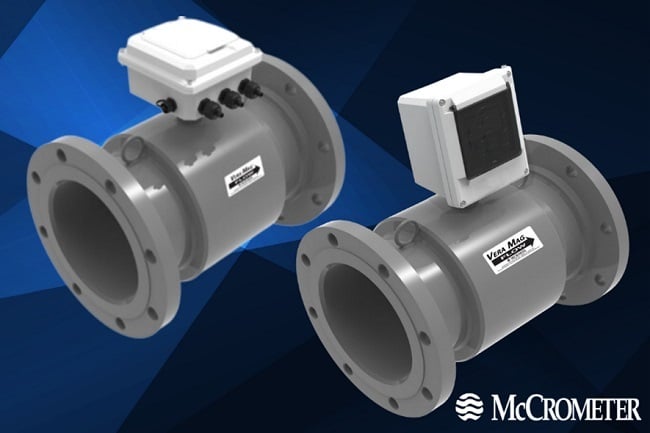 Figure 3: The Vera Mag 3000 (left) and Vera Mag 5000 (right) with mounted transmitters. Source: McCrometer
Both FPI Mag Plus meters and Vera Mag meters require minimal-to-no straight-run piping to maintain accuracy and repeatability (the Vera Mag 5000 boasts ±0.2% accuracy), a major benefit for retrofit installations or tight-fit locations bearing a multitude of flow disturbers. Requiring almost no maintenance and boasting a lifespan of 20+ years in many conditions, these mag meters serve data centers and similar industrial settings for the lifetime of the facility, making them an astute investment. In addition, the FPI Mag Plus and Vera Mag meters are compatible with McCrometer’s EA403 flow computer offering BTU flow measurement, a major benefit for operators and technicians tracking energy consumption for energy audits, or simply monitoring their pipelines to gauge optimum performance.
McCrometer’s V-Cone for data centers
While cooling water processes are a common method for server heat removal, many facilities rely on air cooling. For applications involving air handling units (AHUs) and CRACs, McCrometer’s V-Cone is the ideal solution. A differential pressure instrument, the V-Cone offers a lifespan of 25+ years, line sizes of 0.5 inches to 120 inches, a wide variety of material construction, custom lay lengths and end connections, zero straight run requirements, and other features benefitting AHU applications. The V-Cone’s ±0.5% accuracy and unprecedented dependability ensure that operators and technicians have reliable flow data on hand to provide an adequate volume of cooled air to their servers.
The V-Cone is compatible with McCrometer’s EA403 BTU flow computer, allowing users to monitor the BTUs being removed from the server rooms. By providing real-time flow data of various air flow systems, facility managers are able to optimize their cooling system’s performance and tackle inefficiencies and problems before servers overheat.