Merging ventilation and conditioning for high-performance buildings
Jon Lowy | April 17, 2025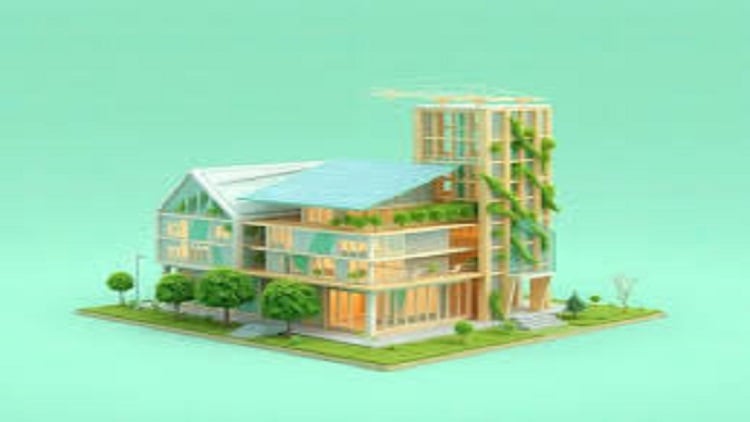 Control and optimization of interior environments has moved from ‘put in some fans’ to a holistic control approach that accounts for the full spectrum of user/stakeholder needs. Source: Adobe Stock
High-performance buildings represent the frontier of architecture and environmental/systems engineering. Their intent is to deliver superior energy efficiency, environment quality, durability and sustainability. These structures don't merely target reduced energy consumption but take aggressive steps to optimize occupant comfort, health and productivity. They're planning to minimize their carbon footprint by ensuring long-term operational efficiency.
Examples of widely recognized high-performance buildings are The Edge, in Amsterdam, the Netherlands, and the Park Royal Pickering in Singapore. Each has pushed the performance boundaries in what high-performance means in a built environment and each provides an archetype that can help in the general improvement of a wide range of new and restored buildings The Edge is viewed as the most eco-friendly office building in the world; the Park Royal as a beacon for sustainability in the hotel sector.
Ventilation and conditioning play a pivotal role in this microclimate creation, directly influencing air quality, thermal comfort and energy expenditure. With this intense focus on building performance, optimizing ventilation and atmospheric condition is not the afterthought of previous times. It is central to the successful conformance with the demands of high-performance buildings.
Ventilation is conditioning
Historically, building ventilation has been primarily concerned with providing sufficient airflow to dilute/flush indoor pollutants and regulate temperature. The typically applied strategies fell short of delivering excellence in building-health and occupant comfort. All too often this delivered uncomfortable, unhealthy and at times toxic environments that hurt occupants and wasted running costs — sometimes called sick building syndrome. Over-ventilating wastes energy and often creates air-flow discomfort, where under-ventilating compromises air quality, with serious short-term productivity and long-term health consequences.
High-performance buildings demand a ground-up re-evaluation of ventilation system design, installation, operational control and maintenance. Engineers and architects now incorporate advanced modeling tools, sensor-based monitoring, and energy recovery technologies to ensure that ventilation systems are both efficient and responsive to real-time occupancy and environmental conditions.
One of the most significant advancements in this domain is the integration of demand-controlled ventilation (DCV) systems. Unlike conventional ventilation, which operates at time and temperature-controlled levels, irrespective of occupancy, DCV leverages sensors to adjust airflow dynamically, and more commonly regionally, based on carbon dioxide levels, humidity, pollutants/volatile organic compounds (VOCs) or other selected indicators of air quality. This approach complicates system design and installation but can greatly enhance energy efficiency by reducing unnecessary ventilation. The benefits in ensuring a more consistently healthy indoor environment, zone by zone, are valuable in both power and health terms. Smart building technologies are increasingly refining this operational mode, with artificial intelligence (AI)-driven algorithms predicting ventilation needs based on historical usage patterns and real-time weather data, allowing for even more precise control.
Beyond intelligent control systems, innovations in energy recovery ventilation (ERV) have transformed how buildings manage air exchange. ERV systems capture heat and moisture from outgoing air and transfer it in advanced heat exchangers to the incoming fresh air, reducing the burden on heating and cooling systems. This process both enhances energy efficiency and improves humidity control, making indoor spaces more consistent while cutting operational costs. This is approaching standard in high-performance buildings, where every component and technology is tuned to contribute to an overall reduction in energy need without compromising indoor air quality.
Standards and compliance
The move toward standardized performance metrics and certifications, such as LEED, WELL and Passive House, has accelerated the adoption of, and consistency in optimized ventilation strategies. These frameworks emphasize energy efficiency and occupant health and wellbeing, driving system specifiers to take a holistic approach to ventilation installations. Regulatory bodies are also tightening ventilation requirements, particularly in the wake of the COVID-19 pandemic, which underscored the importance of adequate airflow in militating against airborne contaminants. Compliance with these evolving standards is not just a matter of certification — it is rapidly becoming a market expectation for new, and, increasingly for, retrofitted buildings.
Building materials and envelope design also play a central role in optimized system design. High-performance buildings often incorporate airtight construction to regulate air supply and venting, which can otherwise lead to large energy losses. However, airtightness must be compensated by mechanical ventilation solutions, to avoid indoor air stagnation and pollutant concentration.
A feature commonly found outdoors is also being sought for its benefits — plants. Certain varieties of houseplants have positive atmospheric influences, removing formaldehyde and other toxic volatiles, while improving the visual environment. This is well defined from NASA research and other sources. Plants can also help keep buildings cool. This is also exemplified by exterior “green walls,” where ivy or other plants climb lattice strategically placed around a building, such as the Jakob Rope System for natural shading, and studies on the effect of interior greening in elevating air quality and environment comfort.
Hybrid ventilation strategies, which combine natural ventilation with mechanical systems, offer a compelling solution. Human-operable windows, stack ventilation and automated louvers can be integrated into building designs, allowing for natural airflow during favorable conditions while mechanical systems provide controlled and regulated ventilation when required.
For building owners, facility managers and occupants, the benefits of optimized ventilation extend considerably beyond compliance. Improved air quality has been categorically linked to increased cognitive function, productivity and overall well-being.
In commercial and educational settings, well-ventilated spaces contribute to better concentration and reduced sickness/absenteeism. In residential environments, optimized ventilation ensures healthier living conditions. Additionally, energy-efficient ventilation systems translate into significant cost savings over time, making them a financially sound investment.
HVAC remains an emerging technology
The future of ventilation in high-performance buildings will likely be shaped by continued advances in materials, data analytics/AI integration and renewable energy power sources. Emerging solutions, such as photocatalytic air purification. This exploits the oxidative effects of bright sunshine on certain chemicals such as rutile (titanium dioxide), a white colorant. This oxidation destroys chemically active pollutants such as VOCs and aggressively tackles bacterial and viral materials. Phase-change materials assist with passive climate control by acting as cool/hot sinks with high capacity, improving environment inertia and reducing overall energy use.
Decentralized ventilation systems, which allow for more localized control of airflow in specific zones improve adaptability and efficiency. As buildings become increasingly interconnected, ventilation will be integrated seamlessly into broader smart building ecosystems, ensuring that air quality management is as dynamic and intelligent, to suit the complex interactions between structures/spaces.
Optimizing ventilation is not only about efficiency targets — it is about creating healthier, more sustainable spaces that enhance human (and animal) well-being and encompass environmental responsibility. As high-performance buildings continue to deliver improvements in design and operation, ventilation strategies must evolve hand in hand. The challenge lies not only in adopting new technologies but in rethinking the entire approach to building ventilation as an integral aspect of performance-driven architecture.