New self-healing zinc coating slashes sewer clogging by 30%
Marie Donlon | November 20, 2024To prevent such fatbergs, the team created a zinc-enhanced polyurethane coating that works by reducing the release of calcium from concrete, which is a key ingredient in the formation of fatbergs. The developers of the coating suggest that minimizing the release makes it difficult for the fat, oil and grease combination to stick and grow.
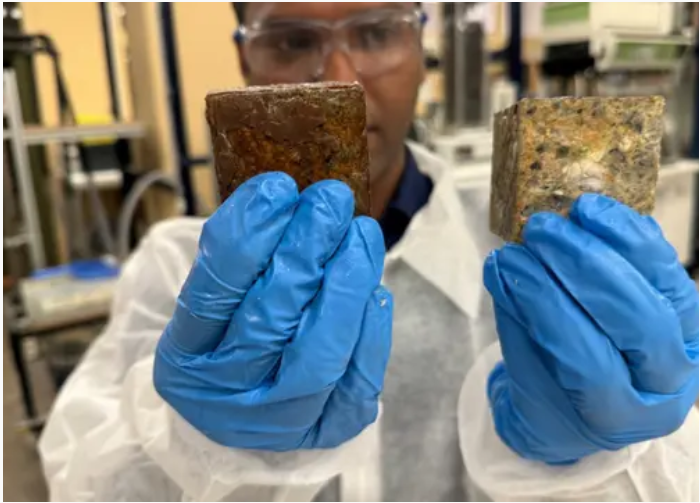 Source: Will Wright/RMIT University
The team added that the new coating offers a sustainable solution by reducing the release of calcium from concrete blocks by up to roughly 80% when compared with uncoated concrete.
When tested in the RMIT lab, concrete treated with the coating showed a 30% reduction in fat, oil and grease buildup, the researchers reported.
“The reduction of fat, oil and grease build-up can be attributed to the significantly reduced release of calcium from coated concrete, as well as less sticking of FOG on the coating surface compared to the rough, uncoated concrete surface. Traditional coatings like magnesium hydroxide, widely used for over two decades, are effective in controlling sewer corrosion but can inadvertently contribute to FOG build-up by interacting with fatty acids,” the researchers explained.
In addition to preventing the development of fatbergs, the coating also reportedly possesses self-healing properties. As such, it can repair minor damage at room temperature, the team added. The new coating is water-resistant and heat-resistant, and is capable of withstanding temperatures up to 1,562° F.
An article detailing the coating, “Novel hybrid coating material with triple distinct healing bond for fat oil and grease deposition control in the sewer system,” appears in the Chemical Engineering Journal.