pH Measurements: Use cases in the paint industry
Parul Chhaparia, courtesy of Mettler Toledo | October 25, 2024The paint industry relies heavily on precise pH measurements to ensure product quality, consistency, and optimal performance. From formulation to final product testing, pH levels are crucial quality parameters in various stages of paint production.
This article explores how the paint industry leverages pH measurement for quality control and process optimization.
Raw material quality control
 Source: METTLER TOLEDO
Paint manufacturers check the pH levels of raw materials before starting production to ensure they meet quality standards across batches. Components, such as pigments, solvents, and additives, vary in acidity or alkalinity, and monitoring their pH makes sure that these materials contribute to the desired properties of the final product. For example, certain pigments may require a specific pH range to maintain their color integrity.
Formulation stability
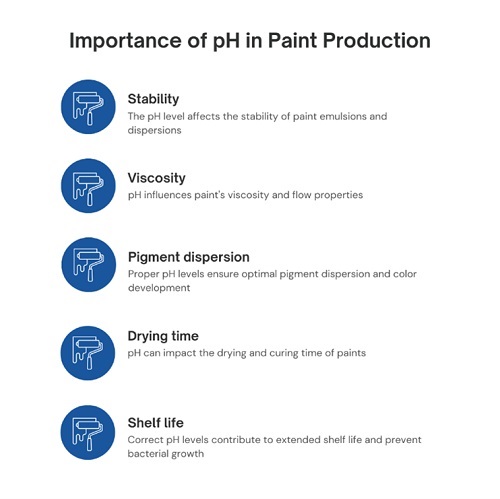
During the paint mixing process, pH is continuously monitored and adjusted. This is essential for the components to interact properly and remain stable. Paints typically consist of water, solvents, and various chemicals. The pH levels can affect the solubility and dispersion of these components. For example, in acrylic paint production, the pH is typically maintained between 8 and 9.5 to optimize thickener efficiency and maintain stable viscosity. Additionally, improper pH levels can lead to issues such as color inconsistency and poor adhesion.
Viscosity control
pH influences the viscosity of paint formulations. If the pH is too low, it can lead to increased viscosity, making the paint harder to apply. and vice versa. A precise pH level helps achieve the desired thickness and flow characteristics. Lower pH levels may cause polymer particles to clump together, increasing resistance to flow, while higher pH levels can promote better dispersion, resulting in a smoother application. This is why regular pH checks during production are conducted to maintain the right consistency for optimal application.
 Source: METTLER TOLEDO
Curing process
In some paint formulations, especially waterborne or those containing specific resins, the curing process is sensitive to pH levels. For example, an incorrect pH can affect the cross-linking of resins, leading to poor film formation or reduced durability. Higher pH levels may enhance the reactivity of certain curing agents, promoting faster curing, while lower pH levels can inhibit the reaction, resulting in an incomplete cure. Monitoring pH during the curing stage ensures that the paint attains the required hardness and adhesion properties.
Environmental compliance
In paint manufacturing, many regulatory requirements must be complied with, especially in terms of environmental impact and safety. pH measurement helps ensure that paint makers can be in complete compliance with both local and international regulations by ensuring that their products are safer and less harmful to the natural environment.
Batch testing
Each batch of paint undergoes pH testing as part of quality control. Consistent pH levels across batches can ensure uniformity in performance characteristics, such as drying time and finish. Variations in pH can lead to inconsistencies in color, texture, and overall quality. So, batch testing helps identify deviations from the target pH range, which could indicate issues in the production process or potential problems with the final product.
Final product evaluation
Once the production is done, the paint manufacturers measure the pH of the final products before packaging. This step is required to ensure that the final product meets specifications and helps predict the paint's performance and shelf life.
The importance of maintaining the right pH can not be overstated in paint manufacturing. pH measurements are essential across various stages of production, from raw material quality control to ensuring the final product meets customer expectations. This is why the paint industry is increasingly using advanced pH measuring devices that improve both production and quality control.
METTLER TOLEDO provides reliable and precise pH solutions that can improve the efficiency of pH monitoring throughout the quality control process. It also offers specialized sensors like InLab® Pure Pro-ISM and InLab® Science Pro-ISM, which are designed to ensure the effective flow of electrolytes, preventing impurities and junction clogging. These sensors are also easy to clean and maintain and come with an intelligent sensor management system, maximizing the efficiency of laboratory pH measurements.
To contact the author of this article, email pHmatters@mt.com