Critical thermal management with excellent thermal interface materials
September 30, 2024Thermal interface materials (TIMs) are critical to electronics of all types. They are placed between two components with differing thermal properties, and their primary function is to fill microscopic gaps and irregularities on surfaces to reduce air gaps that could impede heat transfer. TIMs enhance the efficiency of transferring heat from a high-temperature area to a lower-temperature one.
As technological advancements increase product performance and power, TIMs are increasingly utilized in various industries such as computer networking equipment, semiconductors, optoelectronics, biotechnology and electric vehicles (EVs). These industries demand TIMs with enhanced properties like high thermal conductivity, low thermal resistance, insulation, high-temperature resistance, low density, ultra-flexibility and automation compatibility.
Currently, TIMs are categorized into metallic, inorganic and polymer-based materials. While metallic and inorganic materials offer quick thermal response, they have poor compressibility and adhesion, making them unsuitable for certain applications. Conversely, polymer-based materials — while offering better flexibility and adhesion — tend to have lower thermal conductivity and strength.
As consumer electronics evolve toward higher power, miniaturization and lighter weight, the first hurdle for heat dissipation is the TIM. Ideal TIMs should be lightweight, have high thermal conductivity, high resilience, good processability, high reliability and offer the best cost-performance ratio. However, most high thermal conductivity materials on the market rely on high filler content, which increases rigidity, reduces resilience and flexibility and fails to meet lightweight requirements. This is especially crucial for mobile devices and automotive electronic systems.
The purpose of TIMs is to transfer heat from the source to the environment, thereby lowering temperatures. However, factors like poor surface contact between different materials, uneven material surfaces, large interface gaps or poor compatibility between fillers and carriers can reduce effective heat transfer area and increase thermal resistance. Therefore, the key to effective TIMs lies in minimizing interface thermal resistance, rather than solely focusing on thermal conductivity. For example, while indium metal has a high thermal conductivity of 86 W/m*K, it requires a pressure of 100 psi to achieve a thermal resistance of 0.015° C-in2/W, comparable to thermal grease. This is because metals generally have poor compressibility and gap-filling capability compared to polymer-based TIMs.
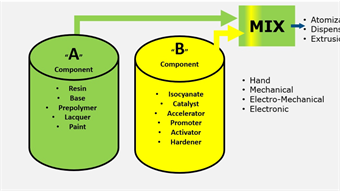
LiPOLY offers a wide variety of TIMs including solid, liquid, gel and film. Chemically, these can be categorized into silicone-based and silicone-free-based types. Functionally, they can be divided into thermal interface materials, thermal absorbing materials, high-insulation thermal materials and thermal pressure-sensitive tapes. Additionally, thermal pads can be classified into high thermal conductivity, ultra-soft, low oil-bleed, high-toughness and ultra-thin types. Liquid TIMs include thermal paste, thermal gel, potting compound and two parts gap filler.
LiPOLY develops TIMs tailored to customer needs. In 2024, in response to requests from the automotive and consumer mobile device sectors, LiPOLY developed numerous low-density options.
For instance, in automotive electronics, switching to low-density TIMs can reduce material weight by 23%, enhancing energy efficiency and range in EVs. In military drones or UAVs, low-density materials contribute to more agile flight control and optimized weight distribution. For wearable electronics like medical monitoring devices or smart glasses, these materials significantly reduce discomfort due to weight.
 Figure 1. LiPOLY offers a wide variety of TIMs including solid, liquid, gel and film. Source: LiPOLY
Low-density thermal pads (DTT44-s, DTT65-s), silicone-based low-density thermal gels (DTT04-s, DTT06-s, DTT10-s), silicone-based low-density two-component thermal potting compounds (TPS31, TPS32) and non-silicone low-density thermal gels (NL-putty04-s, NL-putty06-s, NL-putty10-s) have a thermal conductivity ranging from 0.55 to 10.0 W/m*K, with a minimum thermal resistance of 0.035° C-in²/W.
 Table 1. Above is a more detailed introduction and comparison of low-density materials. Data source: LiPOLY
Vital thermal management through exceptional insulative materials
AS27 thermal insulation material is composed of nano-porous structures of silica, carbon and other materials, with an extremely low thermal conductivity of 0.009 W/m*K, making it one of the lowest known thermal conductivity sheets. AS27 is recognized for its exceptional insulation, noise reduction, cushioning and fireproof properties, and is applied across various fields.
 Table 2. AS27 is recognized for its thermal conductivity and thermal resistance. Data source: LiPOLY
Aerospace
Due to its extremely low thermal conductivity, AS27 is used in spacecraft, rocket nozzles and thermal protection systems to effectively insulate against extreme temperatures. Its lightweight nature also reduces the overall weight of the spacecraft, improving payload capacity and fuel efficiency.
Electronics and wearables
In high-power electronic devices like processors, batteries and power modules, AS27 is used for insulation and noise reduction to prevent overheating and extend device lifespan. AS27 can be applied in the thermal management systems of wearable devices, reducing the perception of weight and discomfort from body contact temperature to ensure a comfortable user experience.
Energy industry
AS27 is used in thermal management systems for lithium-ion and fuel cells to maintain stable operating temperatures, preventing overheating or overcooling.
Automotive industry
In vehicles, AS27 is used as insulation to reduce engine heat transfer to the cabin and lower interior noise, improving passenger comfort.
 Figure 2. Reducing engine heat transfer to improve passenger comfort is just one area of necessity for TIMs. Source: LiPOLY
Consumer electronics and appliances
In refrigerators, air conditioners and other household appliances, AS27 is used in insulation layers to significantly enhance energy efficiency and reduce operating costs.
Conclusion
The application scope of AS27 continues to expand. As technology further develops, emerging applications will reinforce AS27’s importance in modern industry and daily life. LiPOLY has developed polymer-based thermal conductive composite materials for over 20 years, mastering critical technologies in controlling the morphology, structure, compatibility and processing of thermal fillers. LiPOLY leads the industry with a comprehensive production service. Its benchmark product, the T-work9000 thermal pad, boasts the highest thermal conductivity of 20 W/m*K. Contact LiPOLY today to find the best thermal management solutions.