Students create pinecone-shaped wildfire detector
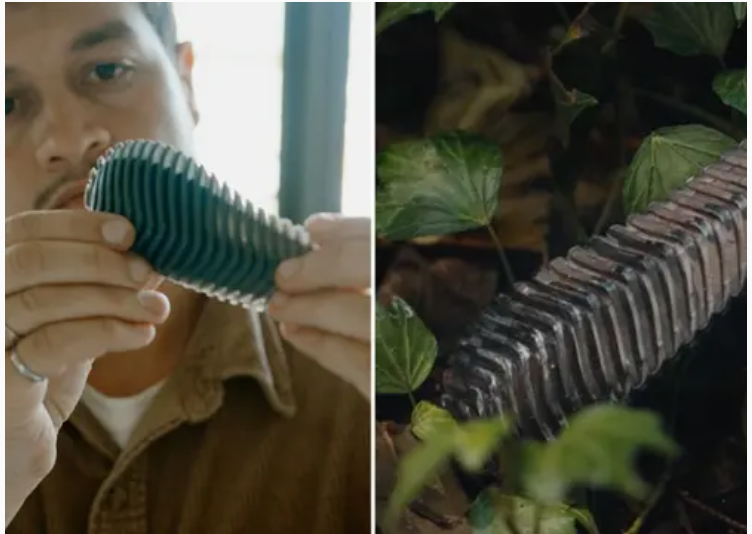
Marie Donlon | September 20, 2024The device, dubbed Pyri, was inspired by pinecones and the phenomenon known as “pyriscence,” wherein plants release their seeds when exposed to high temperatures.
 Source: Royal College of Art
Pyri’s developers explained that that wildfire detector’s alert system is activated by fire, which melts Pyri’s wax shell so that the device releases a saltwater solution. This solution, which also features electrolytes, activates the internal electronics of the Pyri device and sends out a radio frequency signal to nearby communities. Pyri detects and communicates wildfire dangers without relying on traditional sensors, cameras or satellites.
Rather, the wax functions as a natural trigger for the electronics inside it, eliminating the need for a conventional sensor. Meanwhile, the charcoal functions as an electrical conductor.
During a fire, the wax shell melts, which triggers the electronics inside the Pyri to send a signal using the charcoal composite antenna, which can be picked up by communication towers or receivers located roughly tens of kilometers away.