Concrete crack resistance improved by fish scale-inspired design
Marie Donlon | September 22, 2024The Princeton team used a combination of additive manufacturing processes and precision robotic automation to form twisted concrete components, thereby resulting in concrete that is reportedly both stronger and more durable than traditional cast concrete. The team suggests that the new concrete boasts a 63% higher crack resistance than ordinary cast concrete.
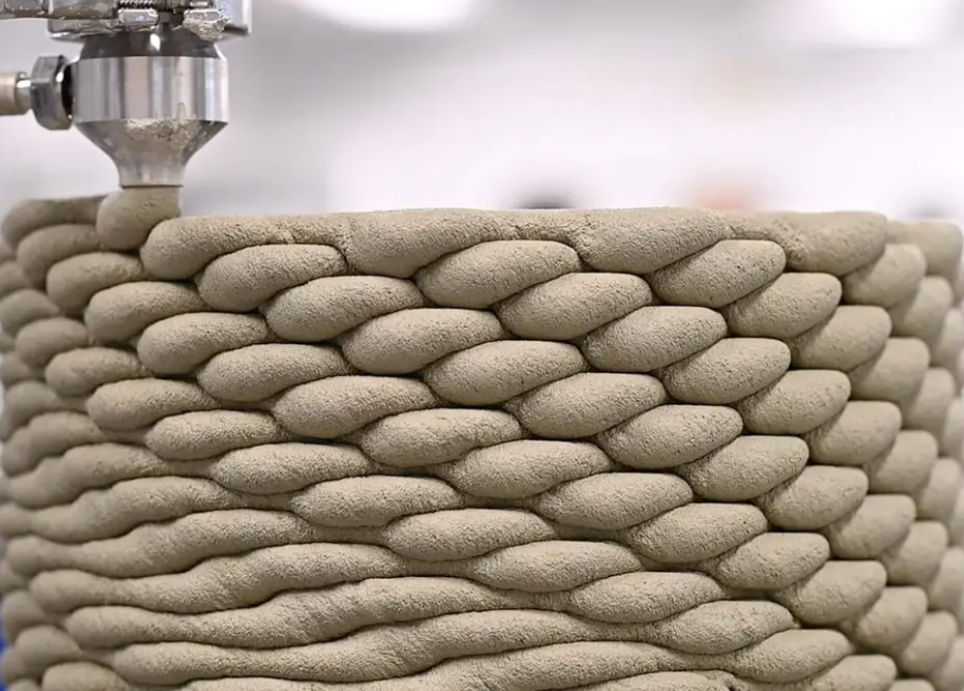 Source: Sameer A. Khan/Fotobuddy
To improve the crack resistance of concrete, the team took inspiration from the double-helical scales of the coelacanth, an ancient fish lineage. Such natural formations, the engineers explained, demonstrate great strength and resistance to fracture.
As such, the team mimicked the structure of coelacanth scales and their double-helical arrangement in their new concrete design using a robotic printer, which generated a 3D structure from individual concrete strands that were arranged in two layers twisted around each other.
According to the engineers, the new pattern improved the material’s resilience to fractures, explaining that when a fracture begins to form, the twisted structure will help to deflect or prevent it from spreading further.
“The paper refers to the underlying resistance in crack propagation as a ‘toughening mechanism.’ The technique relies on a combination of mechanisms that can either shield cracks from propagating, interlock the fractured surfaces, or deflect cracks from a straight path once they are formed,” the team explained.
To create such intricate structures and build these shapes that were previously difficult to accomplish using standard casting processes, the Princeton team used its large-scale industrial robots equipped with real-time material processing equipment, thus making it possible to create full-size structural components.
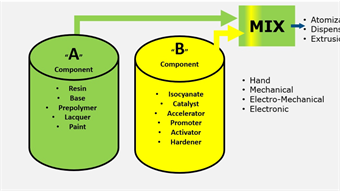
Meanwhile, the team also devised a new method for preventing fresh concrete from deforming during the 3D production process using a “two-component throughout extrusion system” wherein concrete was mixed with a chemical accelerator prior to printing. This reportedly sped up the hardening process and also prevented the concrete from sagging underneath its own weight.
An article detailing the team’s findings, “Tough double-bouligand architected concrete enabled by robotic additive manufacturing,” appears in the journal Nature Communications.