Team creates environmentally friendly adhesive polymer
Marie Donlon | September 11, 2024A new environmentally friendly adhesive polymer has been developed by bioengineers at the University of California, Berkeley.
To create the adhesive polymer, the team used an electrophilic stabilizer to prevent a specific fatty acid from depolymerizing, which, in turn, enabled its use as an adhesive.
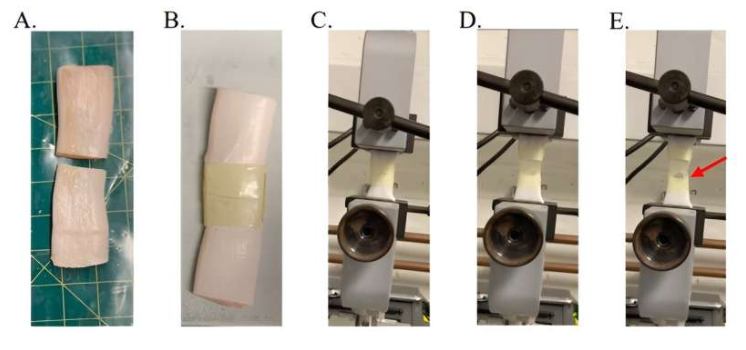 Source: Science (2024). DOI: 10.1126/science.ado6292
Although polymer adhesives are used for assorted applications, the majority are tailored for a specific use and cannot be used in different contexts.
As such, the team sought to develop a sustainably sourced polymer adhesive that could be used for an assortment of medical and nonmedical applications.
To accomplish that, the team used polymers derived from α-lipoic acid (αLA), which is a naturally occurring fatty acid that breaks down naturally. The team determined that using an electrophilic stabilizer prevented the polymers from breaking down, which allowed for the creation of an entire family of environmentally friendly adhesives that can easily break down when desired.
Further, the team determined that the new adhesives could be used across a range of applications, including wood, metal and tissue mending. Another type of pressure-sensitive adhesive the team developed reportedly had 10 times the peel strength of standard products and that adhesive worked in both wet and dry environments.