Students are schooled in AI-powered nuclear fusion
S. Himmelstein | June 27, 2024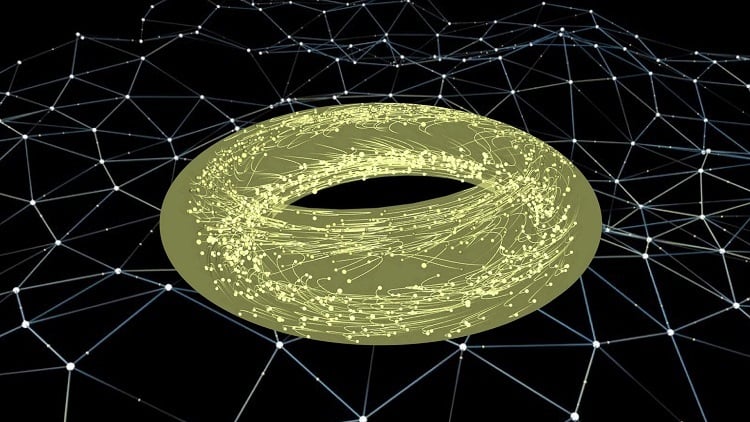 The logo for the summer school, which focuses on the role of AI and machine learning in controlling the variables involved in nuclear fusion experiments. Source: W&M
The inaugural program of the AI4Fusion Summer School at the College of William & Mary (W&M) in Virginia has been successfully completed. Fourteen undergraduates attended the fully funded, two-week intensive course during June 3 to June 14 that leveraged the role of artificial intelligence (AI) and machine learning in controlling the variables involved in fusion experiments.
The summer school is part of a $5 million project funded by the U.S. Department of Energy designed to expose students to internal and external experts in data science and nuclear fusion. Real datasets were made accessible for students to work on, and the school alternated lectures and hands-on work based on real data. As part of its Vision 2026 strategic plan, W&M is focused on promoting data fluency as a key skill across disciplines.
The project’s focus on accessibility also meant providing summer school students with appropriate access to computer resources. Professors arranged for Jupyter notebooks for interactive programming to be used on a Kubernetes cluster that was made available to class attendees. To ensure the broader impact of this activity, a Jupyter book was set, containing all lectures and notebooks, and can be accessed online. Also, to take action on participation barriers, the school organizers had also reached out to The Computational Research Access Network.
“An introduction to these topics has been really important because there are questions we don’t have answers to yet and this is how you start,” said Nathan Cummings, an external collaborator and lecturer from the U.K. Atomic Energy Authority. He considers nuclear fusion and AI as the fields of research with the biggest potential impact on human technological advancement.
The summer school will return to W&M for at least two more summers.