Embedded Sensors Boosting Machining Efficiency
By Engineering360 News Desk | March 02, 2016A UK-based collaboration is developing novel sensing technologies for the real-time monitoring of machined metal parts to help improve the efficiency of those processes.
Innovate UK's two-year "Intelligent Tooling" project—which includes partners BAE Systems, the Centre for Process Innovation, Element Six, the Advanced Manufacturing Research Centre, Advanced Manufacturing, Printed Electronics Limited, the National Physical Laboratory and DMG Mori Seiki—is devising flexible, lightweight sensors that can be embedded into machine tools used in applications across the high-value manufacturing sector, including defense, space, rail, automotive, marine and energy.
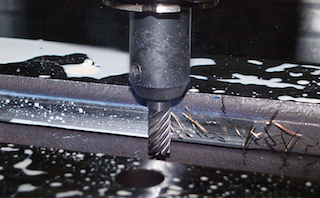 The project could impact machining across the automotive, marine and aerospace sectors. Image credit: Pixabay.According to the project participants, the sensing of critical process variables close to tools' cutting surfaces—temperature, force, acoustic emission and vibration—is integral to improving the capacity and productivity of machining systems by reducing cycle times, process variation and human intervention.
"Developments like this one are aiming to take machining on to the next level by getting to the heart of the cutting process and then being able to adapt the cutting parameters accordingly," says Mark Wilson, principal technologist, advanced manufacturing, at BAE Systems.
Because small variations in input parameters are often observed only in the final inspection of products, tool lives are often conservatively measured. Obtaining data on the machining process at the time of cutting will allow for diagnosis and management of these small changes within the process, leading to better tool utilization and potentially improved processing times.
Printed sensors will be used to apply sensing functionality close to the cutting edge of the tooling inserts. Conventional electronics will be integrated to drive the sensors and transfer data to the control systems.
Ultimately, the project aims to develop a prototype tooling insert with embedded sensing capability that can withstand the harsh environmental conditions present in metal machining. A second focus will be to derive the data needed from the prototype to enable commercial adoption.