Data-driven techniques for advancing smart grids
N. Mughees | April 11, 2024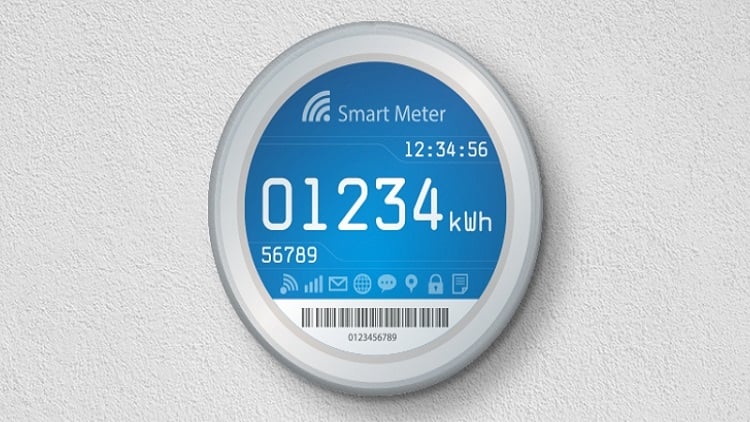 A smart meter delivers loads of data for NGSGs. Source: Adobe Stock
In recent years, data-driven technologies have grown in popularity among engineers and scientists as a toolkit for better understanding, managing and transforming conventional systems into intelligent, long-term solutions. Because of its usefulness in decision-making, transparency, dependability and sustainability, data-driven techniques (DDTs) are quickly becoming popular in many areas of engineering. Research into the potential use of DDTs in traditional power grids has begun in response to the growing promise of data-driven approaches. As a result, a next-generation smart grid (NGSG), which differs from the conventional smart grid, can now be built. In addition, it speeds up the conventional smart grid (SG), which in turn allows future SGs to reach their full potential, which includes zero carbon emissions and enhanced sustainability.
Where do conventional smart grids fall short?
An SG enables the interconnection of various grid components, including smart meters, renewable energy sources, distributed generation, storage, improved communication systems, closed-loop feedback systems and so on. The grid does more than just make sure there's enough high-quality power; it also incorporates features like self-healing, fault assessment, consumer friendliness, cyber and physical security and more. Some regions have enabled the SG to deliver a good yearly growth rate, largely due to the expanded features of SG compared to microgrids. The reason this is doable is that most of the world's current SGs are still using traditional power systems to generate electricity on a kilowatt to gigawatt scale. Because it evolves in tandem with new, cutting-edge technology, traditional SG can't keep up with demand.
The demand for renewable energy sources has skyrocketed in the last decade due to a confluence of factors, including shifting climate patterns, growing human populations and technological advancements that could force the SG into non-linear dynamics. Because smart power grid transmission and distribution technologies are not linear, additional bottlenecks, outages, voltage fluctuations and frequency fluctuations could cause blackouts due to rising electricity demand. Although non-renewable energy sources are a faster, cheaper and easier way to create power, their high emissions make them an obnoxious threat to the environment. An increasing number of power plants are switching to renewable energy sources in an effort to lessen their reliance on fossil fuels. The inclusion of additional distributed generation (DG), larger markets, and renewable sources, however, increases the complexity and volatility of SGs.
What are next-generation smart grids?
Due to issues with grid component compatibility, deployment of programmable sensors, fast real-time monitoring decision making with minimized latency, and integration of maximum intermittent generation, current SGs are not yet sustainable in power generation and distribution over the long term. Scientists are thinking about how to design the SG of the future so that operations are reliable and cost-effective. By combining the limitations with cutting-edge DDTs, blockchain technology, and other edge computing approaches founded on the collection and analysis of traditional SG data, an NGSG will be able to overcome these issues. An improved storage system that incorporates a secure, high-speed data transfer mechanism may also be necessary for an NGSG, as the datasets are growing in size and complexity as a result of the SG systems. To further protect the data, it is recommended to encrypt it using blockchain technology and use advanced algorithms for data management.
While next-generation blockchain technology and data approaches will handle the security of huge numbers of datasets in the NGSG domain, there is a need for progress in the conventional SG area regarding the preservation of data privacy and security. Interoperability, reduced transmission loss and latency, capacity to handle big sources, grid mobility, ease of renovation and advanced resilience are other extended features that an NGSG may have. These aspects are heavily reliant on data-driven technology adaptation.
How does DDT benefit NGSG?
Differentiating the NGSG framework from the traditional SG is the utilization of agent-oriented methodologies, next-generation blockchain technology, improved interoperability, edge computing devices and computationally efficient DDTs. In order to accomplish global sustainable energy evolution, an NGSG may rely heavily on DDTs. We may therefore say that an NGSG is just an upgraded version of the current SG, with some extra features added to make up for the old SG's flaws. An automated grid that is data-driven allows for better control operations, energy management, condition monitoring, forecasting, energy transaction security and fraud characterization through the use of advanced data-driven approaches.
Integrating DDTs into data analysis from datasets of several decentralized renewable energy networks and energy storage systems pave the way for sustainable evolution, which in turn enables the internet of things (IoT), load forecasting, energy trading and security systems. According to current research in the SG area, DDTs have been effectively used to describe grid problems and energy trading. However, as the demand for energy rises, it could offer new problems in terms of security limits and the ever-increasing global cyber threats. A change to the SG structure that allows data-driven planning and modelling is necessary to address these issues.
Faster, more dependable operation, as well as more precise data that permits the use of improved DDTs to enable efficient and sustained power flow from generating to distribution are the main benefits of the data-driven NGSG. More economical, flexible, and effective operation, enhanced power system monitoring and management, and groundbreaking data-driven analysis models and algorithms, mostly influenced by cutting-edge data science, are all on the horizon.
Conclusion
Data-driven techniques are designed to provide advanced features that ensure the sustainable functioning of prospective NGSGs. Improved control operations, energy management, condition monitoring, forecasting, energy transaction security and fraud characterization are all possible with a data-driven automated grid. However, it is important to investigate the current shortcomings of SG systems in order to fix them and make SG technology even better.