A sensor for sniffing out toxic ammonia gas
Marie Donlon | February 01, 2024A small proof-of-concept ammonia gas sensor developed by researchers from RMIT University, the University of Melbourne and the ARC Centre of Excellence for Transformative Meta-Optical Systems (TMOS) promises to enable safer hydrogen storage and specialized medical diagnostic devices.
Because ammonia is considered one of the best methods for storing hydrogen for clean fuel, reliable and sensitive ammonia detection will be necessary to instantly identify potentially dangerous leaks during transportation of hydrogen, thereby ensuring safe operation.
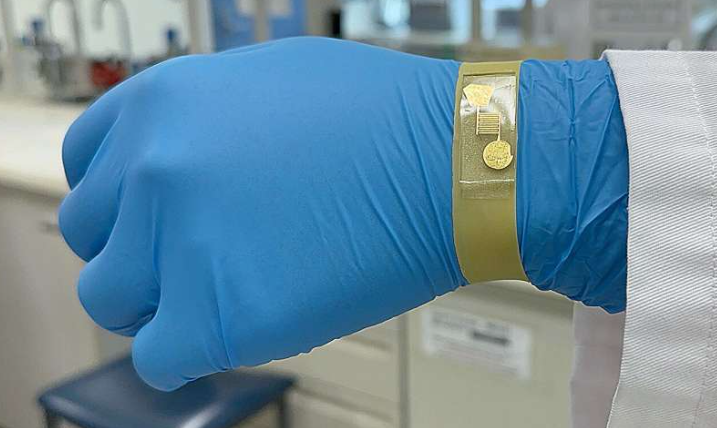 Source: Seamus Daniel, RMIT
Although exposure to high levels of ammonia can reportedly be hazardous to human health, potentially leading to chronic lung conditions or organ damage, it is also found in human breath and can serve as a biomarker of diseases like kidney and liver-related disorders.
As such, the team sought to develop a sensor that can detect tiny amounts of ammonia — even on a person’s breath — thus making quick detection possible.
To create the sensor, atomically thin transparent tin dioxide was deposited onto a base material. The researchers explained that the presence of ammonia alters the electrical resistance of the tin oxide film within the sensor. In other words, the higher the concentration of ammonia, the greater the alteration in the resistance of the device. According to the developers, the sensor can easily detect ammonia — even in smaller concentrations than currently available technology.
The sensor was placed in a specially designed chamber to gauge its ability to detect ammonia gas at different concentrations — from 5 parts per million to 500 parts per million — and under different temperatures and other conditions. Further, the team also measured the sensor’s selectivity of ammonia against other gases like carbon dioxide and methane.
The researchers reported that the sensor offered a safer approach for detecting toxic gas as compared to current techniques.
"Current approaches to ammonia detection produce accurate measurements but require expensive laboratory equipment with qualified technicians, extensive sampling and preparation," the researchers explained. "This process is often time-consuming and not portable, due to the size of the equipment needed. In addition, the manufacturing of today's ammonia detectors involves expensive and complicated processes to prepare sensitive layers for sensor fabrication."
An article detailing the research, “Instant‐in‐Air Liquid Metal Printed Ultrathin Tin Oxide for High‐Performance Ammonia Sensors,” appears in the journal Advanced Functional Materials.