A "seaweed-eating" robot protects shorelines, ocean ecosystems
Marie Donlon | October 30, 2023A new robot developed jointly by Seaweed Generation and researchers from the University of Exeter promises to reduce the impact of sargassum — an invasive seaweed — on shorelines and ocean ecosystems.
AlgaRay is 9 ft wide robot that autonomously scoops up sargassum. Once it reaches capacity, the robot dives 200 m below the surface of the water — a depth at which the air pockets that enable the sargassum leaves to be buoyant are compressed by the water pressure — to release its cargo of seaweed that subsequently sinks to the ocean floor.
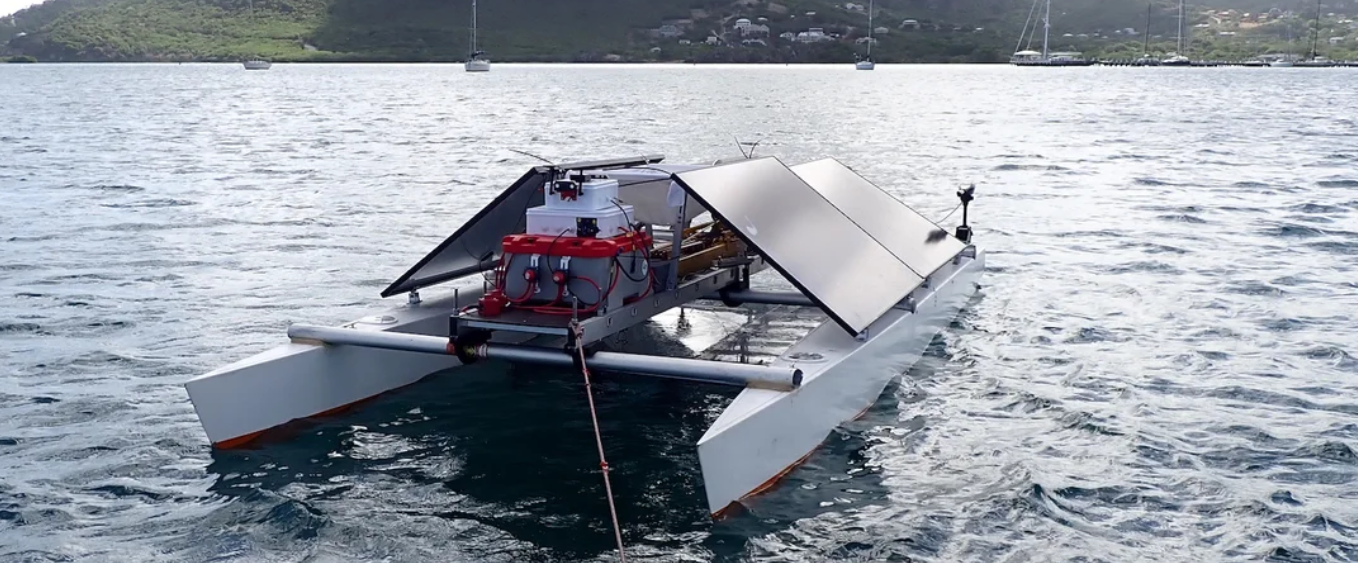 Source: Seaweed Generation/University of Exeter
The developers of the robot suggest that AlgaRay can repeat this process as many as six times an hour, working almost nonstop, due to its composition of solar panels, lithium batteries and navigational tools.
“Sargassum inundations…cause environmental, social and economic disruption across the Caribbean, Central U.S. and West African regions,” Seaweed Generation researchers explained on its website. “Massive influxes of seaweed wash ashore and rot, releasing not just the absorbed CO2 but hydrogen sulfide gasses, decimating fragile coastal ecosystems including mangroves and seagrass meadows and killing countless marine animals.”
Going forward, the researchers are working to develop an almost 33 ft wide iteration of the AlgaRay, which promises to collect roughly 16 metric tons of seaweed at once.