Calculations for hydro turbine performance
Temitayo Oketola | June 25, 2023As the world becomes increasingly conscious of the need for environmental sustainability, the search for clean, renewable and efficient energy sources has intensified. Water energy (or hydropower) is one of the renewable energy sources that is helping to reduce dependence on fossil fuels for power generation. And the hydro turbine is at the forefront of technologies helping to harness hydropower.
A hydro turbine is an essential component of the hydroelectric plant that converts the potential and kinetic energy of water into electricity. However, as simple as the operating principle of hydro turbines might seem, significant effort goes into the design of this system. The key to optimizing their utility lies in understanding the basic calculations governing their operation.
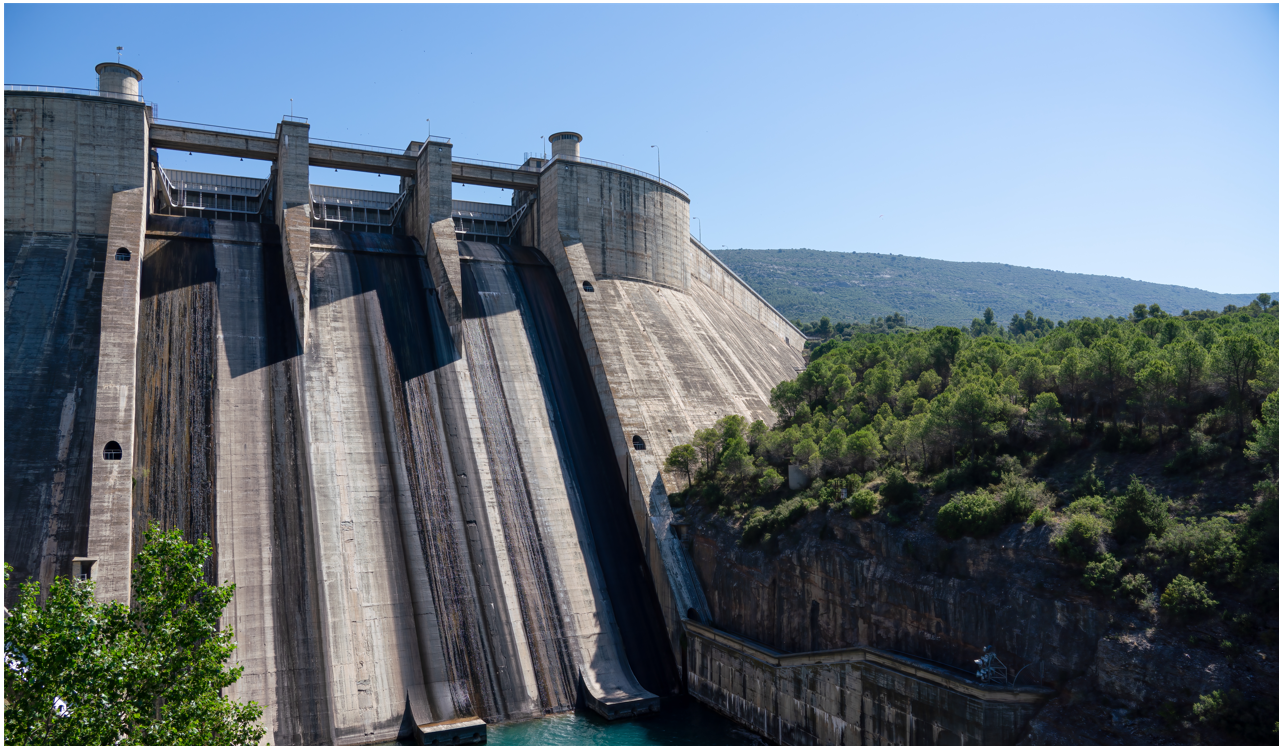 Figure 1: A hydro turbine is an essential component of the hydroelectric plant. Source: Martin/Adobe Stock
Understanding the operating principle of a hydro turbine
The operating principle of a hydro turbine is grounded in the fundamental law of energy conservation. To better understand its operation, consider Figure 2, which shows the basic schematic of a hydroelectric plant with its essential components.
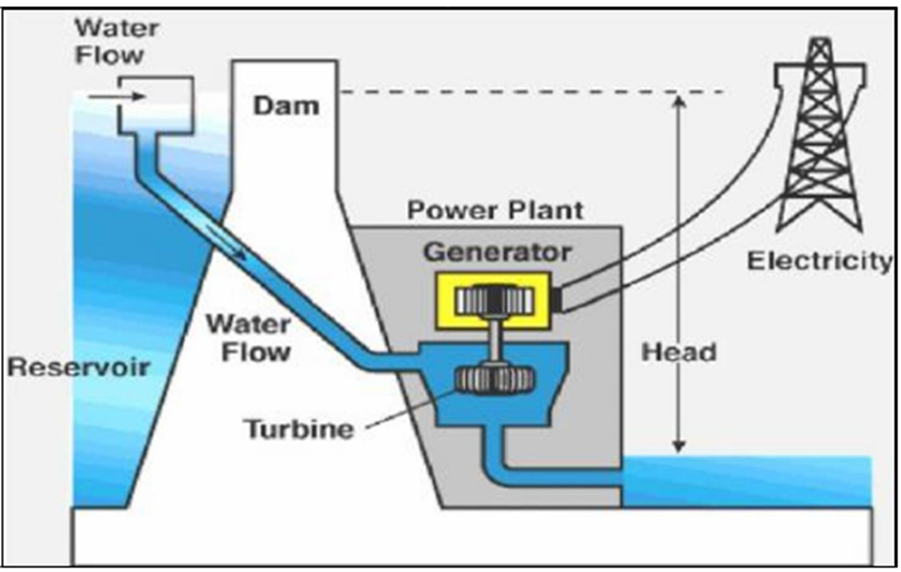 Figure 2: Basic schematic of a hydroelectric plant showing the reservoir, turbine, penstock and dam. Source: Aung Kyaw Soe mm/CC BY-SA 4.0
The operation of this plant starts with water stored at a height, such as in a reservoir behind the dam. This stored water gains gravitational potential energy due to its mass and height above ground level. When the water is released, it flows down the penstock (a pipe leading to the turbine) under the influence of gravity, and its potential energy is converted to kinetic energy in the process.
The water (now at the base of the pipeline) impacts the blades of a hydro turbine at high speed and pressure, causing it to rotate. Through a generator connected to the turbine shaft, this rotational energy is converted into electricity. Therefore, a hydro turbine is essentially an energy conversion device that transforms potential energy into kinetic energy and then into mechanical energy (in the form of shaft rotation).
[Learn more about hydro turbines on GlobalSpec]
Basic essential calculations
Let the head (or height) of the water above the water be h meters. Then, the potential energy of the stored water in the reservoir can be calculated using:
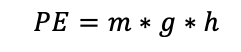
Where:
m = mass of the water (kg)
g = gravitational acceleration (m/s2)
When the water is made to flow down the penstock, the power associated with this potential energy can be calculated using:

Where:
m = mass flow rate of the water (kg/s)
Q = volume flow rate of water at the turbine (m3/s)
p = density of water (1000 kg/m3)
In reality, several losses occur within the hydroelectric plant so that the power available at the generator is always less than the power associated with the potential energy of the water in the reservoir. For instance, there are energy losses (due to pipe friction) as the penstock carries water from the turbine to the reservoir, friction losses in the moving parts of the turbine, and electrical losses in the generator due to resistance in the windings, to name a few. Engineers typically account for these losses by incorporating an overall efficiency into the power equation based on the design of the hydroelectric plant. Therefore, the power output can be calculated using:

Where:
n = overall efficiency of the hydroelectric plant
Typically, the efficiency of hydroelectric plants can range from 70% to 90%. So consider a basic scenario of a hydroelectric plant with a water reservoir that contains a head of water 300 m above the turbine level. If the plant has an overall efficiency of 80% and the volume flow rate of water through the turbine is 90 m3/s, then the power associated with the potential energy of the stored water would be 264.8 MW. In contrast, the power output at the generator would be 211.8 MW.
[Learn more about the world’s largest hydropower dams on GlobalSpec]
Conclusion
While this article presents basic calculations underlying the design of hydro turbines, several other factors and calculations must be considered when designing these systems. For instance, engineers also need to consider the generator design, pumped storage system and tidal power schemes when designing these systems. Therefore, it is recommended to reach out to hydroelectric plant manufacturers to discuss application requirements.