Eggshells for everything!
Marie Donlon | May 30, 2023Eggshells, specifically discarded eggshells or eggshell waste, have, of late, proven to be more than, well, just waste.
In a nod to sustainability, researchers the world over are eyeing this once discarded food waste item for a host of other applications thanks to its composition of mostly calcium carbonate — a common form of calcium.
Follow along as GlobalSpec investigates new uses for the abundant waste product from the food processing industry.
Skulls
Materials scientists from Russia’s National University of Science and Technology (NUST) have developed a bioactive polymer-ceramic composite material derived from eggshell waste that can be used to potentially fix implants or restore bone defects in the skull.
To create the material, the scientists combined polymethylmethacrylate (PMMA) — which is a synthetic polymer already used as a type of bone cement — with diopside, a silicate bio-ceramic derived from eggshells.
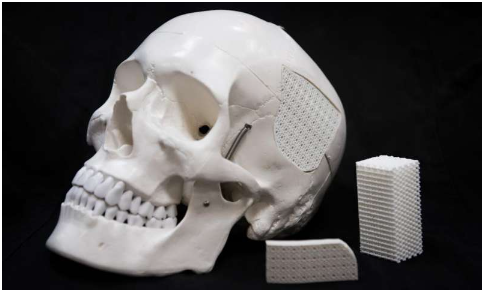 Source: NUST
Alone, the PMMA possesses self-curing properties, but demonstrates weak chemical and biological interactions with living tissue. Yet, modified with the diopside, the mixture reportedly encourages the growth of bone tissue.
In the lab, the researchers determined that a sample with 50% diopside demonstrated a four-fold increase in compressive strength. Additionally, following in vitro testing at four weeks, the mixture included bone minerals on its surface.
Construction
MANUFACTURA, a Mexico-based design studio, has created 3D-printed construction material featuring discarded eggshells.
Under the aptly named Eggshell Project, the researchers sought to address two concerns: reduce the high gas emissions of the ceramics industry and find solutions for food waste.
To accomplish both goals, the researchers collected discarded eggshells from local restaurants, pulverized them and then combined them with bio binders to form a mixture that solidifies without being fired.
The researchers then used the material to 3D print 105 different blocks that were assembled according to their shape, along with an eggshell column composed of 26 eggshell-derived pieces.
To see how the eggshell-enhanced building blocks are created, watch the accompanying video that appears courtesy of MANUFACTURA.
Bone
Like the researchers from NUST (see above), University of Massachusetts (UMass) Lowell researchers have demonstrated that eggshells can promote the growth of new bones for medical procedures.
With the potential to one day repair bones in those who have sustained bone injuries from accidents, diseases, aging or military combat, UMass Lowell researchers have inserted crushed eggshells into a hydrogel formula that developed into a miniature frame for growing bones in the lab to eventually be used in the development of bone grafts. Researchers then added bone cells extracted from a patient’s body to the formula. The mixture was then cultivated in an incubator ahead of the new bone being implanted into the patient.
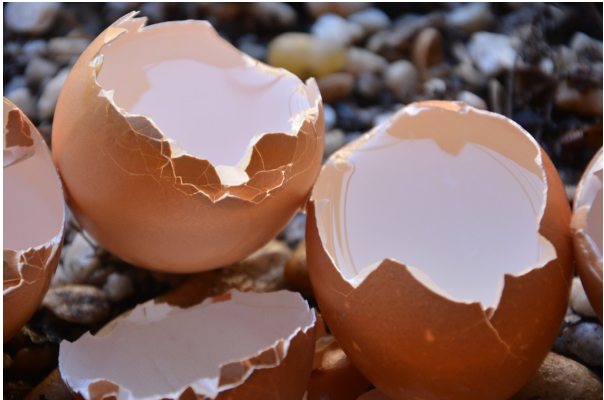
Researchers demonstrated that calcium carbonate present in eggshell particles enhances and encourages bone cell growth, potentially resulting in expedited healing. Additionally, opportunities for immune system rejection of the new materials once implanted in the patient are significantly reduced as the new bone is created using cells taken from the patient.
Researchers believe that the process could eventually be used to also encourage the growth of teeth, tendons and cartilage. Similarly, the research team suggests that the eggshell particles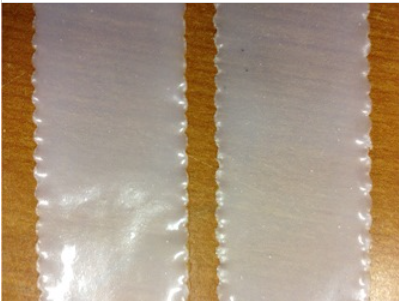 Source: Tuskegee University could also eventually function as a vehicle for delivering peptides, proteins, growth factors, genes and medications to a patient’s body.
Bioplastic
Researchers at Tuskegee University are attempting to develop biodegradable packaging materials that bend but that do not break using eggshells.
To accomplish this, the Tuskegee team collected and cleaned eggshells, and subsequently ground them into a solution of polypropylene glycol. The fragments were exposed to ultrasonic waves, which broke them down further into nanoparticles. Those nanoparticles were then added to a polybutyrate adipate terephthalate (PBAT) (which is engineered to break down in soil within months) and polylactic acid (PLA) (which is composed of cornstarch) to create a polymer that is more flexible than similar bioplastic blends.
According to its developers, the polymer could be used in the manufacture of food containers, film and grocery bags.
Tires
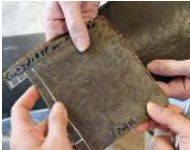
A team of researchers at Ohio State University are reportedly using food waste items — tomatoes, eggshells and other foods — to partially replace the petroleum-based filler commonly used in the manufacture of tires.
Making the manufacture of rubber products more sustainable, reducing American dependence on foreign oil and keeping waste out of landfills, the researchers are transforming eggshells into carbon black, a petroleum-based filler used in the making of tires. According to the researchers, carbon black makes up roughly 30% of a typical automobile tire.
 Source: Ohio State University
In tests, rubber made with the new fillers exceeded industry standards for performance. This is reportedly due, in part, to the eggshell’s porous microstructures, which provide a larger surface area for contact potential with the rubber.
Check back with GlobalSpec for more coverage of eggshells and other materials being used in new and unexpected ways.