Annual performance rankings released for US nuclear power plants
S. Himmelstein | April 21, 2023The U.S. Nuclear Regulatory Commission (NRC) has issued performance reports for the nuclear power stations operating in the U.S. during 2022.
Of the 93 units in the agency’s Reactor Oversight Process, 87 reached the highest performance category in safety and security. These facilities — including Vogtle Unit 3, which was authorized for operation last year — remain under the NRC’s baseline inspection program, involving thousands of inspection hours for each
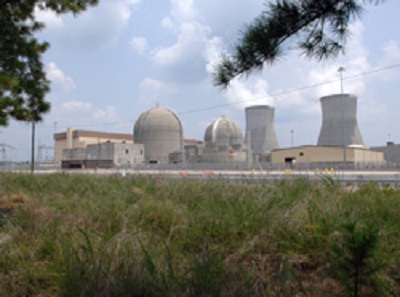 The Vogtle nuclear power station in Georgia. Source: NRC reactor.
Six reactors were assigned to a more highly scrutinized performance category, “Regulatory Response,” as they must resolve one or two items of low safety significance. For this performance level, regulatory oversight includes additional inspection and follow-up of corrective actions:
- Calvert Cliffs-1, for failing to implement foreign material exclusion practices in accordance with site procedures. Specifically, the licensee failed to prevent the introduction of foreign material into the 1A emergency diesel generator, which led to an emergency diesel generator automatic trip and consequential failure on February 20, 2022, during routine testing.
- Davis-Besse, for a security-related finding originating in the third quarter of 2021. (Details of security findings are not divulged to the public.)
- Peach Bottm-2, for the performance of a procedure inappropriate to the circumstances, causing a reactor scram, primary containment isolation system Group I isolation, safety-relief valve actuation, and loss of the normal heat sink, which required emergency core cooling systems to maintain level and pressure.
- Quad Cities-2, for the failure of one of the four electromatic relief valves associated with the automatic depressurization subsystem to actuate during surveillance testing. As a result, the valve was inoperable from April 7, 2020, until March 21, 2022.
- Summer, for failing to identify and correct a condition adverse to quality that resulted in the inoperability of the B emergency diesel generator.
- Waterford, for errors associated with the main condenser wide range gas monitor, which introduced the potential to overclassify radiological emergencies and made the results of dose assessment using the main condenser wide range gas monitor inaccurate.