Swarm technology wrangles wind turbine wakes
S. Himmelstein | March 30, 2023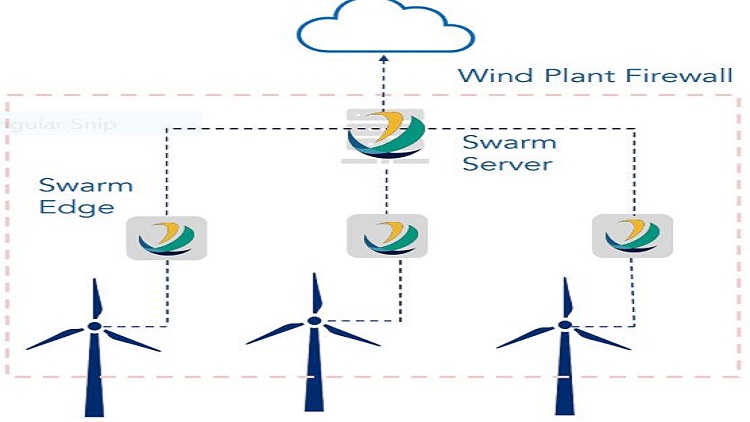 The Swarm system is cybersecurity compliant and is comprised of an Edge computing device installed on each turbine and an onsite Swarm server. Source: WindESCo
Wakes at wind farms create substantial turbulence and curtailment, reducing power system output by up to 20%. A solution to advance wake steering and the collective control of wind turbines is being demonstrated at a wind farm in Utah.
The first full-scale implementation of the Swarm technology developed by WindESCo for commercial wake steering and collective control has delivered a 3% increase in annual energy production at the 306 MW facility hosting 165 wind turbines. Swarm is also engineered to reduce curtailment, optimize low wind resource exploitation and protect against extreme conditions so as to extend asset life.
The wake steering solution combines advanced analytics, model-in-the-loop control and industrial internet of things technologies. The system is cybersecurity compliant and is comprised of an Edge computing device installed on each turbine and an onsite Swarm server, enabling absolute nacelle position control.
One year of high-speed supervisory control and data acquisition findings are used to calibrate wind and wake models to match the plant’s historical behavior. Swarm optimization algorithms are then applied to the data to compute wind plant response and to quantify the energy generation gains from the application of Swarm. Generating capacity improvements stem from Swarm applications including wake steering, yaw by consensus, predictive and dynamic yaw, and online static yaw misalignment correction.
While model simulations predict an annual energy production improvement of up to 3.7% for the Utah site, field data indicate scope to exceed this goal.